



Listen to the Podcast: "A Journey of Compassion in Two Wars of Resistance"
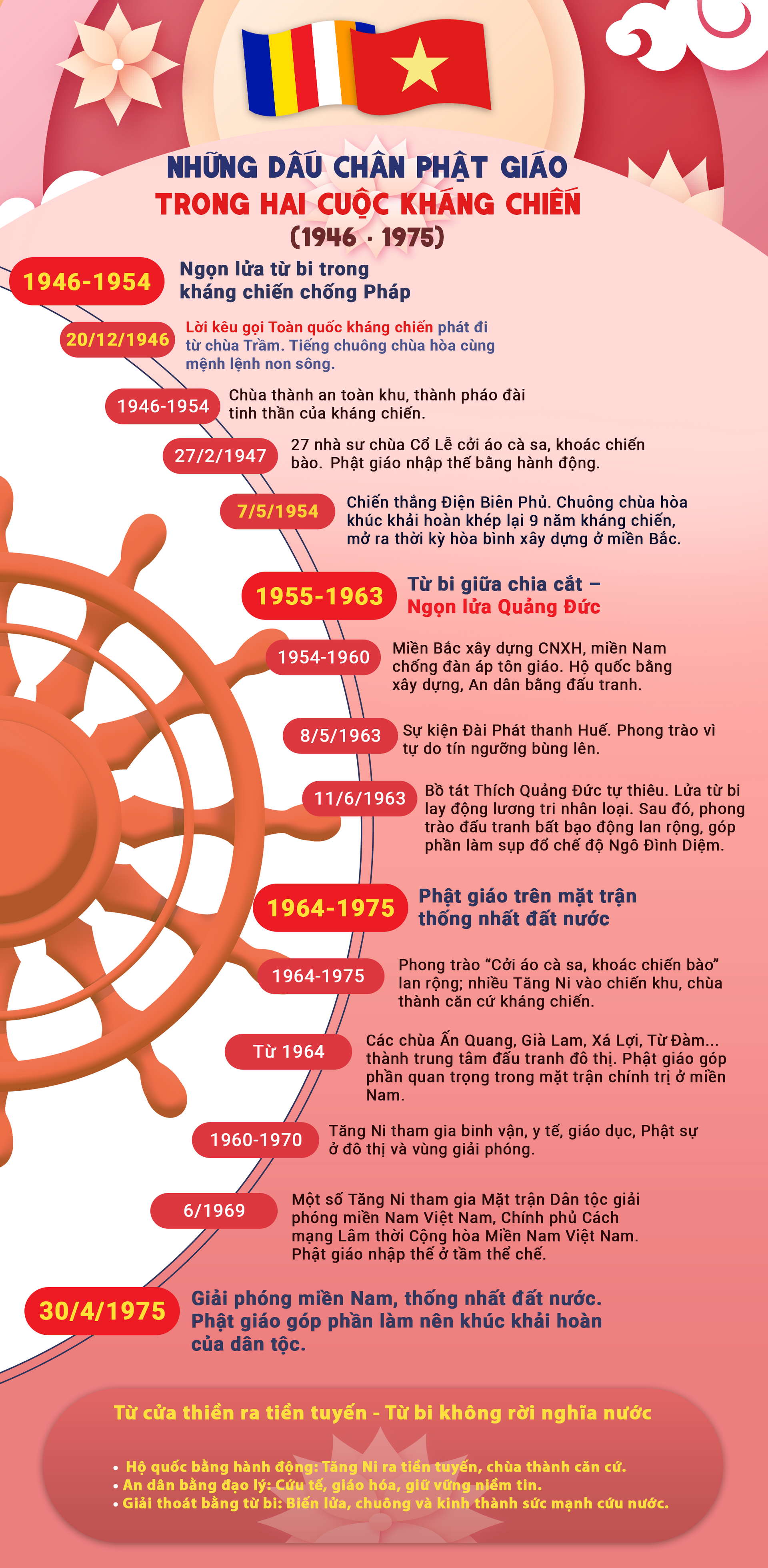
On the winter night of December 19, 1946, Hanoi was engulfed in flames. At Tram Pagoda (Hanoi), the temple bells no longer rang with their usual gentle rhythm, but instead mingled with the sound of gunfire, marking the beginning of the nationwide resistance.
It was in the cave next to the temple that the Voice of Vietnam secretly broadcast President Ho Chi Minh's sacred appeal: "We would rather sacrifice everything than lose our country or become slaves.".
That call to arms to save the nation resonated even within the Buddhist monasteries. Just two months later, on February 27, 1947, at Co Le Pagoda (Nam Dinh), an unprecedented vow-taking ceremony took place under the chairmanship of Venerable Thich The Long.
Before the majestic Three Jewels, 27 young monks and nuns removed their brown robes, preparing to don their national defense uniforms, and unanimously swore an oath:Take off your monk's robe and put on your warrior's attire.They bid farewell to the sounds of gongs and chanting to take up arms and head to the battlefield.
Among them, 12 fell, transforming into the "immortal lotus flowers" of Vietnamese Buddhism. The Co Le incident of 1947 became a brilliant symbol of the engaged spirit of Vietnamese Buddhism during the resistance against the French: considering saving the country as the greatest compassionate vow, and viewing the eradication of evil and injustice as the most practical practice of the Bodhisattva path.
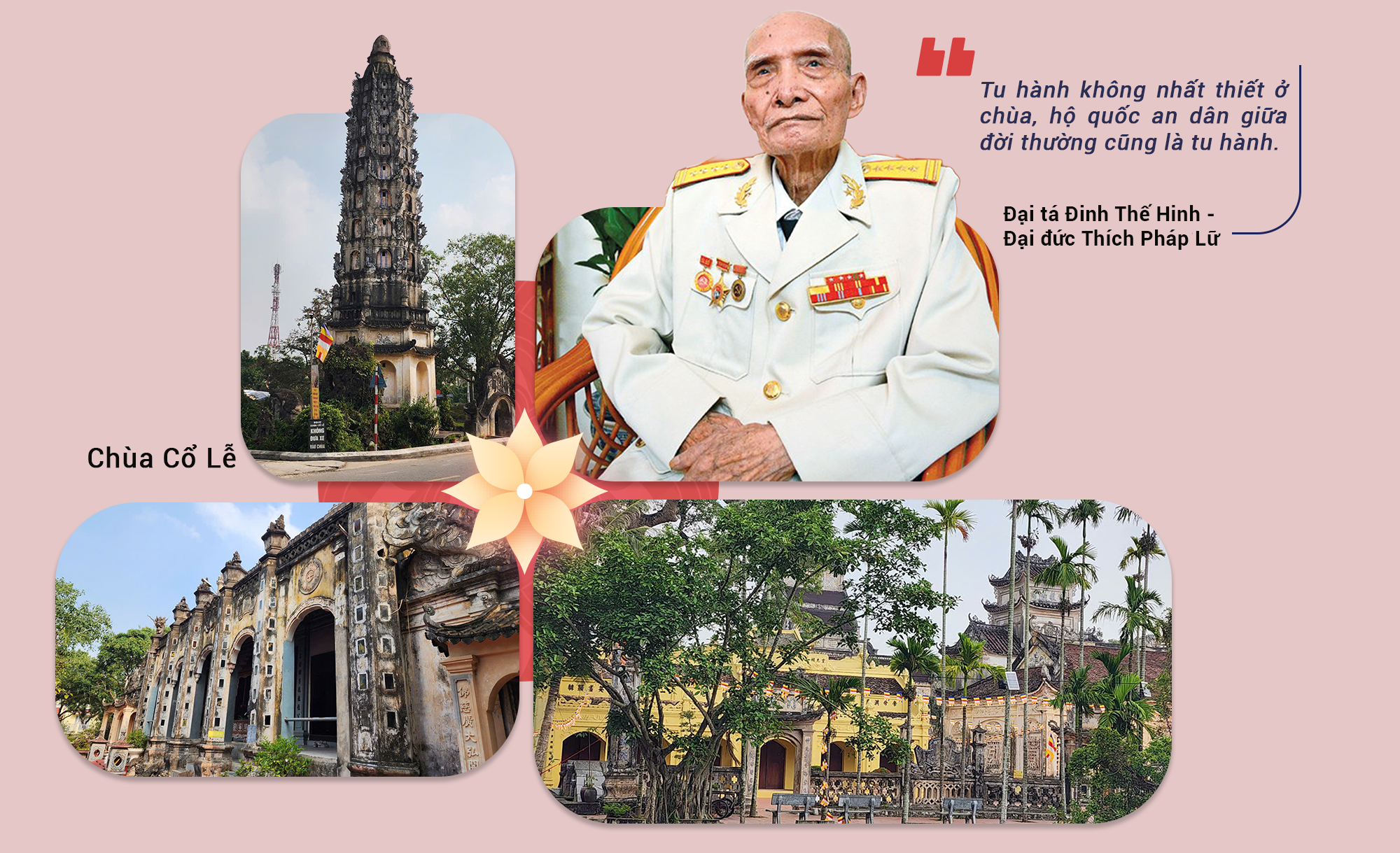
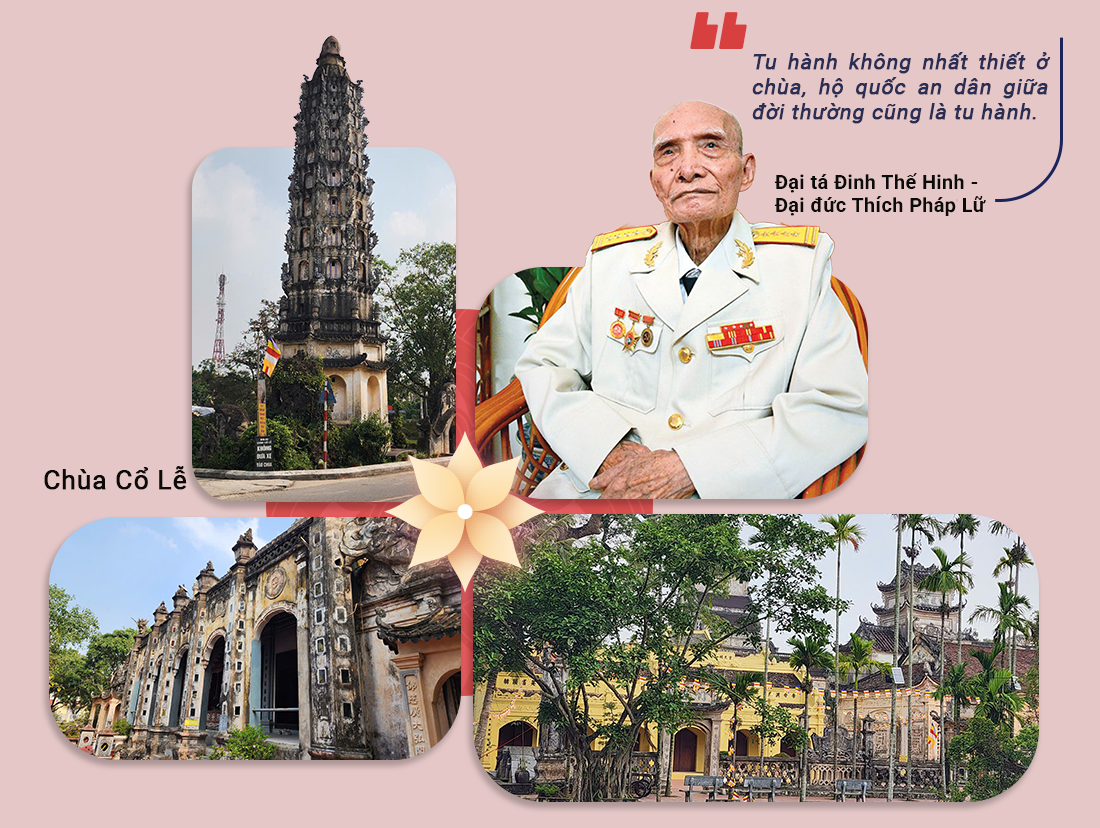
Among the 27 monks who "shed their robes and donned military uniforms" that day was Venerable Thich Phap Lu. From monk to soldier, he served as the team leader of the armed propaganda team in Xuan Truong - Bui Chu (now Ninh Binh), simultaneously mobilizing the people and operating secretly in enemy-controlled territory.
During the war against the US, he continued his military career, serving as Political Commissar of Regiment 542 - Truong Son Command. When the country achieved peace, this retired Colonel returned to his spiritual path, diligently writing and lecturing on Buddhist teachings, with the simple belief: "Spiritual practice doesn't necessarily require being in a temple; protecting the nation and ensuring peace for the people in everyday life is also a form of spiritual practice."
The story of Venerable Thich Phap Lu - Colonel Dinh The Hinh is a vivid testament to the engaged spirit of Vietnamese Buddhism: when the nation is in danger, the monk does not retreat into silence, but "takes off his saffron robe and puts on a soldier's uniform for the country and the people," so that compassion not only illuminates the monastic grounds but also shines amidst the flames of war.
Moreover, during the resistance war against the US, generations of Buddhist monks and nuns continued to follow in the footsteps of their forefathers, enlisting in the army, joining the youth volunteer corps, fighting bravely, and selflessly sacrificing themselves for the independence, freedom, and unification of the country. The spirit of "taking off the monastic robe and donning the soldier's uniform" was continued.
The slogan “All for the front lines, all for our beloved South."The slogan echoed throughout the train stations and ports. When American bombs fell, the temple transformed into a rear base, a military medical station, and a food depot; and when needed, the monk's robe became armor for the Fatherland, and the monk became a soldier fighting for peace."
Throughout both wars, the temples in the North remained places where the sound of bells echoed, both to pray for peace and to call upon the entire nation to rise up. This embodies the spirit of "protecting the nation and ensuring the people's well-being," enduring two periods of war without losing its roots of compassion and wisdom.

If a movement arose in the North,Take off your monk's robe and put on your warrior's attire."In the South, the flame of Buddhist struggle flared up again with compassion, courage, and an indomitable spirit in the face of tyranny."
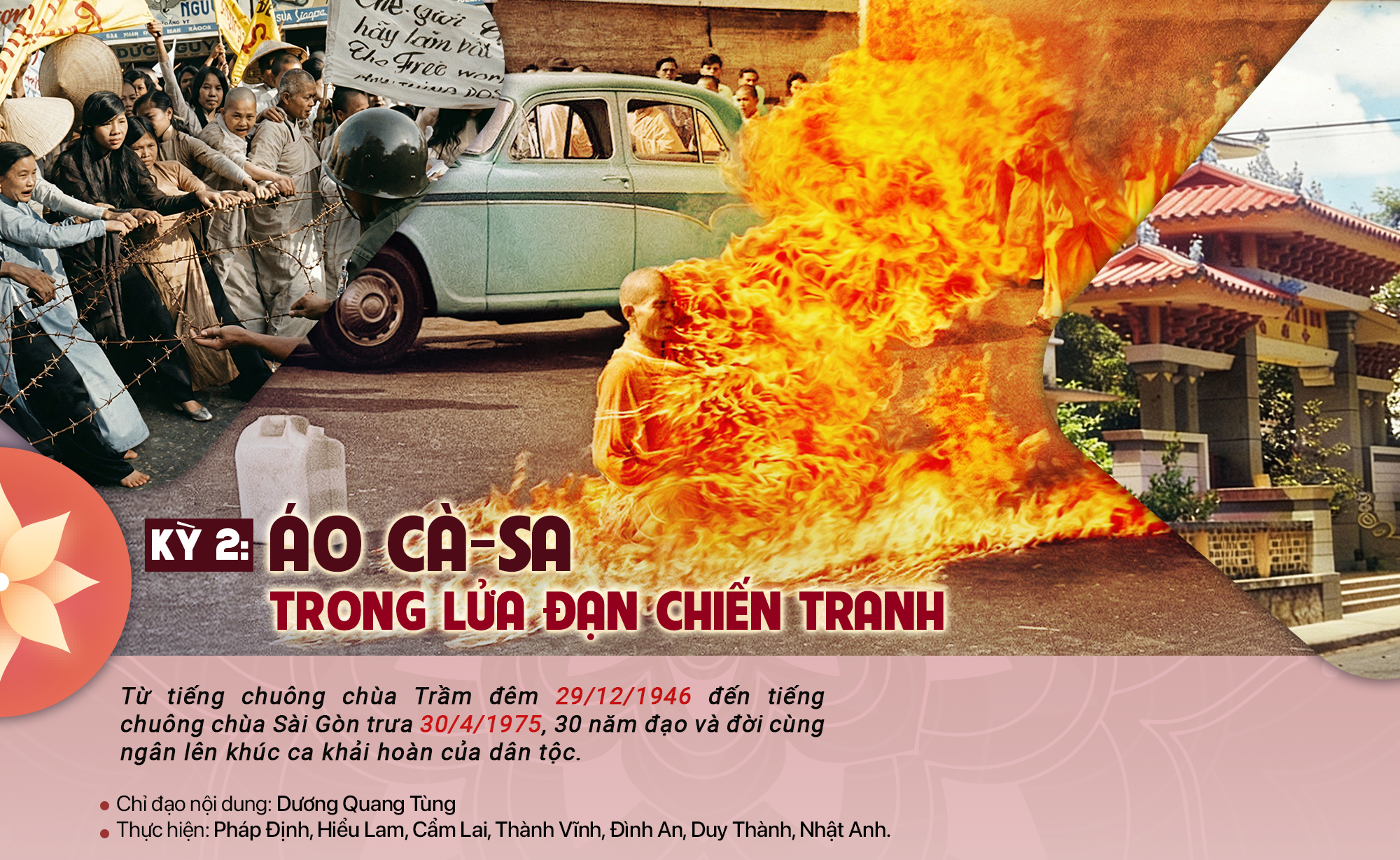
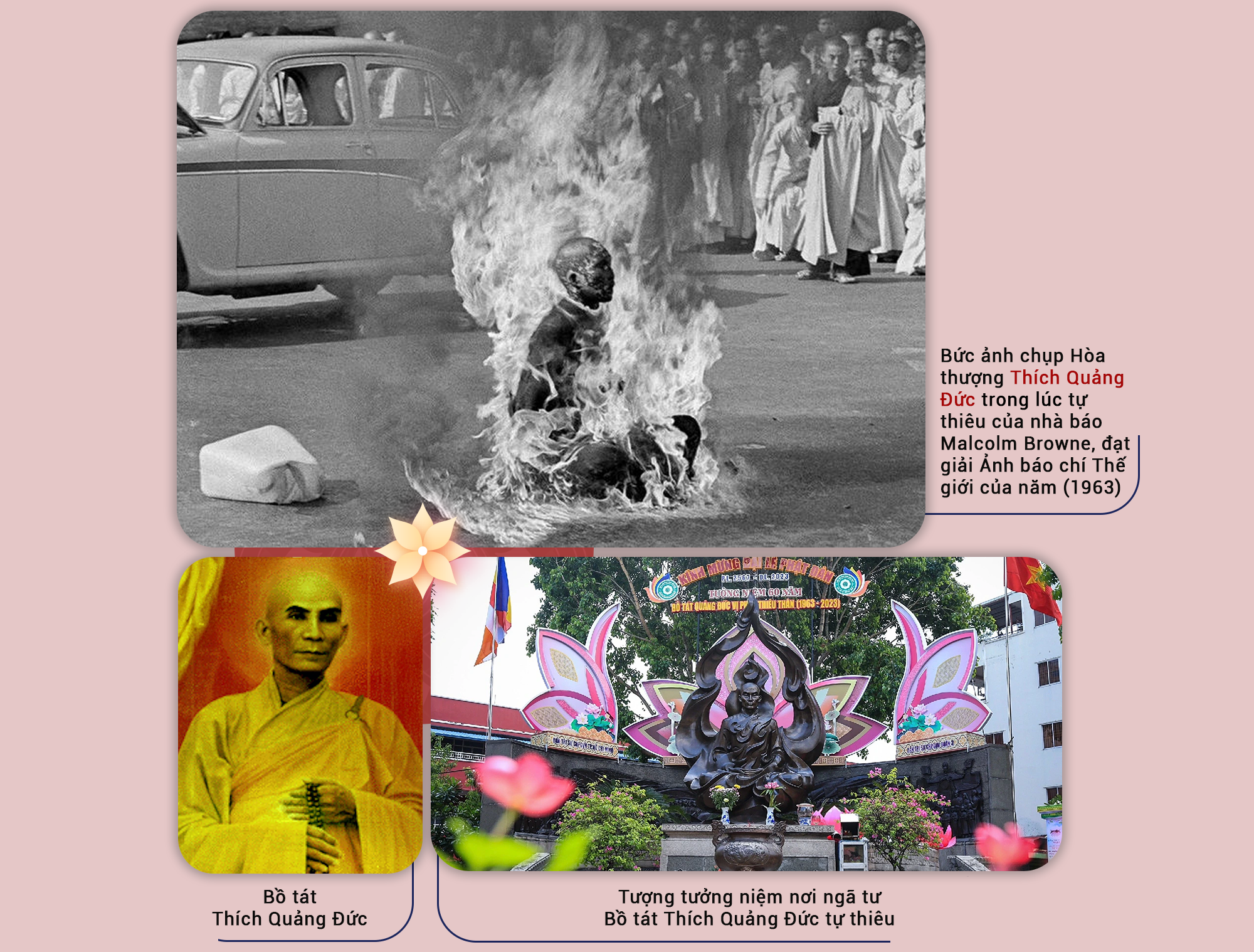
When the tyrannical regime used batons and guns to destroy the Dharma, Venerable Thich Quang Duc used the fire of compassion and vows to illuminate conscience. On the morning of June 11, 1963, at the intersection of Phan Dinh Phung and Le Van Duyet streets (Saigon), he sat cross-legged in the middle of the road, his hands clasped, calmly chanting even as his body was engulfed in flames.
That image traveled the world. It was not a cry of despair, but a bell of awakening. The gasoline fire blazed fiercely, consuming the mortal body, but it could not burn the extraordinary serenity of the true ascetic. He used his own body as a torch. Not to burn anyone, but to illuminate. Not to let hatred arise, but to let love speak.
The image of him sitting serenely amidst the flames shook the world. His death was a wake-up call to humanity's conscience. He used his own body as a torch to dispel the darkness of ignorance, and compassion to overcome brutality. That historic image made the whole world bow in reverence.
Upon receiving the Nobel Peace Prize in 1964, Reverend Martin Luther King Jr. cited the spirit of non-violence of Venerable Thich Quang Duc as a powerful testament that "love and sacrifice can shake even the most powerful oppressive systems."



Alongside that heroic and tragic flame were the resilient "lotus flowers" in the heart of enemy territory. Abbess Huynh Lien, the founder of the Buddhist nun order of the Khất Sĩ sect, with her vow:I vow to dedicate my entire life to the Dharma and to my homeland."The abbess transformed Ngoc Phuong Monastery into a 'fortress' of the political struggle movement."
The people of Saigon called these women the "round-headed army." These women, seemingly frail and unarmed, dared to take to the streets, facing batons, tear gas, and armored vehicles. When the temple was besieged, the abbess erected a "makeshift crematorium," ready to self-immolate for the sake of the Dharma. Amidst the city's flames and smoke, she wrote poetry, hid cadres, and fought for peace. She was the embodiment of a Bodhisattva in everyday life: courageous as a warrior but compassionate as a mother.
After 1975, when the country was reunified, the Venerable Nun continued her journey of helping the poor, opening schools, and caring for orphans. She was not only a true Buddhist nun, but a Bodhisattva in this world, carrying the flame of compassion to illuminate the era.
They say that if Venerable Thich Quang Duc was the flame of tragic heroism, then Huynh Lien was the flame of compassion - smoldering yet undying.
Deep within the heart of Saigon, few would have imagined that tranquil temples were the most resilient strongholds. Tam Bao Temple (on Lo Sieu Street) is a legend in this regard. Here, Venerable Thich Vien Hao and Nun Dieu Thong chanted Buddhist scriptures during the day and operated within the Saigon Special Forces network at night.
Venerable Thich Vien Hao dug a secret tunnel right under the Buddha statue to hide weapons and documents. The sound of chanting became a coded signal for communication, and the smoke of incense concealed important meetings. When he was arrested and exiled to Phu Quoc, the Venerable still used Buddhist teachings to maintain his unwavering loyalty to the revolution and uplift the spirits of his fellow prisoners.
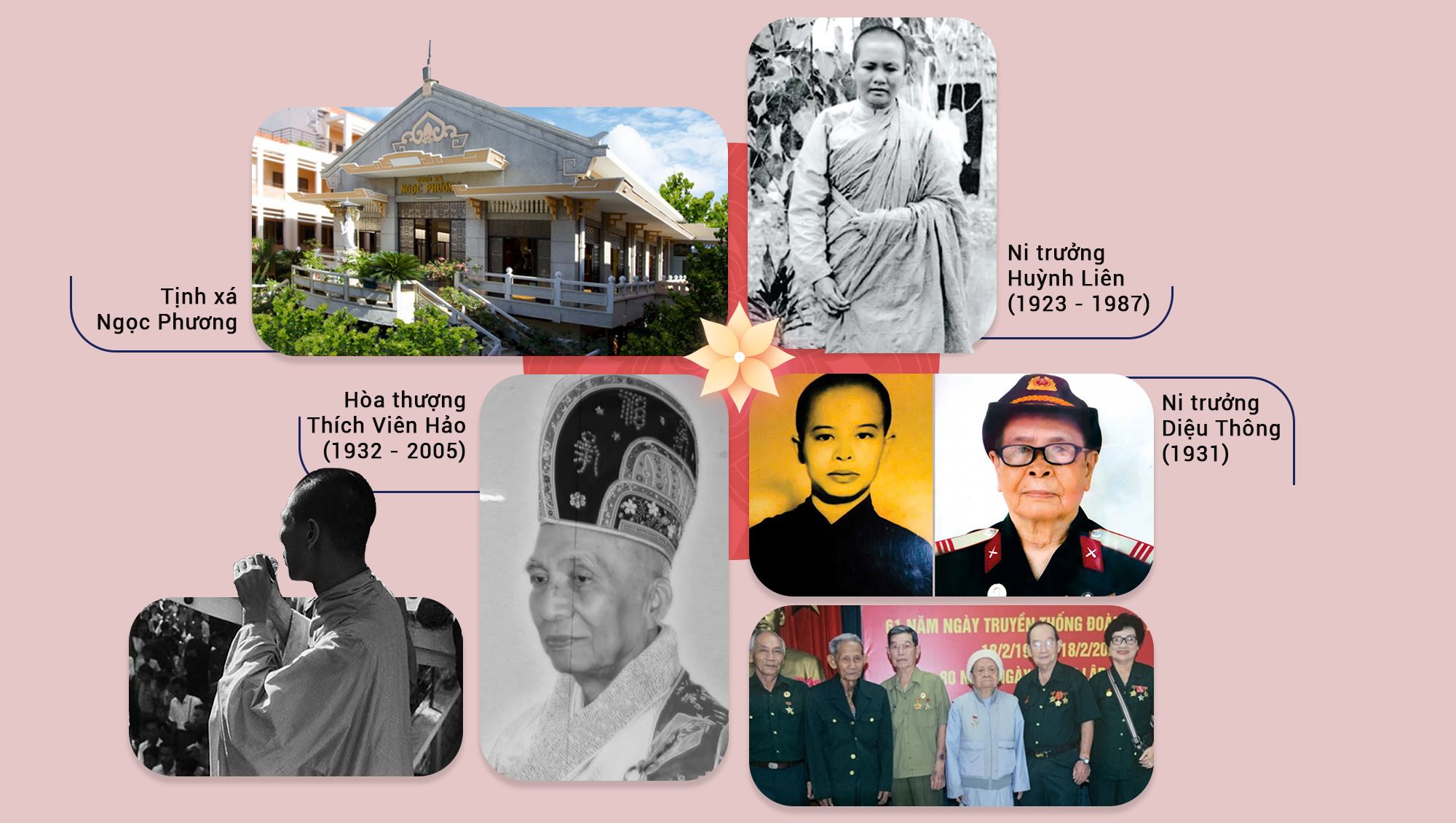
As for Nun Diệu Thông, under the guise of a gentle nun, she transformed her basket of incense and candles into a hiding place for orders for the commando forces. Captured by the enemy and subjected to brutal torture, she had only one answer:All I know is reciting Buddhist prayers and loving my country.".
With peace restored, those "brown-robed soldiers" quietly returned to their religious duties, sweeping leaves in the temple courtyard as if they had never weathered the storm.
Around the same time, many Buddhist monks from the South secretly left the cities and went to the liberated zones. Hundreds of other monks and nuns donned brown robes and practiced the Bodhisattva path in the war zones, becoming revolutionary cadres and soldiers, and participating in the National Liberation Front.
The temples of Pháp Minh (Long An), Tam Bảo (Cần Thơ), and Phật Bửu (Saigon) became meeting places, shelters for wounded soldiers, printing centers for documents, and refuges for cadres. Amidst the smoke and fire, the temple bells mingled with the sounds of gunfire, with the heartbeat of the nation – a place where compassion and patriotism knew no boundaries.
Looking back at the Buddhist movement in South Vietnam during the resistance against the US, it is clear that religion and life were intertwined. From the fiery spirit of Thich Quang Duc, the vows of Huynh Lien, the commando missions… all resonated with one image: Compassion does not stand aside; relieving suffering is saving the nation. Monks and nuns were soldiers, Bodhisattvas who entered the world.


On April 30, 1975, a column of Liberation Army tanks rammed through the gates of the Independence Palace. Amidst the overwhelming joy of the reunification of the country, the bells of Ấn Quang, Xá Lợi, Vĩnh Nghiêm... pagodas rang out simultaneously, harmonizing with the bells of Quán Sứ and Trầm pagodas in the North.
That bell rang out, a perfect punctuation mark marking the end of 30 years of arduous struggle for both the nation and the Buddhist faith. It was an echo of peace, a joyful note heralding a new era: an era of North-South reunification, where religion and life join hands to heal the wounds of war.
The journey from "take off the monk's robe"Going to war until the day of Buddhist reunification (1981) is the most powerful proof of the truth: Vietnamese Buddhism has never had any interests other than the interests of the Fatherland, and has never had any joy separate from the joy of the People."
After reunification, many temples became relief centers, burial places for fallen soldiers, centers for caring for wounded soldiers, and places for raising orphans. Monks and nuns returning from the war zones reunited in joyful harmony.
The movementBuddhism contributes to nation-building.","Buddhism for Peace"It spread throughout the three regions. In Ho Chi Minh City, the Patriotic Buddhist Liaison Committee was established, bringing together 10 major Buddhist sects, laying the foundation for the process of consultation and unification."
On November 8, 1981, in Hanoi, Venerable monks representing 10 Buddhist organizations and sects nationwide met at the Unified Congress of Vietnamese Buddhism, giving birth to the Vietnam Buddhist Sangha in a unified country – a historical event that ended nearly half a century of separate activities. The motto "Buddhism - Nation - Socialism" was affirmed, opening a new era: Buddhism accompanying the nation in the cause of building peace and development.
Thirty years of war, thirty years the temple bells never fell silent. From the solemn sound of the temple bell in 1946 to the sound of temple bells throughout the country in 1975, Vietnamese Buddhism has completed a full cycle of history: from religion to life, from suffering to peace.
With peace restored, that bell still rings – no longer a call to arms, but a prayer for the nation's rebirth, a signal for monks, nuns, Buddhists, and the people to work together to build a stronger, more prosperous, and more beautiful country, as President Ho Chi Minh wished during his lifetime.
The companionship of Vietnamese Buddhism with the revolution – its spirit of engagement with the world – was further affirmed when the revolutionary government was formed and operated. When the gunfire temporarily subsided to make way for the building of the new regime, many Buddhist dignitaries continued to step forward, bringing the engaged spirit of Buddhism into the very central organs of the new State.
A particularly significant historical milestone was the presence of Venerable Thich Mat The in the First National Assembly (1946) - the first National Assembly of the Democratic Republic of Vietnam. The fact that a high-ranking member of the Vietnamese Buddhist Sangha assumed this important responsibility from the very beginning of independence shows that Buddhism did not stand outside the revolutionary government, but had stepped directly into the center of national political life.
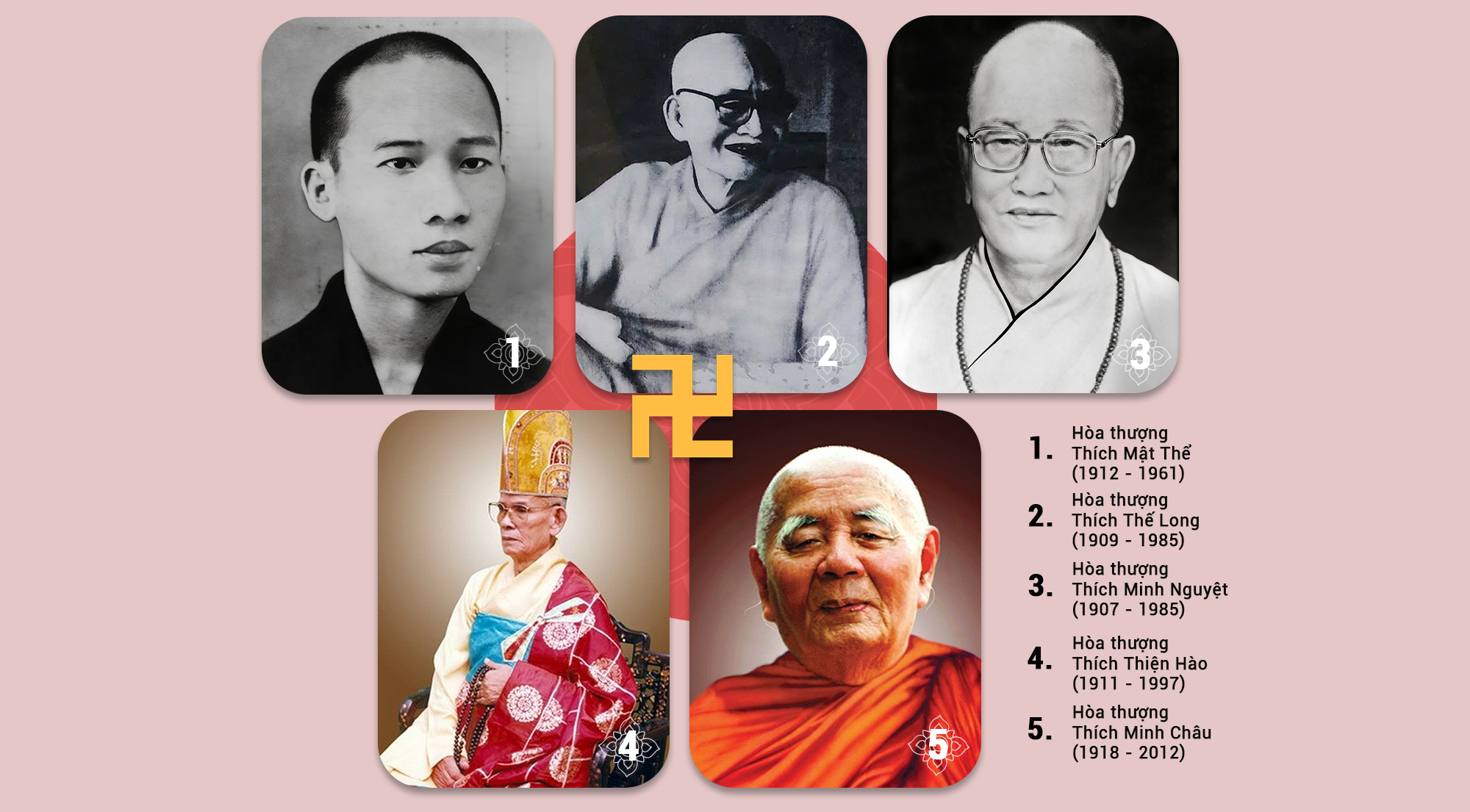
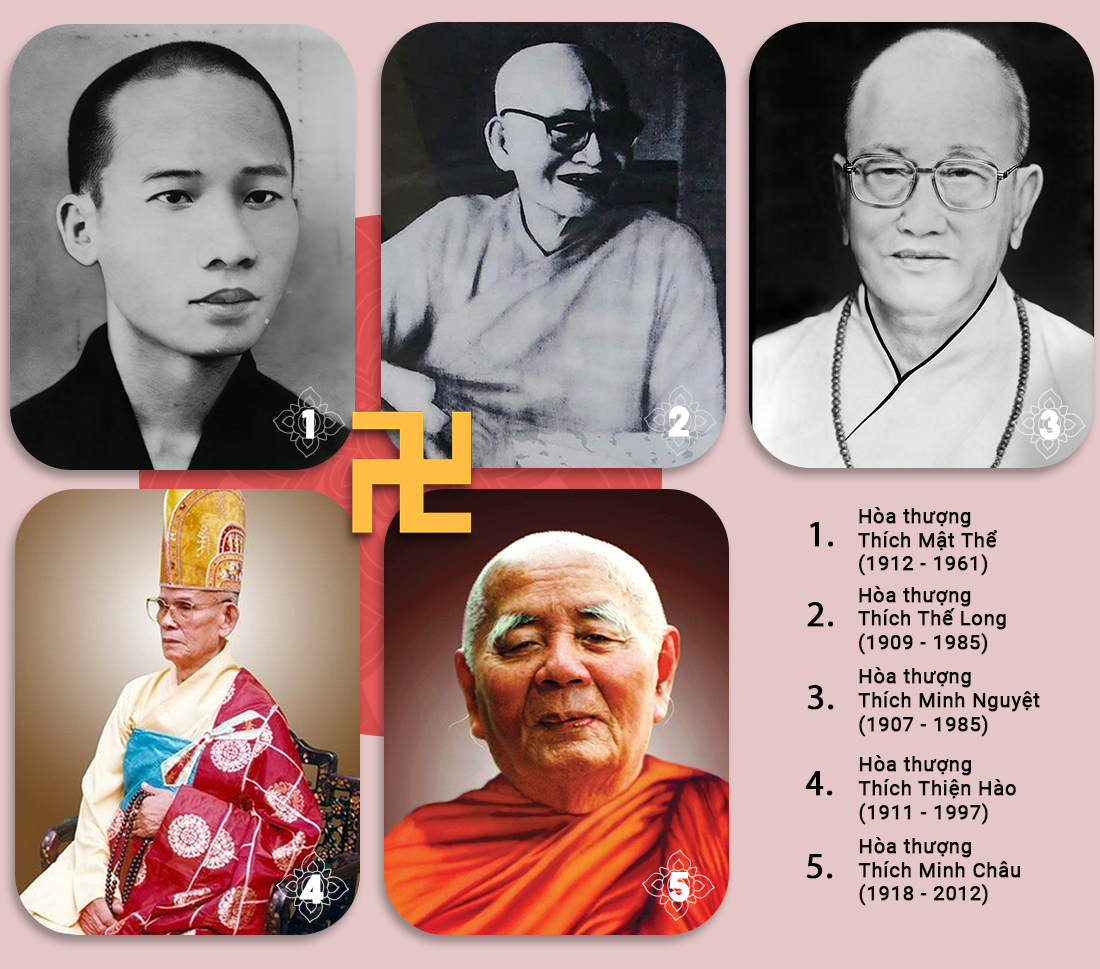
During the years of resistance against the French, the Buddhist National Salvation system was formed and operated within the Viet Minh Front, then the Lien Viet Front, and developed particularly strongly in Southern Vietnam. Venerable Thich Minh Nguyet was one of the prominent figures, both leading the Buddhist National Salvation movement in Southern Vietnam and participating in the structures of the Front and the resistance government in My Tho, Saigon - Gia Dinh.
During the war against the US, the engaged spirit of Buddhism continued to expand. Many monks from the South left urban areas to join the resistance zones and participate in the National Liberation Front of South Vietnam. Some were introduced to participate in the agencies of the Provisional Revolutionary Government of the Republic of South Vietnam after 1969, contributing to the appearance of a revolutionary government with the presence of patriotic religions.
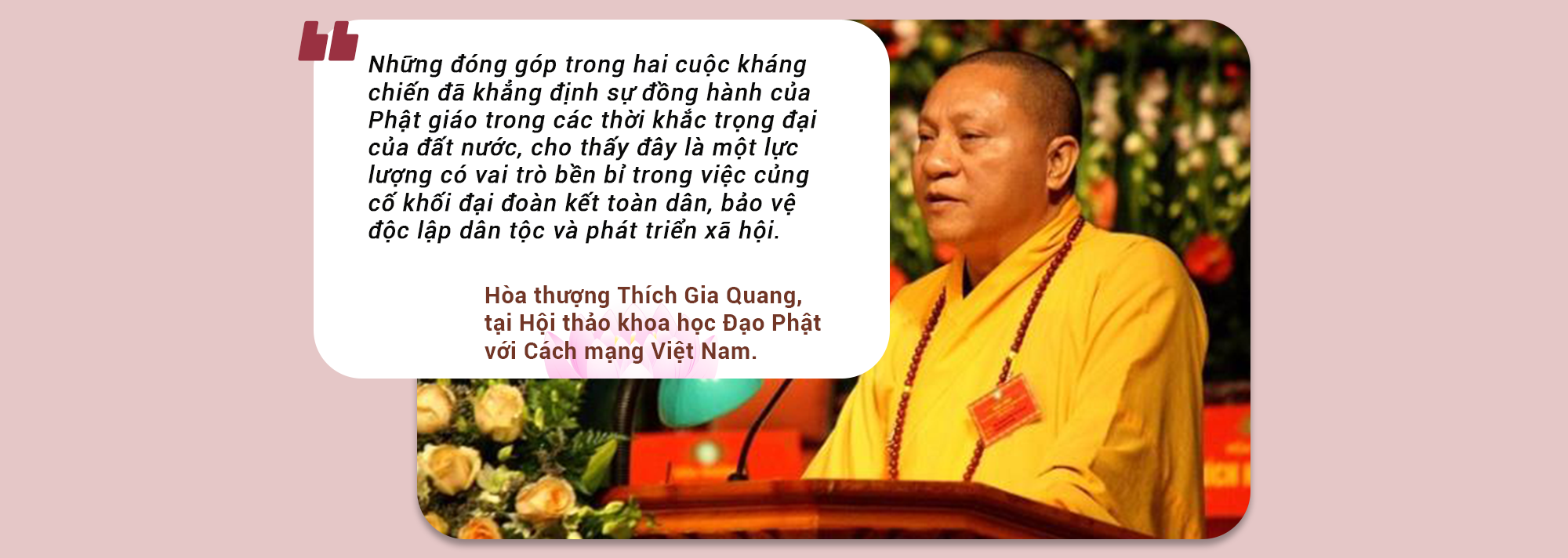
The engaged spirit of Southern Buddhism is clearly demonstrated in the case of Venerable Thich Thien Hao. From a monk active in the patriotic Buddhist movement, he left the city for the resistance zone, holding the position of Member of the Presidium of the Central Committee of the National Front.
After 1969, when the Provisional Revolutionary Government of the Republic of South Vietnam was established, the Venerable Monk was invited to join the Government Advisory Council. After the reunification of the country, he continued to be a Member of the National Assembly in the 6th term and a member of the Standing Committee of the National Assembly, demonstrating the continuation of the spirit of engagement from the resistance war to nation-building in peacetime.
After the reunification of the country, the partnership between Buddhism and the nation did not stop at the spirit of service, but was gradually institutionalized in parliamentary life. Many Buddhist clergy, through their prestige, virtue, and dedication to the community, were trusted by voters and elected to the National Assembly.
Among them, Venerable Thich The Long not only won a seat in the 7th National Assembly but was also entrusted with the important responsibility of Vice Chairman of the National Assembly, directly participating in leading the highest state power body. Following this same trend, Venerable Thich Minh Chau left his mark by continuously participating in four National Assembly terms (7th, 8th, 9th, and 10th), serving as a vivid testament to the long-lasting and responsible presence of Buddhism in the nation-building process.
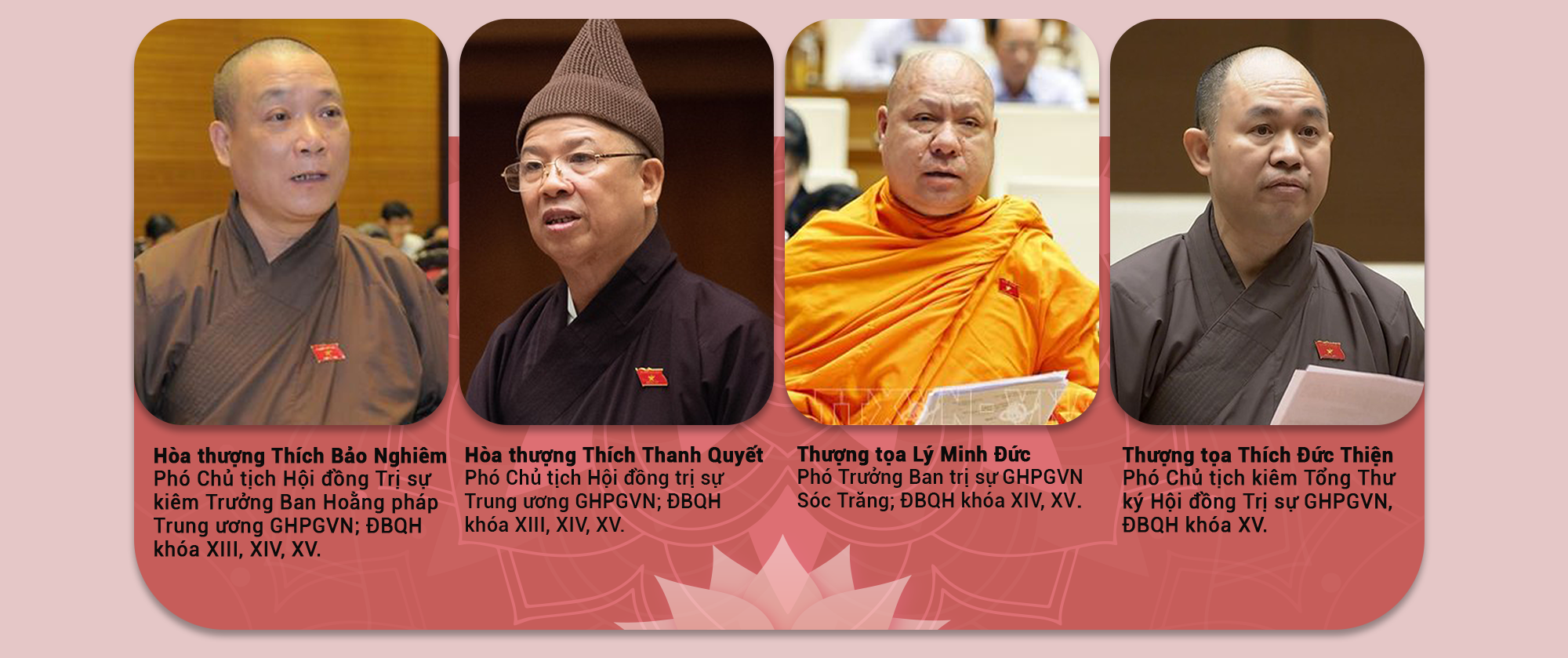
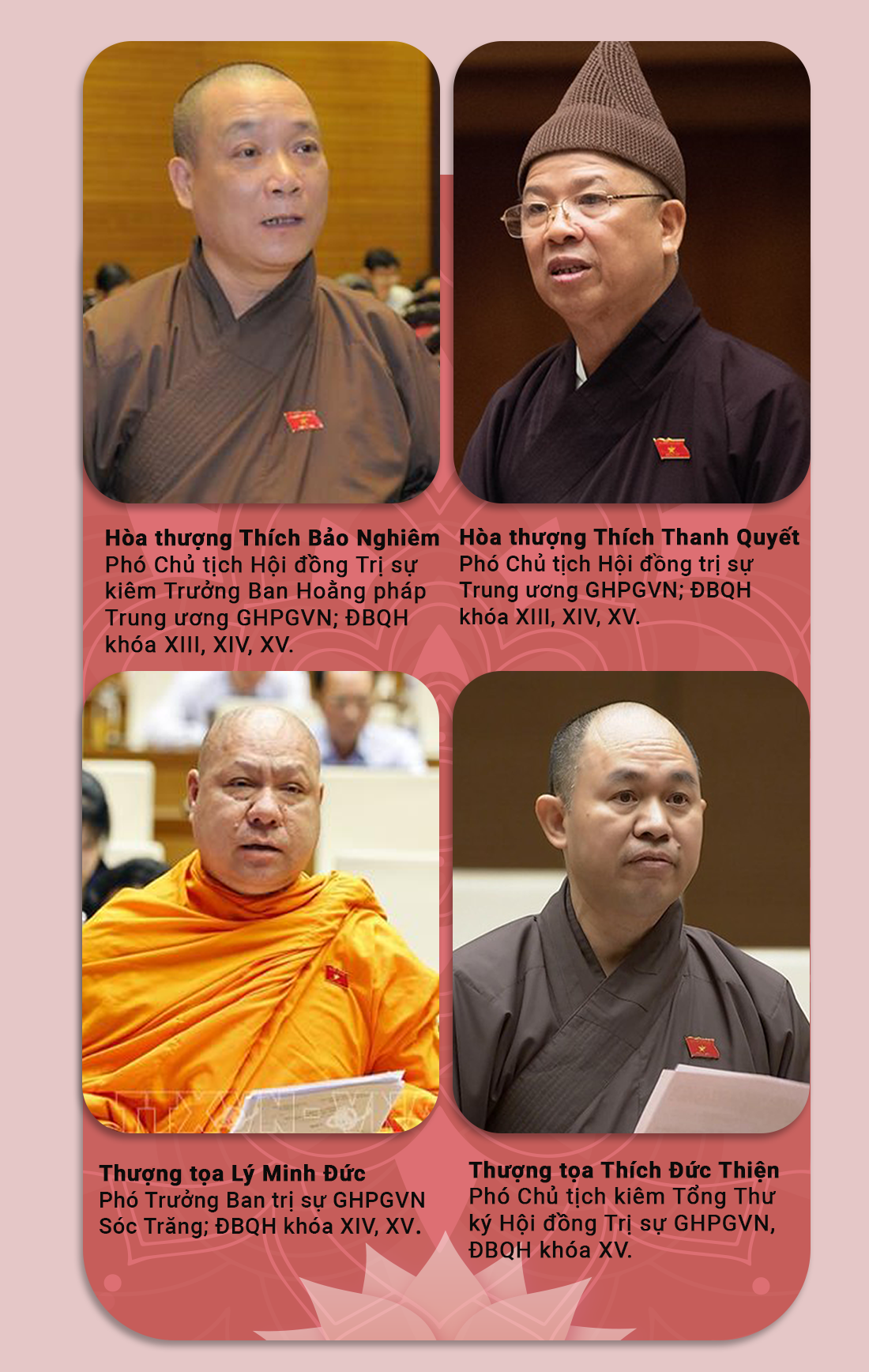
At the 4th National Assembly, that tradition continued naturally and persistently. Four Venerable Monks and Senior Monks are currently holding important responsibilities in the Vietnam Buddhist Sangha while also serving as National Assembly representatives, directly participating in lawmaking, exercising supreme oversight, and conveying the thoughts and aspirations of voters to the parliament, contributing to deepening the bond between Buddhism and the nation in the new context.
From the National Assembly of independence in 1946 to the parliamentary arena of today's integration era, this presence demonstrates a continuous historical thread: Vietnamese Buddhism not only accompanied the revolution during the war, but also participated with the revolution in building institutions and governing the country in peacetime.
 Comment