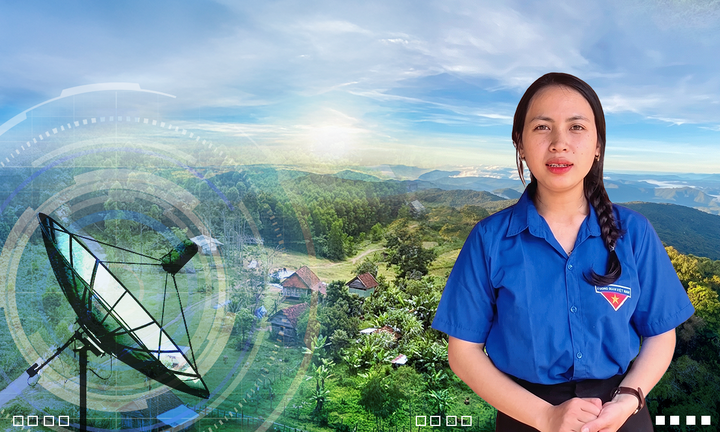
In O2 village (Gia Lai), despite having to climb trees to get a signal, the youth union members persevered in eradicating digital illiteracy, laying the foundation for a sustainable "green operating system" for this disadvantaged region.
At Tam Quan fishing port (Gia Lai), the "Popular Education" class for union members takes place on the ship's deck, helping fishermen become proficient in technology and protect themselves from online scams.
Under the roof of the communal house in K3 village (Gia Lai), youth union members patiently guide the Ba Na people on how to use smartphones, opening a meaningful "Digital Literacy Class" in the heart of the mountains.
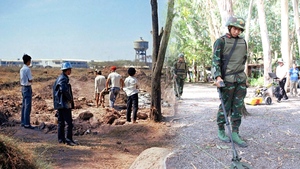
Based on witness accounts, declassified photos, archival documents, and radar scan results, Ho Chi Minh City is preparing to excavate an area suspected of containing a mass grave in Le Thi Rieng Park.
Completely eradicating football betting is as difficult as "plugging a hole in a dike," yet people easily fall for the lure of attractive odds during the World Cup season.
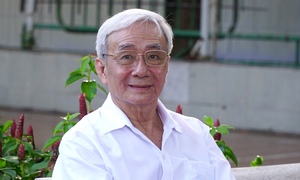
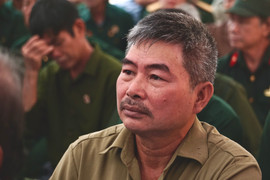
On a morning in 1968, the 12-year-old boy stood silently by Chi Hoa Cemetery, watching dozens of soldiers' bodies being brought in for burial. That memory has stayed with him for 58 years.
From "provincial rich kids" to "Saigon playboys," they all share the same fate: debt, loss of homes, broken families, and ultimately, losing everything because of the World Cup "trap."
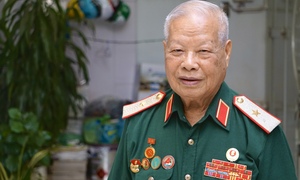
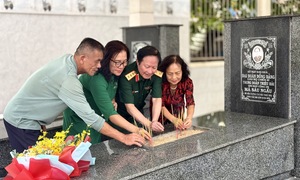
Having been pulled from his grave in 1966, Major General Nguyen Ngoc Doanh spent the rest of his life quietly searching for and bringing his comrades back to their homeland.
From the night Aunt Six handed the map guiding the troops into Saigon, General Nguyen Huy Hieu maintained that bond of gratitude for half a century through his April visits.
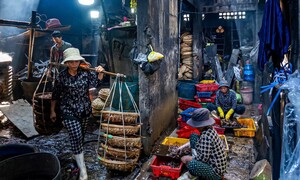
From fish drying yards to community centers in the vast forests, the journey towards gender equality begins with economic autonomy and women's voices within the family.
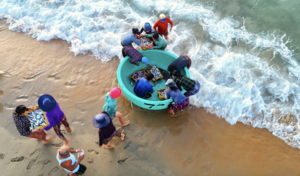
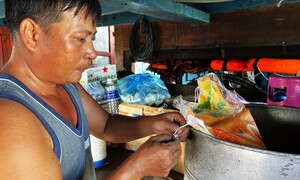
As livelihoods from the sea become unstable and the role of the family's breadwinner wavers, many fishing families have to redefine "power" and responsibilities within their homes.
In fishing villages in central Vietnam, when the men go out to sea, the women manage the income and the home, but economic power doesn't always rest with them.
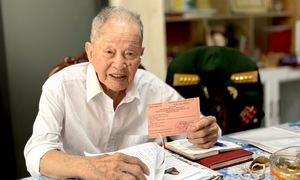
Eighty years ago, in the first spring of the nation's independence, an 18-year-old boy cast his first vote – thus beginning the revolutionary journey of a legendary life.
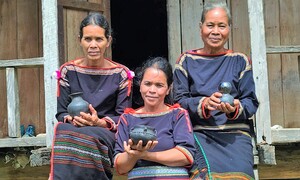
Nestled quietly beneath the vast Chư Yang Sin forest, the Dơng Bắk village is the last remaining "sacred site" of the ancient M'Nông pottery tradition, where clay is awakened by skilled hands, without the need for a potter's wheel.
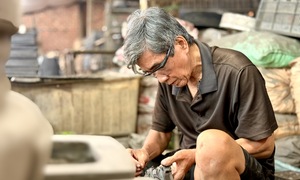
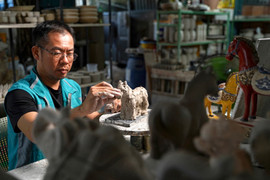
Amidst the rise of plastic products, artisans quietly keep the flame alive, molding piggy banks from clay and memories, ensuring that an old craft remains in the heart of Ho Chi Minh City.
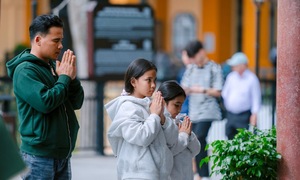
At the end of the year, a stream of people quietly ascends the temple on the summit of Mount Ba Den not only to pray, but also to learn how to express gratitude after a year of many upheavals.
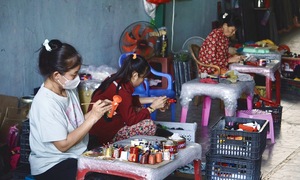
In December, amidst the scent of fresh wood and drying paint, the lacquerware village of Tuong Binh Hiep enters its busiest season of the year, with Tet orders piling up one after another.
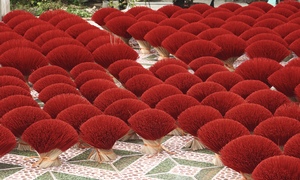
Tet arrives early in the incense-making village on the outskirts of Ho Chi Minh City, where bundles of bright red incense sticks dry in the sun, and artisans quietly preserve their craft, sending their fragrance on the wind to herald the arrival of spring.
In the days leading up to Tet (Lunar New Year), the An Hoi bronze casting village in Ho Chi Minh City is ablaze with activity day and night, where the rhythmic hammering and the scent of smoke signal that spring is just around the corner.
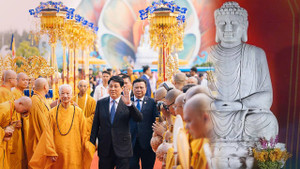
Beneath the moss-covered roofs of ancient temples or amidst the dynamic digital landscape of today, Vietnamese Buddhism maintains an unbroken thread: protecting the nation and ensuring the well-being of its people.
In an interview with VTC News, Venerable Thich Duc Thien - Vice Chairman of the Executive Council and General Secretary of the Vietnam Buddhist Sangha - shared his insights on the path of Vietnamese Buddhism's engagement with the world and its journey alongside the nation in this era of progress.
As the digital space becomes an inseparable part of social life, Vietnamese Buddhism is entering a new era with a spirit of engagement, adaptation, and leadership, to continue its mission of protecting the nation and ensuring the well-being of the people in the modern context.
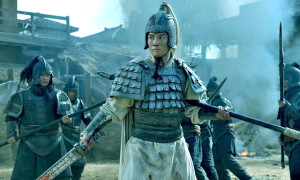
Zhuge Liang was an exceptionally talented man, skilled in governing and managing the country, but as Prime Minister, his poor administrative methods ultimately cost him his life.
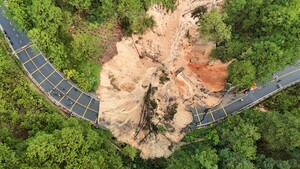
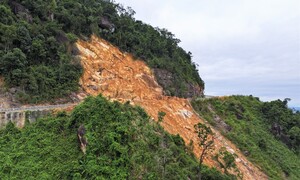
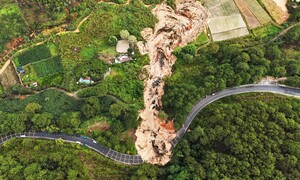
Landslides are no longer isolated incidents but cumulative consequences; the challenge is no longer simply patching the road but saving the pass through long-term planning, engineering, and risk management.
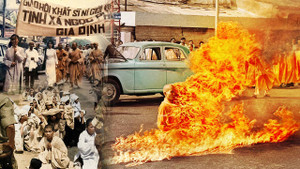
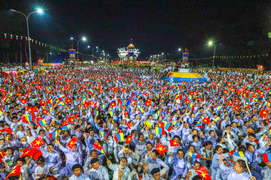
From the sound of the bells of Tram Pagoda on the night of December 19, 1946, to the sound of the bells of Saigon Pagoda on the afternoon of April 30, 1975, 30 years of religious and secular life together resonated in the triumphant song of the nation.
From the temples where the awakening bells resounded, the wellspring of "protecting the nation and ensuring the people's well-being" flowed silently, then met the ideal of national liberation and burst forth powerfully.
Weak soil, sparse forests, extreme rainfall, eroded slopes, heavy vehicles, construction projects clinging to mountain passes, climate change, and slow planning all converge to make landslides no longer just accidents.
With landslides becoming a constant threat, those living and making a living at the foot of the mountain passes in Lam Dong province enter the rainy season with unprecedented anxiety.
Landslides on mountain passes in Khanh Hoa and Lam Dong provinces are no longer a seasonal phenomenon, but have become a permanent occurrence, as many mountain slopes have begun to "flow".
In the final days of the year, tourists flock to Ba Den Mountain to experience its unique religious atmosphere, where the story of the sacred mountain has become an integral part of the culture.
Depicted by Luo Guanzhong in Romance of the Three Kingdoms as a general with extraordinary martial skills, in actual history, Zhao Zilong was a talented general but not an invincible superhuman.
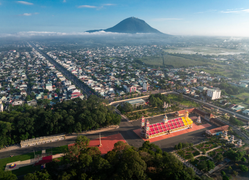
Located in the border region, the Tay Ninh Holy See stands as a living heritage, where Eastern and Western architecture blend seamlessly with centuries-old traditions, preserved with the support of the State.
Veteran Luong Manh Hung, one of the commanders at the time of that battle, recounted and explained why 39 soldiers died, refuting public opinion about the commander's negligence.
In the final days of the year, Lai Thieu pottery village is bustling with the cultural spirit of a centuries-old craft, where visitors can touch the clay, the fire, and the hands of the artisans.
"Digital literacy programs for the masses" not only eliminate skills illiteracy but also ignite a desire to get rich in their own homeland, transforming farmers and fishermen into "digital entrepreneurs."
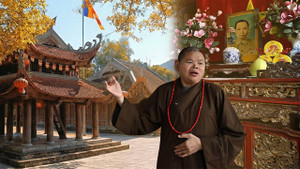
The Party's ideals have illuminated the path of virtuous faith, allowing spirituality and worldly life to harmonize in the aspiration to serve humanity.





 Hotline: 0855.911.911
  RSS
RSS