


 Hotline: 0855.911.911
  RSS
RSS 





For a long time, the Aralia plant has been known as a traditional Vietnamese medicine, with the leaves and roots being the main parts used. This plant is easy to grow but highly effective, earning it the nickname "ginseng of the poor." People usually only know about the roots and leaves of Aralia, so the question "Does the Aralia plant bear fruit?" might surprise many, as many have never even considered this possibility.
Does the Gynura procumbens plant bear fruit?
In fact, the Aralia plant can flower and bear fruit, but its fruit is not common and therefore little known. As a result, many people have never seen the fruit of this plant or do not recognize its shape.
The flowers of the Aralia plant usually bloom in summer, are white or pale purple, and grow in small clusters at the ends of branches. After the flowers wither, the Aralia plant bears fruit. The Aralia fruit is small, spherical or oval, and turns black or dark purple when ripe. The fruit of the Aralia plant is not as large or prominent as other fruits; each fruit usually contains a small seed inside.
The fruit of the Aralia plant is not the part that receives much attention or is used in traditional medicine. Instead, the leaves and roots of the plant contain many important medicinal properties and are widely used. Therefore, few people pay attention to or know about the flowers and fruit of the Aralia plant.
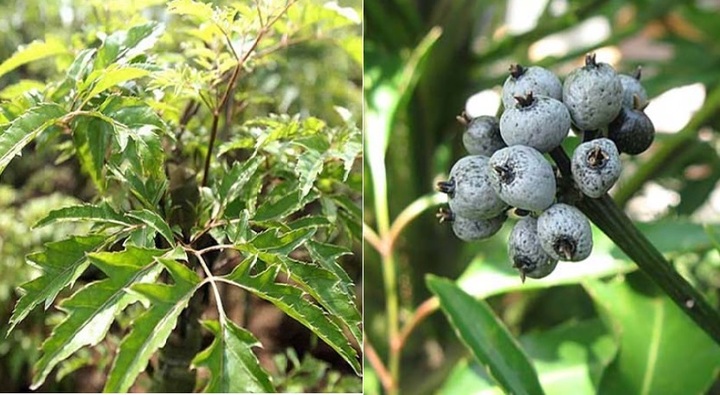
Does the Gynura procumbens plant bear fruit? This question stumps many people.
Overview of the Gynura procumbens plant
Polyscias Fruticosa, also known as Aralia, originates from Southeast Asia. Vietnamese people often plant Aralia in their home gardens not only for its aesthetic value but also for the health benefits it offers.
In traditional Vietnamese medicine, Hai Thuong Lan Ong Le Huu Trac recommended using roasted and buried roots of the Aralia plant, brewed into a decoction, for women to drink after childbirth to relieve uterine pain and increase milk production for breastfeeding.
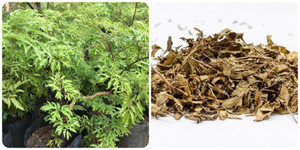
The leaves of the Aralia plant have a nutty, bitter, fragrant, and slightly cooling taste. According to Dr. Bui Dac Sang, a general practitioner at the Vietnam Academy of Science and Technology and the Hanoi Traditional Medicine Association, Aralia leaves have the effects of cooling the blood, detoxifying, eliminating foul odors, promoting urination, and relieving itching. Aralia leaves are used in remedies for allergies, coughing up blood, and dysentery.
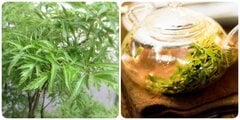
Additionally, the leaves of the Aralia plant are often used in the form of decoctions, tinctures, or dried powder to treat coughs, breast pain, blocked milk ducts, promote lactation, treat dysentery, and as a tonic to treat physical weakness.
People use the Aralia plant as a vegetable, a spice, and a remedy for headaches. In many places, Aralia leaves are used to cook soup with meat or fish to nourish postpartum women, the elderly, or those recovering from illness.
In an article on VnExpressAccording to Ms. Nguyen Thi Lai, the roots of the Aralia plant have only been studied and their nutritional benefits confirmed in recent years, while the leaves and stems have long been used as traditional medicine.
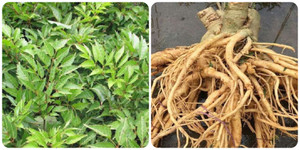
In terms of chemical and nutritional composition, the root of the Aralia plant contains 0,3% glucosides, alkaloids, saponins, tannins, 13 types of amino acids, and vitamin B1. Aralia also contains several active compounds with properties similar to ginseng.
How to plant and care for the Gynura procumbens plant.
Panax notoginseng is a small woody plant, which can grow from 1 to 2 meters tall. It is a species that can grow well in many different soil types and requires little care. A notable characteristic of Panax notoginseng is its deep and widespread root system, which helps the plant absorb nutrients effectively from the soil.
The Aralia plant can be grown from seeds or cuttings. For optimal growth, it should be planted in a location with full sunlight and well-drained soil. Regular fertilization will promote vigorous growth.
This plant doesn't require much care. It needs regular watering, but avoid waterlogging. To keep it healthy, regularly prune away dry and diseased leaves and branches. If grown in a pot, change the soil and fertilize periodically to ensure the plant receives adequate nutrition.
 Comment