


 Hotline: 0855.911.911
  RSS
RSS 





At the conference on disseminating and implementing tasks and solutions for digital transformation in 2022, held in Tay Ninh province, Mr. Nguyen Phu Tien - Deputy Director of the National Digital Transformation Department, Ministry of Information and Communications, assessed that Tay Ninh is one of the leading provinces in focusing on implementing digital transformation.
"A prime example of leading the digital transformation in Tay Ninh province is the application used for COVID-19 prevention and control, as well as software for vaccination and test monitoring for the people.", Mr. Tien shared.
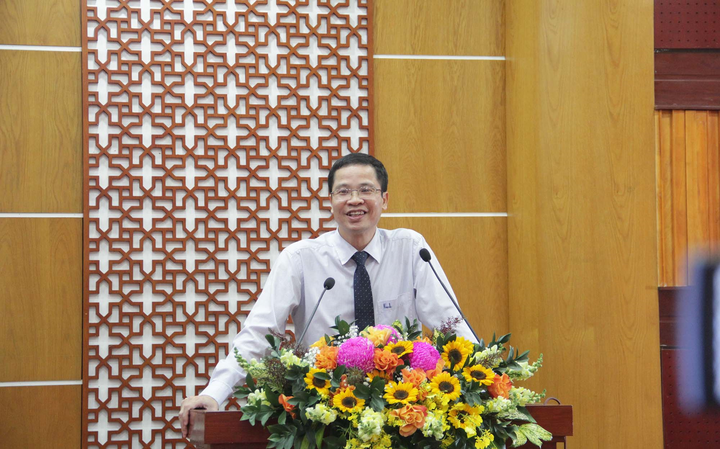
Mr. Nguyen Phu Tien - Deputy Director of the National Digital Transformation Department, Ministry of Information and Communications.
"Leaders at all levels must truly get involved, showing determination and decisive leadership; implementation should be cautious, starting on a small scale, and only expanding the model after achieving success and learning from experience.", Mr. Tien said.
According to Mr. Nguyen Manh Hung, Deputy Secretary of the Tay Ninh Provincial Party Committee, digital transformation is a commitment of the provincial Party Committee and the entire political system of the province.
"2020 can be considered the year of raising awareness about digital transformation; 2021 was the year of beginning implementation and experimentation with digital transformation in the context of the pandemic; and 2022 was the year of accelerating digital transformation in a people-centered, nationwide, and comprehensive manner. From now until 2025 will be a period of accelerated digital transformation with specific implementation actions for each industry, sector, and locality."The Deputy Secretary of the Tay Ninh Provincial Party Committee said.
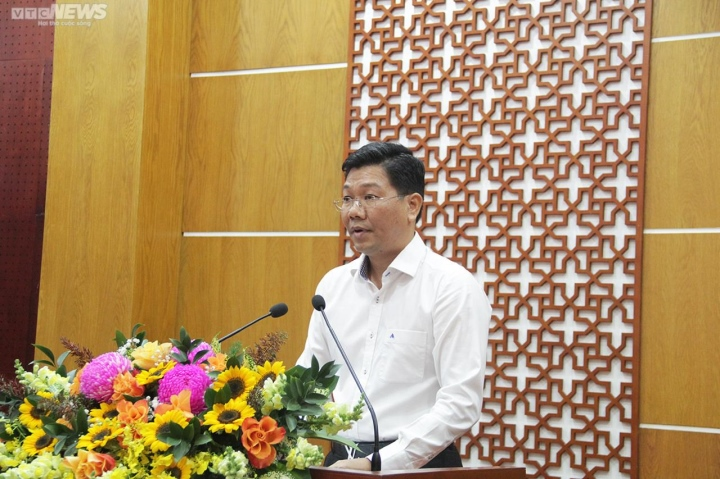
Mr. Nguyen Manh Hung, Deputy Secretary of the Tay Ninh Provincial Party Committee.
According to Mr. Hung, in order for digital transformation to achieve high results, the Provincial Party Standing Committee requires Party committees, governments, departments, and mass organizations at all levels in the province to organize practical digital transformation activities in their respective areas and localities.
In the province, various shared platforms have been implemented to date, including: an information system for handling administrative procedures, an electronic document management and operational system, a paperless meeting system; a data interoperability system from the central government to the province, provincial information systems, a network security monitoring system connected to the national information security system, and an intelligent monitoring and operation system...
Tay Ninh province has "Tay Ninh Smart," a shared application for the entire political system, citizens, and businesses, which currently has over 132.000 registered accounts.
To achieve high results in digital transformation, each agency and organization needs to maximize opportunities for development, identify a roadmap early, and accelerate the digital transformation process, which is of vital importance. At the same time, this is an opportunity to develop industries, sectors, and localities, and improve the province's ranking.
"Press and media agencies are actively coordinating with functional units to strengthen information and communication efforts, contributing to raising awareness among officials, workers, and the public about the importance of digital transformation.", Mr. Hung emphasized.
Associate Professor Thoai Nam, Director of the Institute of Advanced Interdisciplinary Science and Technology, Ho Chi Minh City University of Technology, Vietnam National University Ho Chi Minh City, believes that adopting a new development direction for Vietnamese agriculture is necessary for various units and localities. He hopes that Tay Ninh will adopt this new approach.
"This will bring a breath of fresh air, a new revolution to the development of the province's agricultural sector.", Mr. Nam said.
According to Associate Professor Thoai Nam, the current trend of scientific and technological development and innovation is being applied to many fields, including agriculture. Countries from Europe to Asia now need to fundamentally change their agricultural sector, one of which is to adopt the smart village model.
Smart villages are the application of scientific and technological advancements, especially digital technology and innovation, to address and solve local problems, so that the local community can develop sustainably based on its strengths, connect with the community, apply advanced science and technology, and solve major issues such as climate change... aiming for prosperity in rural areas.
 Comment