


 Hotline: 0855.911.911
  RSS
RSS 





Mid-Autumn Festival is a traditional holiday closely associated with the spiritual life of the Vietnamese people. It's not only a time for children to excitedly carry lanterns and enjoy festive treats, but also a time for family reunions, where adults temporarily set aside their work to gather together. feast, enjoying the moon and exchanging love. When full moon of the 8th lunar month As the streets are illuminated with lanterns, they remind everyone of a time-honored cultural tradition. But when did the Mid-Autumn Festival originate?
The origins of the Mid-Autumn Festival
According to archaeologists, the moon-gazing festival has existed for thousands of years. On the Ngoc Lu bronze drum, dating back approximately 2.500 years, images of people singing, dancing, and celebrating under the bright autumn moon have been found. This evidence shows that customs associated with the full moon were deeply ingrained in the lives of rice-farming communities.
During the Ly Dynasty, the Mid-Autumn Festival was officially celebrated in the capital city of Thang Long. An inscription at Doi Pagoda (dated 1121) records the organization of festivities such as boat races, water puppetry, and lantern processions under the full moon. During the Le-Trinh period, this festival became even more extravagant, especially in the Lord's palace, reflecting prosperity and a rich spiritual life.
For farmers, the Mid-Autumn Festival is also linked to the production cycle. The eighth lunar month is a time when the weather is mild and the harvest is complete. Therefore, the Mid-Autumn Festival is also an occasion to give thanks to heaven and earth, celebrate a bountiful harvest, and pray for favorable weather in the coming year.
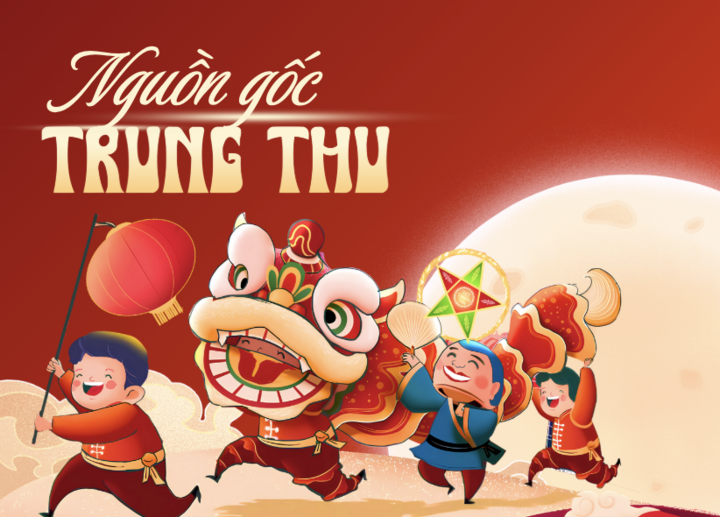
When did the Mid-Autumn Festival originate? (Photo: Nhat Thuy)
In Vietnamese folklore, the origin of the Mid-Autumn Festival is also explained by the story of Cuoi sitting under a banyan tree. The story tells that Cuoi, a poor woodcutter, accidentally found a magical medicinal plant capable of bringing the dead back to life. Thanks to this plant, he saved many people's lives.
One day, while Cuoi was away, his wife accidentally watered the medicinal plant with dirty water. The plant was uprooted and flew straight up into the sky. Cuoi, panicked, ran to grab it, but was eventually pulled all the way to the moon. Since then, folklore has believed that the image of the banyan tree and the figure of Cuoi are still reflected on the moon every full moon night.
This very story gave rise to the Vietnamese custom of "gazing at the moon and breaking the feast," where children often look up at the bright moon to find the figure of Cuoi, a memory associated with sweet childhood moments.
Not only in Vietnam, but the Chinese also have many legends explaining the origin of the Mid-Autumn Festival. One of them is the story of Hou Yi and Chang'e. Hou Yi shot down nine of the ten suns, saving humanity from a drought. He was granted an elixir of immortality, but due to unforeseen circumstances, his wife, Chang'e, drank the elixir and ascended to the moon. Since then, whenever Hou Yi misses his wife, he offers sacrifices on the brightest moonlit night, which is also the 15th day of the 8th lunar month.
Another legend is associated with Emperor Tang Xuanzong's love for Yang Guifei. After the An Lushan Rebellion, the emperor was forced to order the execution of his beloved concubine. In their grief, the people believed that fairies allowed the emperor to see her again on the night of the full moon. Since then, the full moon of the eighth lunar month has become a day for the emperor and the people to celebrate the moon festival, carrying lanterns and admiring the moon.
These stories, whether from Vietnam or China, show that the Mid-Autumn Festival is closely associated with feelings and beliefs in family reunion.
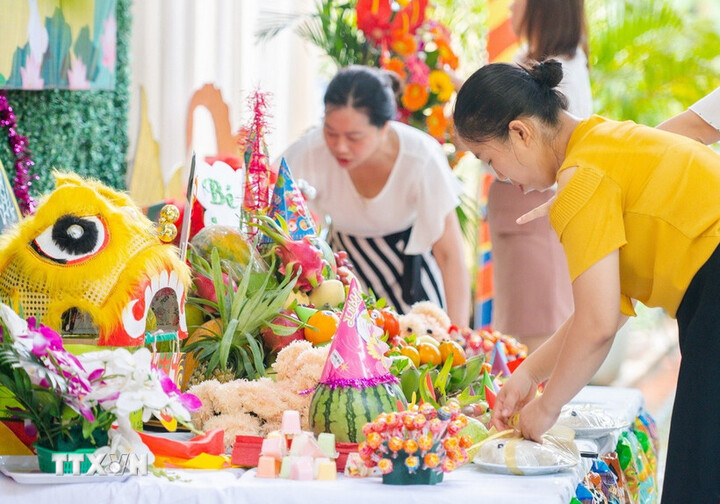
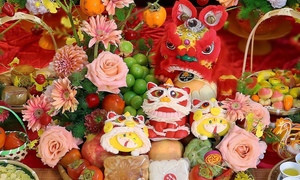
Teachers at a kindergarten prepare a Mid-Autumn Festival feast. (Photo: VNA)
The meaning of the Mid-Autumn Festival
Although historical records don't clearly state when the Mid-Autumn Festival originated in Vietnam, over the centuries, this holiday has become an indispensable part of people's lives. Vietnamese people often call it "Children's Festival," because most of the activities on this day are geared towards children.
On the full moon night, children eagerly carry lanterns in processions, share feasts with friends, enjoy lion dances, play with clay figurines, or sing traditional folk songs. These are fun folk games that help children preserve simple childhood memories.
Meanwhile, adults find joy in family reunion during the Mid-Autumn Festival. They gather with their families, enjoying mooncakes and sticky rice cakes together, sipping green tea under the moonlight. The cakes exchanged are not just gifts, but also wishes for good luck, happiness, and prosperity.
The most iconic symbol of the Mid-Autumn Festival is the full moon. The full moon symbolizes abundance, prosperity, and reunion. Looking at the moon, people remember loved ones far from home, expressing their feelings and hopes for a reunion.
In many rural areas, the Mid-Autumn Festival is also distinctly communal. People prepare a shared feast, and children in the village carry lanterns and perform lion dances together, creating a festive atmosphere that fosters a sense of community and neighborly spirit.
The Mid-Autumn Festival is also a festival of nature. The full moon of the eighth lunar month is a time when the sky is clear and the moon shines brightly. Ancient people believed this was an auspicious time to give thanks to heaven and earth, and to pray for favorable weather and a bountiful harvest. Therefore, the Mid-Autumn Festival holds both spiritual value and is closely intertwined with the rhythm of agricultural production.
The Mid-Autumn Festival is not just about children's joy with star-shaped lanterns and frog drums; it's also a holiday with profound meaning, from mystical legends and historical traces to deep humanistic values. It's a day for adults to remember their cultural roots, for children to fully experience innocent joy, and for each family to feel the warmth of reunion.

 Comment