


 Hotline: 0855.911.911
  RSS
RSS 





If the opportunity arises visit the restaurant Whether in the capital city of New Delhi or enjoying a family meal on banana leaves in the suburbs of Tamil Nadu, India, tourists rarely see knives, spoons, or forks. For Indians, the use of utensils to bring food to the mouth is often humorously illustrated by the famous saying: "Eating biryani (chicken rice bowl) with a knife and fork is like falling in love through an interpreter."
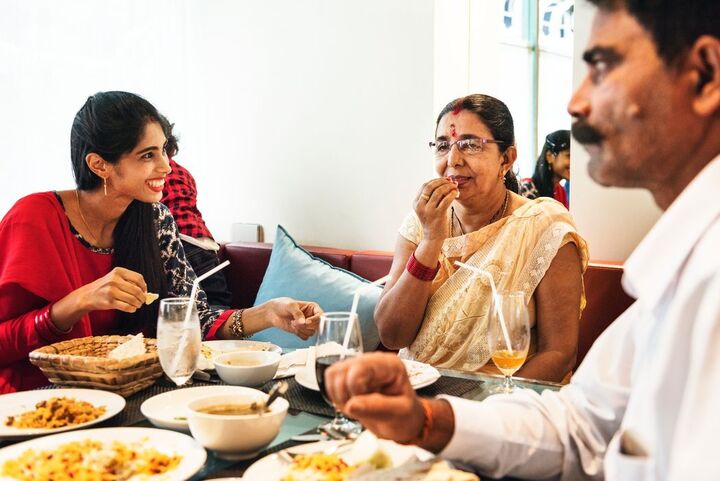
Wealthy people in India also have a habit of eating with their hands. (Photo: Veerji)
Why do Indians eat with their hands?
While the Western world regards knives and forks as the standard of civility at the dinner table, for over 1,4 billion people in India, hands are the most important tool. the perfect "tool" In India, eating with one's hands is not a backward practice, but a refined cultural tradition that harmoniously combines ancient knowledge with practical health benefits. It is also how Indians show the utmost respect for food.
Ancient beliefs
According to traditional Indian Ayurveda medicine, each finger represents a fundamental element that makes up the universe (Pancha Mahabhutas). When Indians cup their fingertips together to eat, they are directly connecting with the surrounding elements, helping to balance the energy flows within the body.
The thumb represents Fire (Agni). The index finger represents Air (Vayu). The middle finger represents Space (Akash). The ring finger represents Earth (Prithvi). The little finger represents Water (Jal). Using all five fingers stimulates the senses, making the food enjoyable not only through taste but also spiritually.
How to make the dish
Most Indian dishes, such as curries, pea-based rice (Dal), or flatbreads (Roti, Naan), have a distinctive texture that is difficult to handle with a spoon or knife. Indian cuisine requires skill to tear the bread, roll the food, or evenly mix the sauces into each grain of rice. Dexterous hands allow diners to appreciate the texture, softness, and ensure the flavors blend perfectly before enjoying the meal.
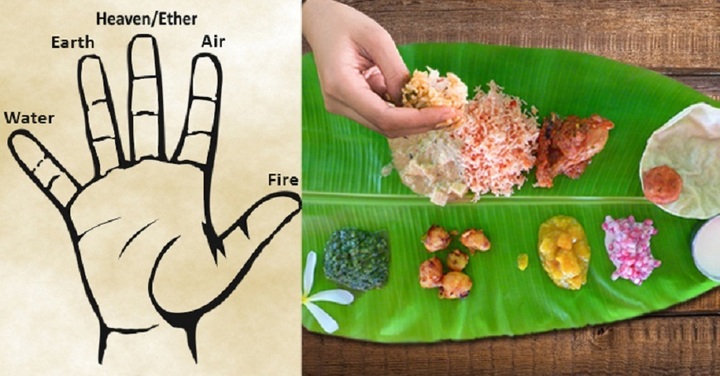
Indians eat with their hands due to long-standing beliefs and culinary traditions. (Photo: Tour De Farm)
Served on banana leaves.
In many regions, particularly in South India, food is often served on banana leaves instead of ceramic plates. This is a culturally appropriate and environmentally friendly choice. When hot food is placed on a banana leaf, the nutrients and distinctive aromas from the leaf are released and infuse into the dish. Using your hands on the surface of the banana leaf creates a rustic, intimate experience and makes it easier to handle than using a spoon or fork.
Mindful eating
For Indians, eating with hands encourages mindfulness. When hands touch food, the brain immediately receives signals about temperature, firmness, and texture. This helps diners focus entirely on the meal, avoiding distractions from phones or television. This connection creates a close bond between the eater and the food, helping them appreciate each bite and better recognize when their body is truly full.
Promotes digestion
In fact, science has proven that eating with your hands can promote better digestion. The nerves in your fingertips, upon contact with food, send signals to the stomach, stimulating the release of necessary digestive enzymes even before the food reaches your tongue. Furthermore, eating with your hands is generally slower than using a spoon, allowing for better chewing and mixing of food, reducing the burden on the digestive system.
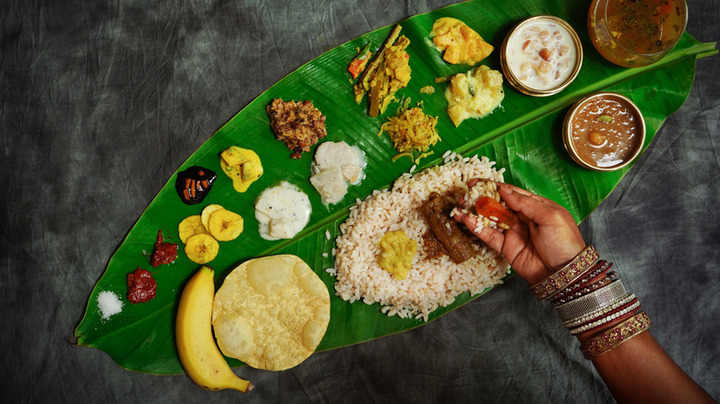
Eating with your hands offers more benefits than many people mistakenly believe. (Photo: FoodRep)
Concept of hygiene
Many people mistakenly believe that eating with hands is unhygienic, but Indians hold the opposite view. A hand thoroughly washed with soap before a meal is generally considered more trustworthy than metal utensils that are only superficially cleaned or shared by hundreds of people in public places. When using your hands, you are the only one controlling the cleanliness of the "utensil" you are using. Furthermore, hands contain naturally occurring beneficial bacteria that help the body fight off pathogens from the environment.
The golden rule of Indian dining etiquette.
Despite eating with their hands, Indians have strict rules regarding hygiene and etiquette:
Use only your right hand.
In Indian culture (and many South Asian countries), the left hand is considered unclean (often used for personal hygiene). Therefore, touching food or offering food to others must be done entirely with the right hand.
Cleanliness is the top priority.
Before and after meals, Indians always wash their hands very thoroughly. In restaurants, customers are often served a bowl of warm water with lemon slices to cleanse away grease and spice odors after eating.
Avoid letting food touch your palms.
A person who eats politely with their hands only uses their fingertips (up to the second knuckle). Getting food on the palms of the hands or spilling it is considered unskillful and impolite.




 Comment