


 Hotline: 0855.911.911
  RSS
RSS 





Installing a wall-mounted altar is not just a matter of aesthetics and interior design. For those interested in feng shui, the location and placement of the altar are considered to affect the peace and good fortune of the family.
To install a wall-mounted altar correctly, safely, and in accordance with feng shui principles, you need to follow these detailed steps and important considerations.
Prepare the materials for installing the wall-mounted altar.
Before you begin installing a wall-mounted altar, you need to prepare the following materials and tools:
- Wall-mounted altars: Choose a design that suits the space and style of your home. You can choose a modern or traditional altar.
- Measuring tape: Used to determine the height and position for installing the altar on the wall.
- Concrete drill: Used to drill through concrete walls, helping to securely fix the altar in place.
- Specialized screws and anchors: Ensure the altar is securely and safely hung.
- Installation tools: Includes a hammer, pliers, screwdriver, and other installation tools to assist with the assembly process.
- Spirit level: Used to check the straightness and balance of the altar after installation.
Choose the right size for a wall-mounted altar according to feng shui principles.
The size of the altar is an important factor in ensuring harmony and suitability with the space and family feng shui. Below are some common altar sizes that you can refer to:
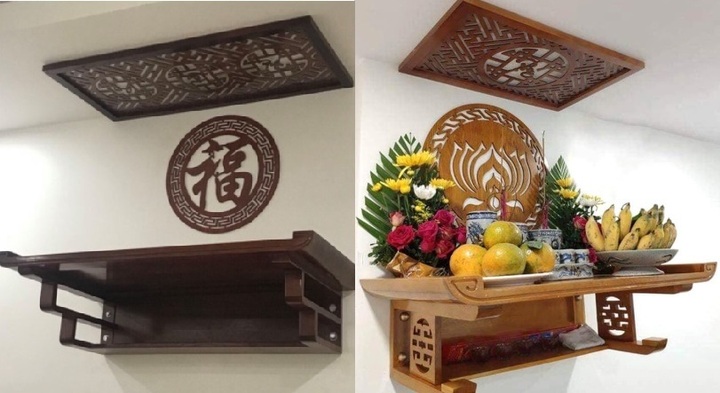
Properly positioning a wall-mounted altar according to feng shui principles can bring peace, good fortune, and happiness to the family (Illustrative image).
48x81 cm (Auspicious occasion, Prosperity): This size is believed to bring prosperity and happiness to the homeowner, suitable for families wishing to pray for wealth and good fortune. It's a common size for ancestral altars, altars dedicated to the God of Wealth, or small altars placed in locations where prosperity and good luck are desired within the family.
48x88 cm (Fortune and Prosperity): This size is associated with prosperity and is believed to help the family attract good fortune, especially in terms of wealth and career. Many families choose this size for altars dedicated to the God of Wealth and the Earth God to ensure success in their work and finances, placing them in suitable locations in the living room or business areas.
48x108 cm (Adding blessings): This number symbolizes prosperity not only in wealth but also in blessings, making it an ideal size for families seeking peace, good health, and lasting happiness. It is suitable for large altars or altars with ample space, often used in spaces for ancestor worship, praying for peace and sustainable development for the family.
Other popular sizes include: 49,5 x 95 cm (Wealth and Prosperity), 56 x 95 cm (Wealth and Prosperity), 61 x 07 cm (Wealth and Prosperity, Noble Son).
The size of the altar should be appropriate for the worship space in your home. If the space is small, you should choose an altar of a moderate size to create balance. You can also refer to the Lu Ban ruler for dimensions, as this is a standard measurement in feng shui.
Determine the installation location for the wall-mounted altar.
The placement of the altar plays a crucial role in ensuring its sacredness and feng shui; here are some factors to consider:
- Direction for placing the altar: Choose a direction for the altar that is compatible with the homeowner's birth element. According to feng shui, auspicious directions are usually Sheng Qi, Tian Yi, Yan Nian, and Fu Wei. Avoid placing the altar directly facing the main door, windows, or opposite the kitchen.
- Surrounding space: The altar should be placed in a high, well-ventilated, and quiet location. Avoid placing the altar near the toilet, kitchen, or unclean areas, as this will affect its sacredness and is not in accordance with feng shui principles.
- Altar placement height: The altar should be hung at a suitable height, making it easy to light incense and clean. It should not be hung too low, as this shows disrespect, or too high, making worship difficult. Generally, the height of a wall-mounted altar ranges from 1.72m to 2.11m, depending on the space and feng shui principles.
Here are some standard height measurements for installing a wall-mounted altar:
- Low height: From 1.72m (Great Fortune) to 1.765m (Progress), suitable for small spaces, saving space while still ensuring solemnity.
- Medium range: Height from 1.93m (Wealth) to 1.975m (Prosperity), is the ideal height for houses with moderate space, creating balance for the ancestral altar room.
- Height: A height of 2.11 meters (auspicious) is a suitable choice for spacious areas, especially high-end apartments or villas.
Steps for properly installing a wall-mounted altar.
After determining the location and height, you need to proceed with the following steps to install the wall-mounted altar:
- Drilling through walls: Use a concrete drill to drill holes in the wall. Choose a drill bit with a diameter suitable for the screws you are using (usually 8, 10, or 14mm). Before drilling, mark the exact location on the wall with a pencil. This helps you drill in the correct position without damaging the wall structure. Pay attention to adjusting the speed and force of the drill to avoid making loud noises or damaging the wall.
- Installing the altar: After drilling the holes, insert the specialized anchors to create a secure bond, then use screws to fix the altar to the wall. You can check the altar's stability by gently pulling or lightly pressing it with your hand.
- Check for balance: Use a spirit level to check the straightness and balance of the altar. Ensure that the altar is not tilted or uneven, as this not only affects aesthetics but can also negatively impact feng shui.
After installation, you need to check again to ensure the altar is not loose. Apply light pressure to the altar to check its stability. If the altar does not wobble or fall over, you can be assured of the quality of the installation.
Things to note when installing a wall-mounted altar.
Before installation, a simple ceremony should be performed to inform and seek permission from the deities or ancestors. The altar should not be moved unnecessarily, as this is believed to diminish the sacredness of the worship space. If the altar is moved to a new location, a ceremony to request permission to move it is necessary.
If installing an altar in an apartment, pay attention to the ceiling height to ensure proper ventilation and feng shui.
Do not use the altar to store belongings.
Regular cleaning and maintenance are essential to prevent dust and dirt buildup.
Following these principles correctly will help ensure your family maintains a dignified atmosphere and good feng shui.
(*) The information in this article is for reference only.



 Comment