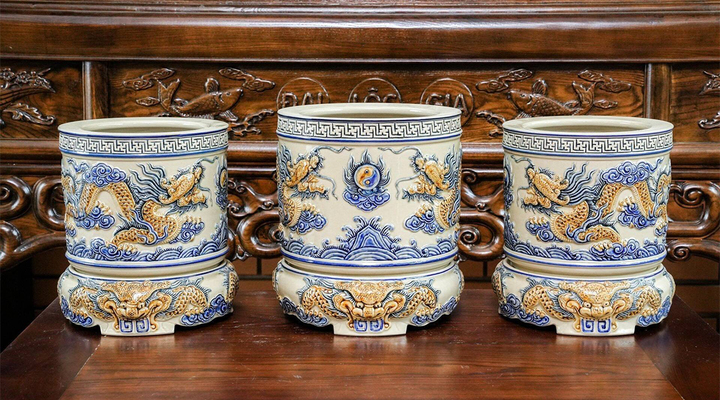
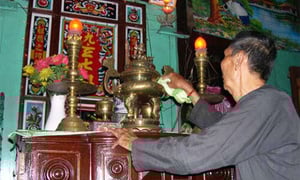
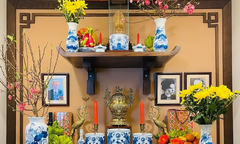
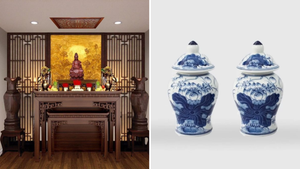
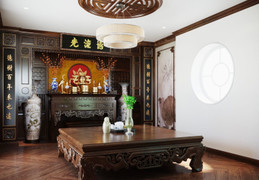
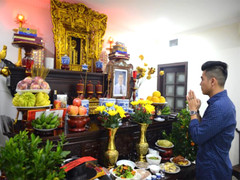
Many people believe that the ritual of placing incense burners should only be performed by a master or someone with a special affinity and knowledge of the ceremony to be effective; doing it yourself is incorrect and can easily lead to misfortune.
Cleaning the ancestral altar at the end of the year is a beautiful cultural tradition of the Vietnamese people, so should we clean the altar before the 23rd day of the 12th lunar month?
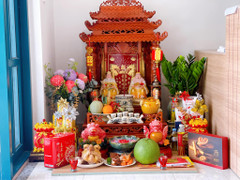
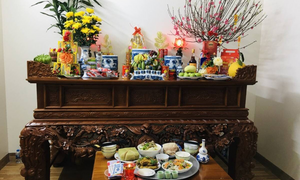
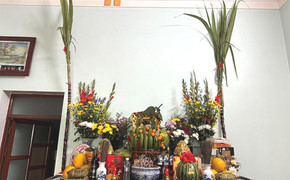
In apartments, although the worship space may not be large, it plays an important role in the spiritual culture of Vietnamese people. Therefore, the placement of the altar needs to be carefully considered.
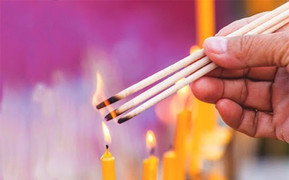
Many people worry that removing the offerings too early will make the worship ritual seem less respectful and solemn; so how long should incense be burned before removing the offerings and receiving the blessings?
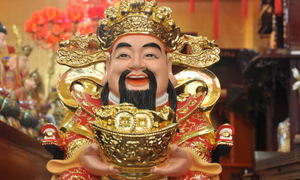
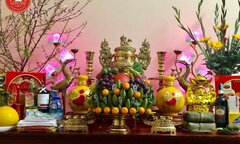
What should a God of Wealth altar include? This is a question many people ask when designing a place of worship for the first time to honor this deity who brings wealth and good fortune in business.
Referring to prayers for the full moon day will help families perform the ritual of offering incense to their ancestors, the earth god, and other deities with care.
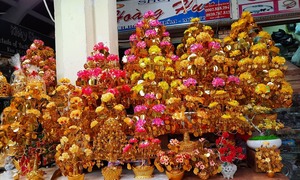
Golden branches and jade leaves are offerings symbolizing wealth and prosperity, so why is there a belief that one shouldn't place them on the altar when visiting temples at the beginning of the year?
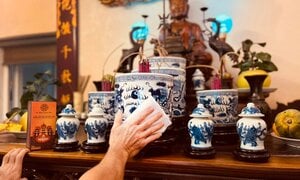
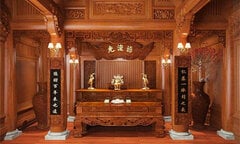
The ancestral altar is a sacred place, and cleaning it must be done carefully; therefore, the question of whether or not to use plain water to clean the altar is frequently asked.
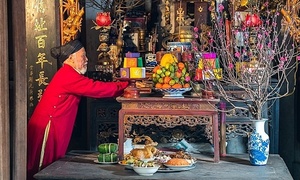
Cleaning or tidying the altar is an important preparation for welcoming the new year; below is the prayer for cleaning the altar at the end of the year.
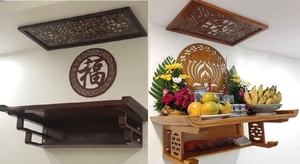
The placement of a wall-mounted altar should adhere to feng shui principles and spatial considerations to ensure both solemnity and suitability for the living space.
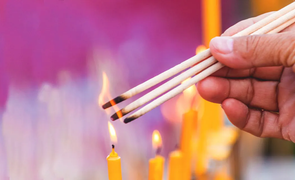
According to Vietnamese tradition, if you want to extinguish a candle on an altar, you shouldn't blow on it but instead use your hand to create a breeze. Why?
According to folk beliefs, the incense burning out completely is a good sign, indicating that the homeowner's prayers have been answered; so what should be done if the incense doesn't burn out completely?
Rice and salt are two important items in the worship area used for spiritual rituals. Do you know what the jar of rice and salt placed on the altar signifies?
Burning incense continuously is part of the ritual of replacing an altar; a question many people ask is, how many days should incense be burned when replacing an altar to be considered proper?
When replacing an altar, one of the things that causes many people the most concern and worry is what to do with the old altar to avoid violating any taboos.
For Vietnamese people, replacing an altar is a significant event, requiring certain rituals and avoiding taboos. So, what needs to be done when replacing an altar?
Many people wonder whether they should place the altar on the first floor, and where to position it to ensure both reverence and suitability to the family's circumstances.
Many people wonder whether the pair of cranes on the altar should face each other or outwards when setting up a worship space or arranging cranes for the first time.
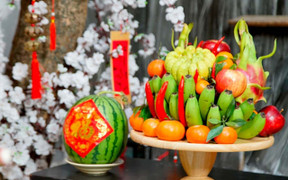
In the past, people often applied the principle of "east vase, west fruit" when determining the placement of offerings on the altar, so where should the fruit plate be placed according to custom?
Feng shui plays an extremely important role and has profound significance in Vietnamese religious beliefs and worship, therefore, homeowners need to pay close attention when setting up an altar.
Ancestor worship is a long-standing religious tradition in Vietnam; however, many people are concerned about placing the altar on the first floor or the top floor.





 Hotline: 0855.911.911
  RSS
RSS