


 Hotline: 0855.911.911
  RSS
RSS 





Of the four worldly pleasures, eating always comes first. People eat to live, and then live to... enjoy better food. Yet, the Buddha—who lived amidst countless tempting flavors—chose for himself a diet of just one meal a day, before noon.
Buddha He did this not out of asceticism, nor to follow the current trends of intermittent fasting or clean eating, but because he understood that eating less allows one to live a more mindful and relaxed life, free from the control of the stomach or tongue.
The founder of "mindful eating"
Every morning, the Buddha and the monks would put on their robes, take their alms bowls, and walk with ease and serenity. Go begging for alms. No choosing of dishes, no requests. Eat whatever is offered. A bowl of rice, a few vegetables, some water – that's enough for a day of mindfulness.
He taught: "Food is medicine, not just for pleasure. Take just enough to nourish this body, to support the path of spiritual practice." (Samyutta Nikaya).
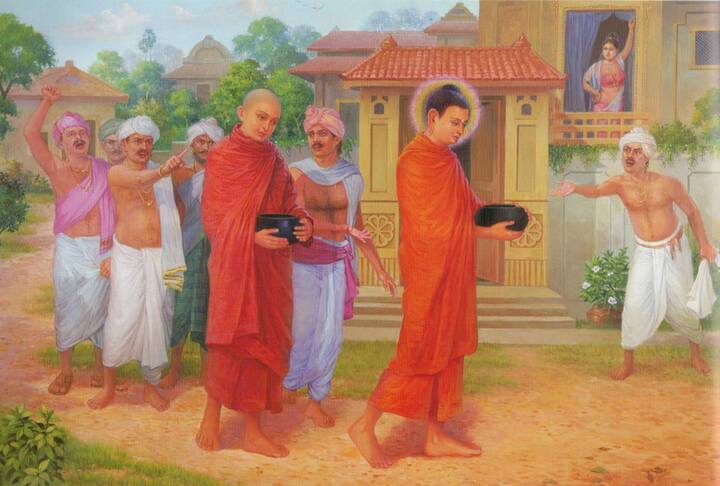
The Buddha and his monastic community also faced insults and slander while going on alms rounds. (Image: Phatgiao.org)
Eating is not about satisfying the taste buds, but about keeping the body from being hungry and the mind from being disturbed. Finishing your meal before noon, from then until the next morning, your stomach will be empty but your mind will be full of peace.
A full stomach makes the eyes droop, and meditation easily turns into... nodding off. A heavy body and a sluggish mind make it impossible to practice. The Buddha knew this well, so he didn't eat dinner, not out of stinginess, but because he wanted to. Keep your body light.Intelligent and insightful.
Moreover, eating less helps to control desires. Because even after having enough to eat and feel warm, if the mind is still hungry, trouble can easily arise. But when one knows when enough is enough and when to stop, no temptation can pull a person who is calm and clear-headed.
He had this in mind: "It is not material things that bind people, but the desire for material things that binds them." (Majjhima Nikaya).
The Buddha did not require vegetarianism. He accepted offerings equally, as long as he did not see, hear, or suspect that the animal was killed for him. What matters is not what is in the bowl, but what is in the mind while eating.
"To eat with awareness of what you are eating, knowing where each bite comes from, knowing how to chew to nourish the body – that is mindfulness." (The Sutta on the Four Foundations of Mindfulness).
Each bite is an opportunity to practice mindfulness, cultivate gratitude, and... digest with your heart.
Should we eat in the Buddhist way?
Recently, nutrition experts have discovered that eating less helps reduce inflammation, improve memory, and increase longevity. But the Buddha himself verified this over 2.500 years ago – even without a lab or testing equipment – relying solely on meditative intuition and profound wisdom.
A simple meal, yet he still had the strength to walk dozens of kilometers each day, preaching continuously without tiring, because he wasn't carrying a few kilograms of leftover food in his stomach – but rather compassion and wisdom in every step.
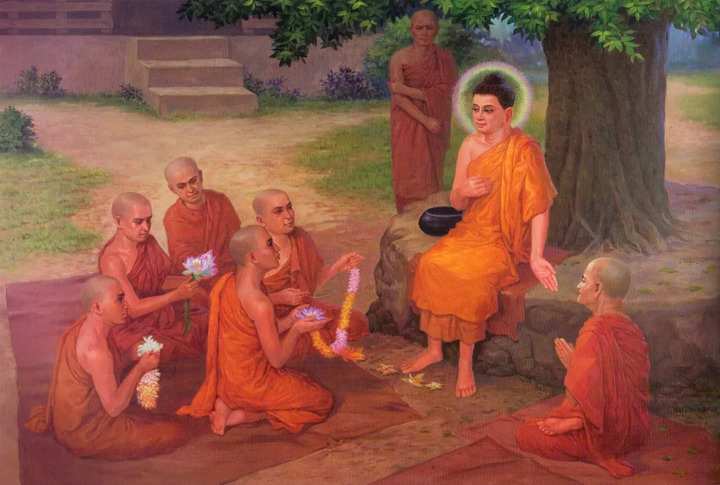
The Buddha and the enlightened monks usually ate very little, and only one meal a day. (Image: Phatgiao.org)
No one is forcing us to skip dinner, or become "intermittent fasting" monks. But in this world of abundance yet exhaustion, perhaps all we need to do is eat a little slower, chew a little more thoroughly, savor each bite as a precious gift from the convergence of countless blessings, and... don't eat when your heart is hungry for love.
Perhaps, that's all we need to find peace in every spoonful of rice, instead of having a full stomach but a mind still full of worries.
"Eat to live, not live to eat." - This saying is all too familiar, but if you can put it into practice... well, enlightenment might begin right from the plate of rice in front of you. A little less, a little more awareness, and you've already taken a step further on the path to freedom.

 Comment