


 Hotline: 0855.911.911
  RSS
RSS 





The violations at Phase II Production Expansion Project This has caused the financial situation of Thai Nguyen Iron and Steel Company (Tisco, ticker TIS) to become extremely difficult, with debt-to-equity ratio exceeding 81%.
According to the financial report, in the third quarter of 2019, Tisco's net revenue and after-tax profit reached VND 2.169 billion and VND 3,2 billion respectively, a decrease of 11% and 29% compared to the same period last year.
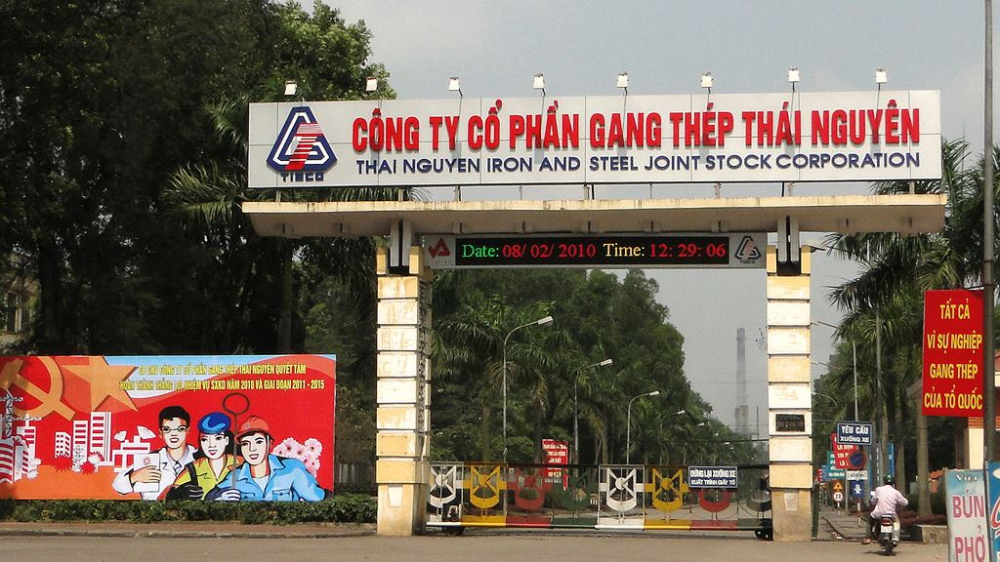
Trapped with trillions of VND at Tisco II, Thai Nguyen Steel Corporation is on the verge of bankruptcy. (Photo: TIS)
According to Tisco's explanation, the decline was due to a decrease of 4.382 tons of rolled steel consumption, equivalent to a 2,6% reduction. Meanwhile, the average selling price decreased by 8,9%, and the cost of goods sold decreased by 8,6%.
For the first nine months of the year, Tisco's net revenue reached VND 7.652 billion, a decrease of 7% compared to the same period last year, and net profit reached VND 40 billion, a decrease of 14%.
As of September 30th, total assets Tisco Revenue decreased by VND 635 billion, or 6%, compared to the beginning of the year, reaching VND 9.938 billion. The main reason is that TIS's inventory decreased by more than VND 544 billion, equivalent to a 23% reduction.
Tisco currently has liabilities exceeding VND 8.039 billion, accounting for over 81% of its total assets. Of this, borrowings of approximately VND 5.000 billion exceed short-term assets, which stand at VND 2.397 billion.
In documents presented at the shareholders' general meeting, Tisco's leadership stated that by early 2019, Tisco's financial situation had become extremely difficult, with the risk of a financial crisis leading to bankruptcy looming if there was no timely rescue from the Government, banks, and relevant authorities.
Accordingly, the charter capital of Tisco By the end of 2018, the company's total capital was nearly 1.937 trillion VND, but liabilities accounted for 82% of its capital structure. Equity capital only accounted for 18% of total capital, considered a low ratio, lower than in 2017, causing a financial imbalance for the company.
Tisco's total non-performing loans as of December 31, 2018, amounted to VND 851.962 billion, while the recoverable value was VND 393.332 billion.
"The company's liabilities far exceed its equity, at 4,65 times its equity, indicating an unsafe capital structure," the Supervisory Board report stated, affirming that the company is in an exceptionally difficult financial situation and is unable to repay its debts when due.
According to the report, Tisco's current difficulties mainly stem from the fact that the Phase II production expansion project is still under construction. Due to the project's delays, Tisco is having to purchase billets from external sources for production.
The project, although being implemented by a foreign contractor and not yet handed over to the investor, is currently on hold pending further action. opinion State management agencies have many issues that the investor cannot fully decide on because the State holds up to 65% of the charter capital.
Since 2011, Tisco has had to use short-term capital to pay interest and principal on project loans to banks. By early June 2018, Tisco had paid 1.313 billion VND in principal and interest. The total amount spent on the project was 1.531 billion VND, forcing Tisco to borrow additional capital to cover working capital and ensure production and business operations for the remaining part, leading to significantly increased financial costs.
Furthermore, the implementation of production also depends heavily on developments. market, product consumption capacity. According to Tisco, product consumption faced difficulties in 2017-2018 due to the increasing number of new steel projects coming into production, leading to fierce competition while market demand remained limited.
Many individuals committed violations serious enough to warrant disciplinary action.
From December 4-6 in Hanoi, the Central Inspection Committee held its 41st meeting to investigate suspected violations by the Standing Committee of the Party Committee of Vietnam Steel Corporation.
The Central Inspection Committee concluded that the Standing Committee of the Party Committee of Vietnam Steel Corporation lacked responsibility, neglected leadership and direction, and failed to inspect and supervise, allowing the corporation to commit numerous serious violations and shortcomings in the implementation of the Phase II production expansion project of Thai Nguyen Iron and Steel Company (Tisco II), causing very serious consequences, significant losses of state funds and assets, and public outrage.
Specifically, former Party Committee Secretaries and former Chairmen of the Board of Directors of Vietnam Steel Corporation, Nguyen Kim Son and Dang Thuc Khang, are held responsible as the top leaders for the violations and shortcomings of the Party Committee's Standing Committee.
Mr. Le Phu Hung, former Deputy Secretary of the Party Committee and former General Director, and Mr. Trinh Khoi Nguyen, member of the Standing Committee of the Party Committee and Deputy General Director of Vietnam Steel Corporation, are jointly responsible for the violations and shortcomings of the Standing Committee of the Party Committee and for their individual responsibilities in performing their assigned duties and tasks.
The Central Inspection Committee concluded that the Party Committee of the Ministry of Industry and Trade lacked responsibility and neglected leadership, direction, inspection, and supervision, allowing the Ministry of Industry and Trade to commit numerous violations and shortcomings in performing its state management functions regarding the Tisco II project.
Accordingly, Mr. Vu Huy Hoang, Secretary of the Party Committee and Minister (during the period 2007-2016), bears primary responsibility for the violations and shortcomings of the Party Committee of the Ministry of Industry and Trade.
Mr. Hoang Trung Hai, a member of the Politburo and Secretary of the Hanoi Party Committee, committed violations and shortcomings while serving as a member of the Party Committee and Deputy Prime Minister when giving certain directives regarding the Tisco II project.
In addition, two former Deputy Heads of the Government Office, Van Trong Ly and Nguyen Huu Vu, and Mr. Nguyen Van Tai, former Deputy Director of the Department of Sectoral Economics, and Mr. Do Canh Duong, Director General of the General Department of Geology and Minerals, Ministry of Natural Resources and Environment, and former staff member of the Government Office, committed violations and shortcomings in advising the Government leaders on directing the Project.
 Comment