


 Hotline: 0855.911.911
  RSS
RSS 





Having just launched on October 1st, the Google Pixel 5 will compete in the $699 smartphone segment, which includes the best-selling phone of the first half of 2020.
The Pixel 5 is a mid-range smartphone with many outstanding features and a relatively affordable price. While there are already some Android competitors on the market, such as the OnePlus 8 Pro 5G and Samsung Galaxy S20 FE, Apple's iPhone 11 is the more formidable contender.
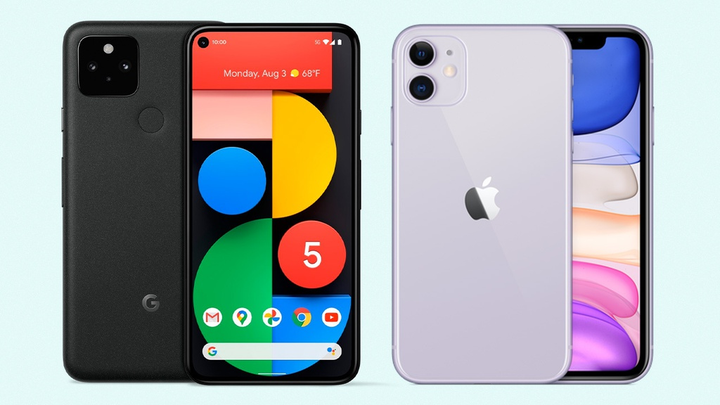
The Pixel 5 and iPhone 11 are two equally matched competitors in the smartphone market. (Image: PCMag)
The comparison might seem unfair since the iPhone 11 is almost a year old and lacks 5G. However, Apple has just updated iOS 14, adding many new features and sharing some similarities with Android.
When priced similarly, consumers will hesitate between these two products. They are both made by some of the biggest names in the tech industry, each embodying the distinctive style of the two mobile platforms that currently dominate the market.
Design and display
The Pixel 5 stays true to the utilitarian design of its predecessor but adds a few differentiating features. The device has a 6-inch OLED display with a resolution of 2.340 x 1.080 pixels, a 90Hz refresh rate, and a circular punch-hole in the upper left corner for the selfie camera.
It has thinner bezels than the Pixel 4 thanks to the removal of the Soli sensor for Face Unlock. This also means that facial recognition unlocking is no longer available, replaced by a fingerprint sensor on the back.
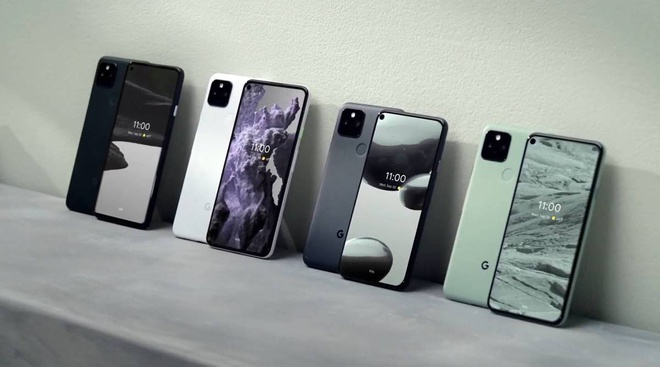
The Pixel 5's design isn't much different from its predecessor. (Image: Google)
The iPhone 11 is more rounded. The majority of the front is covered by a 6,1-inch LCD screen with a resolution of 1.792 x 828 pixels, and a relatively large notch. The back features two lenses housed in a raised, square camera module in the upper left corner.
In this respect, the two phones can be considered evenly matched. Both the Pixel 5 and iPhone 11 have distinctive and unique design languages. Users may prefer one over the other. While the Pixel has an OLED screen with higher resolution, the iPhone has a faster refresh rate and Apple's proprietary True Tone color technology.
Hardware configuration
The Pixel 5 is equipped with a mid-range Snapdragon 765G chipset, 8 GB of RAM, 128 GB of storage, a 4.080 mAh battery, an 18W charger included in the box, and supports wireless and bidirectional charging. Notably, Google's smartphone features multi-band 5G connectivity.
The Pixel 5's processor isn't as powerful as the Snapdragon 800 series chips found in current Android flagships, but it offers good multitasking and gaming capabilities. It's also more energy-efficient, promising longer battery life.
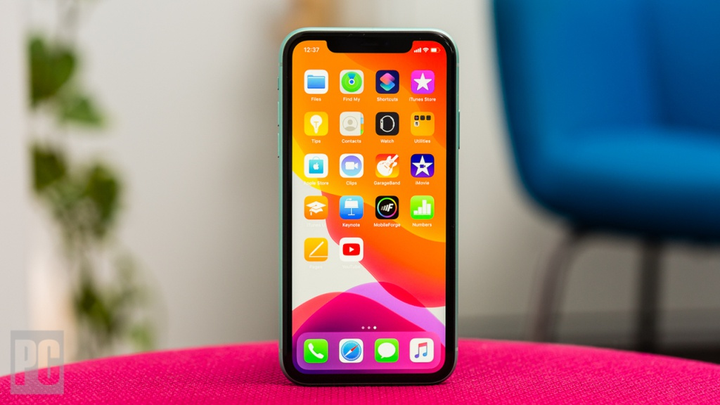
Despite differences in RAM and battery specifications, the iPhone 11 is still just as powerful as the Pixel 5. (Image: PCMag)
Meanwhile, the iPhone 11 has the Apple A13 Bionic chipset and 4GB of RAM. That's only half the amount of the Pixel 5, but iOS manages tasks differently than Android, so the iPhone doesn't need as much RAM to run smoothly. The cheapest version has 64GB of storage, with 128GB and 256GB options also available.
The iPhone 11 has a 3.111 mAh battery. Similar to RAM, thanks to optimized power management, Apple's smartphone doesn't need a large battery like Android phones. With typical usage, users can comfortably enjoy more than a day of use.
The iPhone 11 also supports fast charging, but you have to buy a separate charger. To date, no Apple phone supports reverse charging for other devices.
The Pixel 5 and iPhone 11 have fairly similar camera hardware. The Pixel 5 uses a 12,2MP main sensor and a 16MP wide-angle lens, while the iPhone 11 has a dual-camera setup consisting of a main and wide-angle sensor, both with 12MP resolution. On the front, the Pixel 5 is equipped with an 8MP lens, while the iPhone 11 has a 7MP selfie camera.
The Pixel line has been a leader in smartphone photography thanks to Google's camera algorithms. The Pixel 5 is likely to continue this advantage. The iPhone 11 can also take stunning photos, but it's not the best in low-light conditions.
If Google continues to improve Night Mode, the Pixel 5 could beat the iPhone 11 in night photography. This will need time to be verified once the commercial version is released to the market.
Software
This is the biggest difference between the two phones. The Pixel 5 ships with Android 11, while the iPhone 11 comes with iOS 13 and has just been upgraded to iOS 14.
Both Android and iOS have their own unique features. Android 11 offers chat bubbles similar to Messenger, improved access to smart home features, and adds live subtitles to videos using Live Captions.
iOS 14 brings a fresh look to the iPhone. Photo: MacRumors. iOS 14 subtly improves Messages, adds Widgets, App Library, Picture-in-Picture video viewing, and allows changing default apps. This version also upgrades security and privacy features.
Android and iOS are two great platforms with many differences. They both have their own advantages and disadvantages, and choosing which ecosystem to use depends on the user's preferences.
Pricing: Users can pre-order the Google Pixel 5 for $699, and it will officially go on sale from October 15th. The iPhone 11 has the same starting price but offers higher storage options.
Both the iPhone 11 and the Pixel 5 are phones that can meet users' needs for many years to come. So which is the better choice?
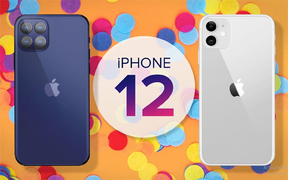
If you prefer Android, buy the Pixel 5. Conversely, if you favor Apple products, wait for the iPhone 12 launch event in a few weeks. Apple might introduce another attractive device in the $699 price range or lower the price of the iPhone 11.
 Comment