



 Hotline: 0855.911.911
  RSS
RSS 





On October 16, 2020, 47-year-old French teacher Samuel Paty was assassinated outside the Bois d'Aulne high school near Paris.
The 18-year-old extremist suspect was shot dead by police after murdering Paty. Prior to the murder, he had offered money to students to identify the teacher.
According to media reports, Paty's teaching of certain free speech and "blasphemous" content to students led to complaints and an online campaign against him. The attackers saw that content on social media.
Prosecutors claim there is a "direct cause-and-effect link" between the online campaign against Samuel Paty and the murder.
A total of 14 people have been charged in the case, including 6 high school students, 3 friends of the assailant, and 3 young men who had connections with him on social media.
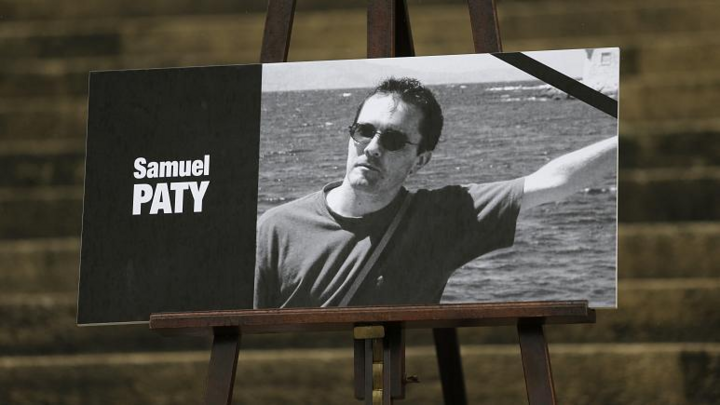
A portrait of Samuel Paty outside the French parliament. (Photo: AP)
On June 6, 2021, Salman Afzaal, 46, his wife Madiha Salman, 44, their 15-year-old daughter Yumna Afzaal, and their 74-year-old grandmother were killed when they were struck by a truck while walking in London, Ontario, Canada. Only the youngest member of the family, 9-year-old Fayez, survived.
A day later, London police charged a 20-year-old man with murder and attempted murder for premeditated acts aimed at attacking the Afzaal family “because of their Islamic faith.”
Canadian Prime Minister Justin Trudeau said on June 8 that hateful content online may have contributed to the motive of the suspect accused of attacking four victims.
There have been many warning signs about how hateful content online can incite violence. In 2017, Alexandre Bissonnette killed six people at a church in Quebec. Subsequent investigations revealed the gunman had become radicalized online and was immersed in sources from far-right media. According to Bernie Farber, president of the Canadian Anti-Hate Network, the majority of crimes like the church shooting are radicalized online, and the best way to prevent future attacks is through legal frameworks.
Following the 2019 mosque shooting in New Zealand, Trudeau attended the Christchurch Call to Action conference, pledging to “remove terrorist and violent extremist content online,” promising to “target hate speech, harassment and exploitation, and do more to protect victims of hate speech.”
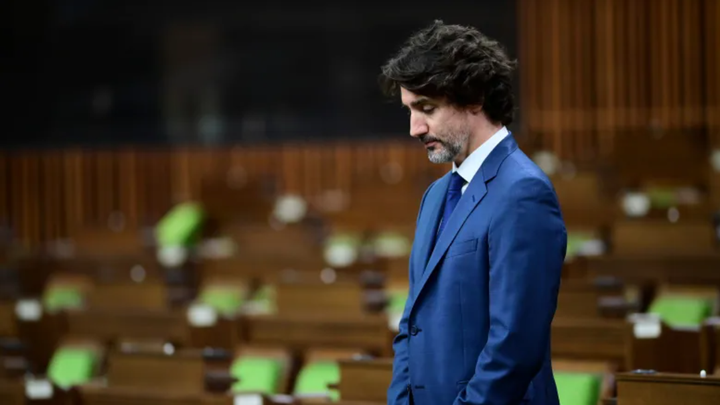
Canadian Prime Minister Justin Trudeau. (Photo: The Canadian Press)
According to the Canadian Centre for Digital and Media Culture (MediaSmarts), the internet is a fantastic space brimming with ideas and a means for people to access information and services. However, its dark side is that, alongside useful resources, it can become a breeding ground for hateful and offensive content – fueling anti-government sentiment against specific individuals or groups, leading to infighting and mutual attacks.
It's not always easy to distinguish when hate speech on the internet crosses the line from hate speech to illegal. The line between hate speech and freedom of speech is also incredibly thin, especially when different countries have different regulations.
Online hate speech can have multifaceted impacts, leading to harassment and harm to the "target." Furthermore, those exposed to hateful content may become more radicalized and agitated.
Julian Wiehl, CEO of a media organization, said: "Social media gives us the feeling that certain values exist, when in reality they don't."
The vast reach of the internet, combined with the difficulty in tracing communications, makes it an ideal tool for extremists to spread negative views, even systematically raise funds and recruit members. As the internet evolves and changes, hate groups and movements adapt, creating websites, forums, and social media accounts to achieve their goals.

(Illustrative image)
The German Federal Office for Civic Education describes the phenomenon of hate speech as: "When people are belittled, attacked, or hated, or when there are calls for violence against them." In addition, hateful content is also described as "The phenomenon of hostility and incitement against a specific person or group of people on online platforms and social media."
More and more people are being affected by hate speech, whether in the form of bullying at school or work, or through sexist, racist, and other forms of abuse.
In 2020, in an annual survey conducted by the media agency of the German state of North Rhine-Westphalia, 94% of respondents aged 14 to 24 said they had seen hate speech on the internet.
In a survey conducted by the Jena Institute for Democracy and Civil Society (IDZ) in Germany, 8% of respondents reported being personally affected by hate speech. A majority of respondents said they became more emotional, fearful, anxious, depressed, and experienced self-image issues after being insulted or attacked.
The level of online attacks has also increased in recent years. Besides crude insults, comments sometimes take a threatening tone, such as: "I know where your child goes to school."
According to experts, Facebook, Twitter, and other platforms have essentially contributed to fueling the hate speech. "Social media platforms built on algorithms can reinforce statements that provoke extreme reactions with likes, then assume these are statements of interest and help them gain more visibility."
Wiehl said: “We have become addicted to emotions, with our self-worth depending on the reactions (from others)... Social media tries to limit social interaction to just the exchange of information. But you can't judge another person comprehensively through social media. Then a refugee, for example, is no longer a person, but just a piece of information, an object.”
Gradually, civil society seems to be waking up to the massive wave of hate speech that has been flourishing online in recent years. More and more people affected by hate speech are seeking help or developing their own "strategies" to cope with it.
Hate comments are reported as violations more frequently, especially by young people.
However, much work remains to be done, and many affected individuals still feel left alone or powerless to defend themselves against digital attacks, especially as extremists seek anonymity while spreading inflammatory rhetoric online.
"There must be laws in place, there must be fines for hate speech... because otherwise nothing will happen.", Farber said to CBC.


 Comment