


 Hotline: 0855.911.911
  RSS
RSS 





According to the Lao Dong newspaper, citing the book "Some medicinal plants and herbs that can replace rhinoceros horn" from the Project on preventing and combating illegal trade in wild animals and plants (February 2.2021), introduced by MSc-Dr. Nguyen Dinh Thuc - General Secretary of the Vietnam Traditional Medicine Association - gardenia is one of 23 medicinal plants and herbs that can replace rhinoceros horn.
Information about gardenia
Gardenia, also known as Chi Tu, has the scientific name Gardenia augusta (L.) Merr. It belongs to the Rubiaceae family (coffee family). Gardenia is characterized by its many branching shrub, 1-2m tall, with brown, cracked bark on the trunk and older branches; young branches are smooth.
Leaves have short petioles, are opposite or in whorls of 3; leaf blade is lanceolate, tapering towards the base, apical, smooth on both sides, measuring 5-9 x 2-3 cm. Stipules are nearly tubular and thin.
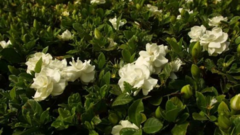
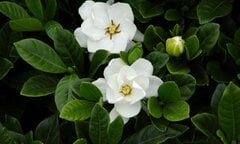
The flowers are large, solitary at the end of branches, white and fragrant. The calyx has 6 petals that persist with the fruit. The corolla is tubular, with the tip split into 6 inverted lanceolate petals. There are 6 stamens attached to the mouth of the corolla tube; the ovary is oblong.
The fruit is oval-shaped with 6 longitudinal ridges, yellow when ripe, with red flesh. The seeds are flat, numerous, and yellow. Several other Gardenia species (Gardenia annamensis Pitard; G. obtusifolia Roxb. ex Kurz; G. stenophylla Merr...) are also used.
Flowering and fruiting season: Flowers bloom from March to May; fruits ripen from July to September.
Harvesting takes place in late summer or early autumn, when the mature fruit begins to turn yellow.
Harvesting method: Harvest the whole fruit, bring it home and let it ripen evenly. Then, use a knife to remove the shell, and take the seed mass to dry in the sun or in a dryer (at 50-60°C). In some cases, the fruit is dried with the shell on, and the shell is removed only when needed.
Distribution and ecology: In Vietnam, the plant is naturally distributed sporadically in provinces from Thua Thien-Hue northward, but is now cultivated in many different places.
Globally, gardenia is found in Southern China, Laos, and Cambodia. It prefers moist and sunny conditions. In nature, it often grows among small shrubs along the banks of ponds and canals, in thickets around villages, or on the slopes of hills.
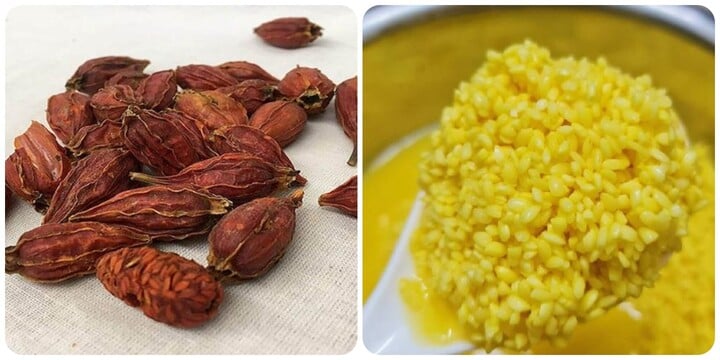
Many people wonder what the gardenia fruit is used for.
What are the benefits of gardenia fruit?
Gardenia fruit (Fructus Gardeniae) is the ripe fruit of the gardenia plant, dried in the sun or by artificial means. According to the Health & Life newspaper, quoting Dr. Nguyen Quang Duong, MSc, Department of General Internal Medicine, Tue Tinh Hospital, gardenia fruit, when eaten fresh, has the effect of clearing heat (treating fever); when roasted until golden brown, it is used to reduce internal heat; and when roasted until black, it is used to stop bleeding.
Gardenia contains a yellow glucoside called gardenin. When hydrolyzed, it yields a sugar-free fraction called gardenidin. In addition, gardenia also contains tannins, essential oils, and pectin.
Gardenia is a medicinal herb that has long been used in Traditional Chinese Medicine. According to ancient texts, gardenia fruit has a bitter taste, a cold nature, and acts on the heart, lung, and triple burner meridians. Its effects include clearing heat (treating fever), reducing inflammation, promoting urination, and stopping bleeding. It is used in cases of fever, restlessness, insomnia, thirst, sore throat, red eyes, jaundice, difficulty urinating, hemoptysis, nosebleeds, bloody dysentery, and hematuria.
The daily dose is 6 to 12 grams in the form of a decoction.
Additionally, gardenia can be used as a poultice on swollen and painful areas caused by injury; crush it, add a little water, and apply it to the swollen and painful area.
The yellow color of gardenia is non-toxic, and our people still use it to dye food such as rice cakes, jelly, and sticky rice.
The above information answers the question "What are the uses of gardenia fruit?". Gardenia is a common medicinal herb in Traditional Chinese Medicine with the ability to treat many different ailments and improve health. However, if you want to use gardenia for medicinal purposes, you should consult with experts before use.


 Comment