


 Hotline: 0855.911.911
  RSS
RSS 





Beeswax is the hive, the habitat of bees. Typically, a natural beehive will have an outer membrane surrounding the hive, followed by beeswax. So, what is the purpose of beeswax?
Nutritional composition of beeswax
Studies show that to produce 1 kg of beeswax, honeybees must use more than 3 kg of honey along with a small amount of pollen. Therefore, beeswax is a food with a high nutritional content, comparable to honey.
Specifically, beeswax contains nutrients such as fatty acids, esters, caffeine, phenethyl ester (CAPE), and bioflavonoids. There are 20-30 different types of flavonoids, the most important of which are chrysin, pinocembrin, and galangin. In addition, beeswax also contains monosaccharides, cellulose, amino acids, B vitamins (B1, B2), pro-vitamins A, E, and D, nicotinic acid, folic acid, and minerals such as calcium, magnesium, iron, copper, and zinc.
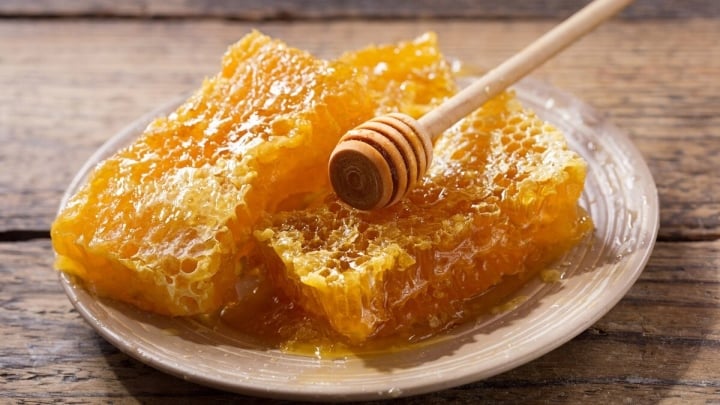
Many people wonder what beeswax is used for.
What are the uses of beeswax?
Here are some of the health benefits of beeswax:
Treating a sore throat: Using about 4g of dried beeswax, ground into powder and dissolved in water, is an extremely effective remedy for sore throats.
Treating external burns: For minor burns, you can apply a small amount of beeswax gently to the affected area to soothe the skin and promote faster healing.
Treating diaper rash in infants and young children: Because beeswax is gentle, rich in vitamin A and components that promote cell regeneration, it can be applied to diaper rash areas in children, helping to relieve pain and promote faster healing.
Treating sinusitis: Soak about 500g of beeswax in 2 liters of glutinous rice wine for about 3 months, then drink about 10ml to 20ml daily to effectively treat sinusitis.
Relieves bone and joint pain: Using beeswax soaked in alcohol for consumption or massage can help relieve joint pain quickly, especially for the elderly.
Boost your immune system: Beeswax is highly nutritious, containing many essential minerals and vitamins that help boost the body's immunity and fight off diseases.
Treatment of postpartum hemorrhage: Women who experience postpartum hemorrhage can mix about 2 to 3 teaspoons of beeswax with warm alcohol and drink it.
Treatment for stomach pain and colitis: Boil 15g of beeswax, 15g of yam, and 20g of atractylodes with 100ml of water. Drink this decoction daily instead of plain water to help treat stomach pain and colitis.
Treating allergic rhinitis: Using beeswax soaked in alcohol, as in the treatment of sinusitis, drinking a small cup twice a day can reduce the symptoms of allergic rhinitis.
In addition, beeswax has many beneficial effects in beauty treatments:
Moisturizing for the skin
Beeswax is a great way to hydrate the skin and is often found in skincare and cosmetic products.
Similarly, it has the ability to repair and care for the symptoms of dry and cracked skin, thanks to its ability to retain moisture in the body.
Clear acne
Beeswax is one of the most well-known and popular home remedies used to improve skin conditions caused by acne. It has strong antiseptic, healing, and anti-inflammatory properties, and is effective in treating acne due to its vitamin A content.
Beeswax is also an excellent emollient and softener that helps maintain a smooth skin texture after acne removal. Combine this with skincare and a healthy diet.
Reduce stretch marks
Thanks to its excellent skin-protecting and moisturizing properties, beeswax is particularly effective in treating unsightly dark spots.
A study conducted in South Korea reported that stretch marks are atrophic scars with thinning of the epidermis due to a decrease in collagen and elastic fibers.
Research shows that collagen is a key component of the extracellular matrix, which is crucial for wound healing.
Beeswax contains vitamin A, which is often helpful in collagen production; additionally, it tends to be very beneficial for reducing stretch marks.
Treatment of fungal skin infections
Fungal skin infections are certainly unpleasant, but they can be treated with the benefits of beeswax.
Because of its anti-inflammatory properties, it can help reduce pain from rashes and fungal skin infections, while also providing moisturizing benefits to reduce itching. Applying a mixture of beeswax, honey, and olive oil to the affected area three times a day for four weeks may help improve fungal infections and skin fungus.
The above information answers the question "What are the uses of beeswax?". Hopefully, this information will be useful to you.
 Comment