



 Hotline: 0855.911.911
  RSS
RSS 

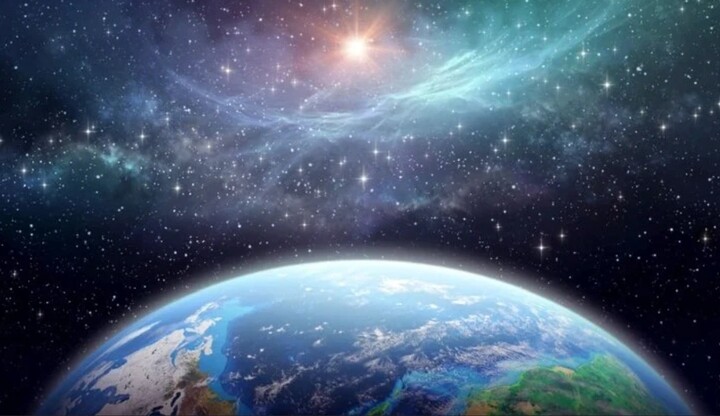
The true figures for flight times from Earth to planets in the Milky Way.
The journey from Earth to planets in the Milky Way galaxy would take anywhere from a few seconds to millions of years if traveling at the speed of light.





The journey from Earth to planets in the Milky Way galaxy would take anywhere from a few seconds to millions of years if traveling at the speed of light.
Japanese researchers have for the first time successfully simulated the entire Milky Way galaxy, with over 100 billion stars, over a period of 10.000 years.
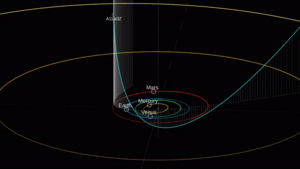
A newly discovered interstellar object traveling at extremely high speed through the Solar System is being likened to an interstellar 'parcel' containing many mysteries from distant star systems.
Phosphorus is a vital component of life but is very rare in space; however, experts have now found it at the edge of the Milky Way galaxy.
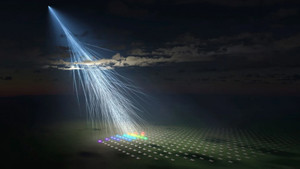
Space scientists studying the origins of cosmic rays have discovered extremely rare, high-energy particles that they believe arrive on Earth from outside the Milky Way galaxy.
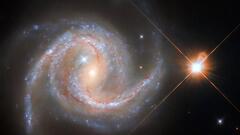
The Hubble Space Telescope has captured an image of a stunning spiral galaxy, adorned with two twinkling stars nearby.
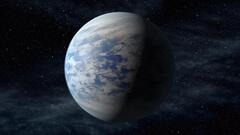
With surface areas 3-7 times larger than Earth, the two newly discovered "super-Earths" have many conditions suitable for human life.
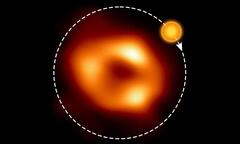
Astronomers say they have just discovered a bubble of hot gas orbiting a black hole at the center of the Milky Way galaxy at breakneck speed.

Approximately 500 planets are roaming the Milky Way, and if one of them were to collide with Earth, the human era could well end.
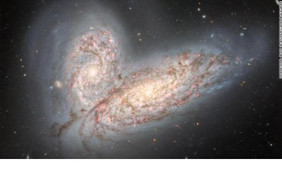
The Gemini North telescope, located atop Maunakea in Hawaii, USA, has discovered interacting spiral galaxies approximately 60 million light-years away.
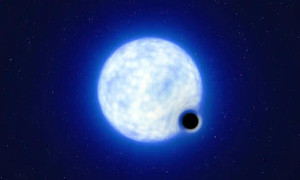
The black hole VFTS243 has a mass nine times that of the Sun and belongs to a binary system with a companion star.
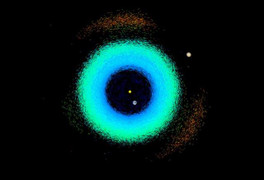
This is a comprehensive overview of 1,6 billion stars, 11,4 million galaxies, and 158.000 asteroids.
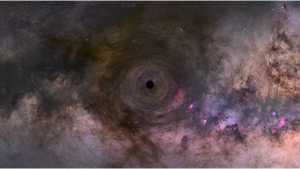
A newly discovered rogue black hole in the Milky Way may be the smallest black hole ever, according to one estimate of its mass.
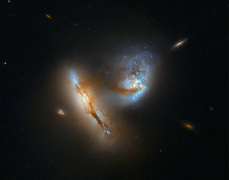
In a few billion years, the Andromeda galaxy and our Milky Way may collide, forming a new galaxy called Milkyomeda.
The Milky Way is home to millions of potentially habitable planets, and about four of them could harbor extraterrestrial civilizations.
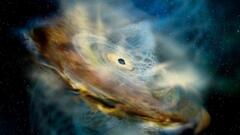
According to Space, a study shows that X-ray emissions disappear and then return due to changes in the environment.
With the help of a new optical telescope, Chinese astronomers have discovered an additional 1.417 small galaxies, nearly double the number of galaxies previously known.
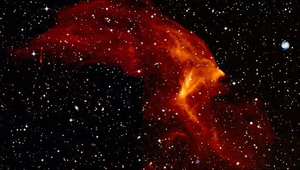
Scientists have discovered that the collision generated a shock wave more than 60 times larger than the entire Milky Way galaxy and with a diameter of approximately 100.000 light-years.
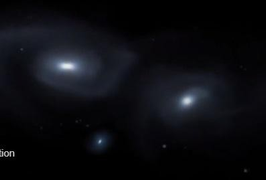
Spinning through space, three distant galaxies collide in a stunning new image captured by NASA's Hubble Space Telescope.
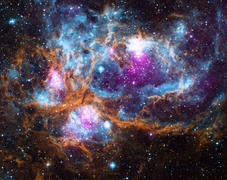
Here are some images showcasing the breathtaking beauty of the universe.
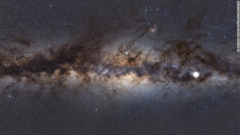
While mapping radio waves in the universe, astronomers stumbled upon a celestial object that was emitting energy sources they had never seen before.
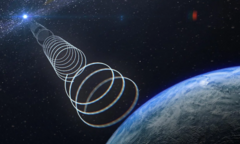
Scientists have discovered strange radio waves, unlike anything previously detected, originating from the center of the Milky Way galaxy.
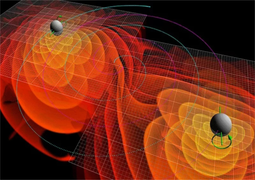
2021 saw incredible and surprising discoveries about black holes – invisible “monsters” that possess immense power in the universe.
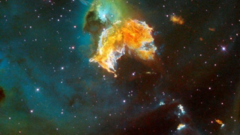
Here are 10 of the most amazing and mysterious spatial structures discovered in 2021.
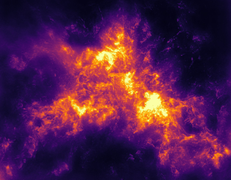
Australia's state-of-the-art ASKAP and Pakers radio observation systems have captured the most comprehensive radio images yet of the Small Magellanic Cloud, a satellite galaxy of the Milky Way.
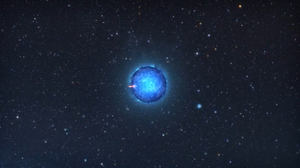
Astronomers may have discovered the first planet outside our Milky Way galaxy, located 28 million light-years from Earth.
Since 1995, the list of discovered exoplanets has grown rapidly.
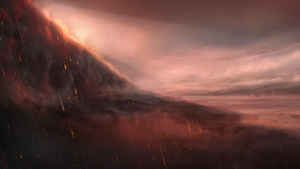
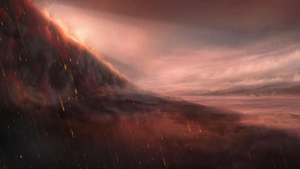
According to scientists, the exoplanet WASP-76b may be much hotter than they previously thought.

Anyone who sets foot here for the first time will be amazed by its mystical beauty, like stars appearing beneath the ground.
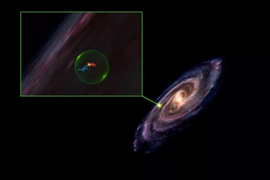
Astronomers have discovered a giant spherical cavity in the Milky Way, believed to have formed after a stellar explosion millions of years ago.