


 Hotline: 0855.911.911
  RSS
RSS 

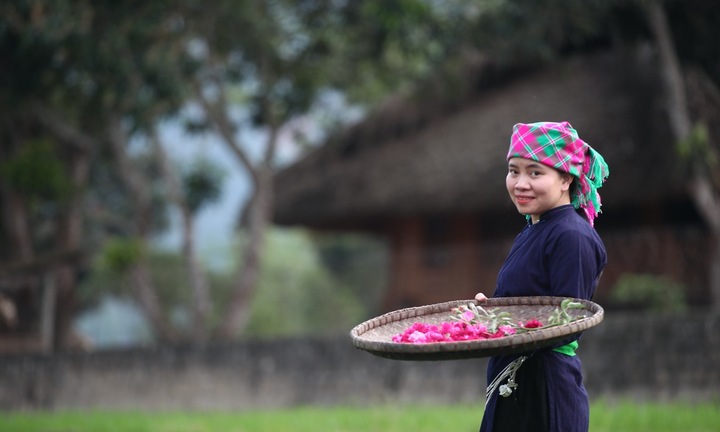
Highland women's lives transformed by digital technology.
Having once had to leave their young children behind to work as factory workers, many ethnic minority women in Lao Cai are now independent and self-reliant on their own village land.





Having once had to leave their young children behind to work as factory workers, many ethnic minority women in Lao Cai are now independent and self-reliant on their own village land.
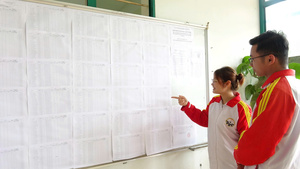
Over 23.000 students from ethnic minority groups were screened, registered as voters, and polling stations were set up right on campus, facilitating their participation in the election in accordance with regulations.
Integrating public opinions into the draft documents is a crucial step in improving the quality of the documents and strengthening confidence in successfully implementing the Resolution of the 14th National Congress.
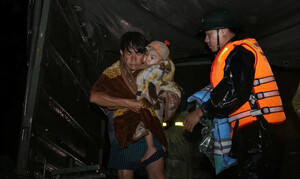
You are luckier than many others if you are wearing dry clothes, eating hot meals, and sleeping in a bed; don't forget those compatriots who only wish to survive while surrounded by raging floods.
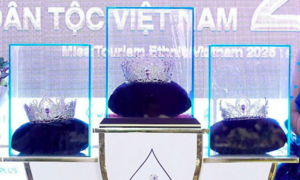
The "Purple Bauhinia Flower" crown of Miss Ethnic Tourism Vietnam impressed with its design, which mimicked the terraced rice fields of Northwest Vietnam.

The exhibition "Returning to Sacred Moments" in Quang Ninh takes participants on a journey back in time to a glorious historical moment of the nation.

Having helped two people from the highlands who were scammed and overcharged 4,2 million VND per taxi ride, and then exposing the incident so the police could investigate, Mr. Truong has been dubbed a "knight" by netizens.

The image of the beautiful Nung bride in a modernized Hmong wedding dress standing next to her handsome groom has captivated many netizens, drawing much praise.

Vi Thi Thao is the first person from a poor border village in Nghe An province to be admitted to the General Medicine program at Hanoi Medical University's Thanh Hoa branch.
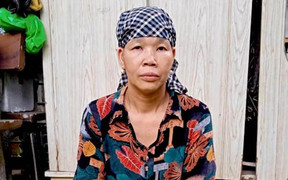
Despite the agonizing pain, Ha Thi Tinh, a woman of the Thai ethnic group, concealed her illness to care for her husband, who was suffering from terminal lung cancer.

Unlike other children, baby Luyen was born with a congenital esophageal defect, and to make matters worse, one of her hands had six fingers.
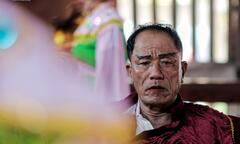
Due to the inability to build a new generation of performers, along with many operational difficulties, the once-famous Thach Loi opera (Hai Duong) is gradually fading away.

By 2025, the goal is to have approximately 3.000 km of expressways nationwide and to essentially complete the Eastern North-South Expressway.
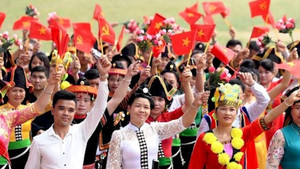
National unity is a precious tradition of our nation, forged over thousands of years of nation-building and national defense.

On November 22nd, commemorating the 17th anniversary of Vietnam's Cultural Heritage Day, Lang Son province inaugurated an exhibition showcasing "Introducing and Performing Cultural Heritage of the Tay, Nung, and Dao Ethnic Groups".
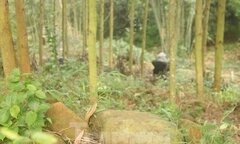
"The elders said we had to hide the 'prostitute's stone' to prevent strangers from touching it, which would cause the women in the village to rebel against sexual matters like before," Mr. Mung recounted.
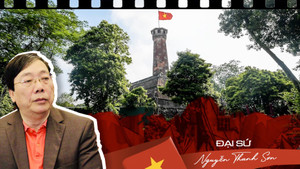
"We should be courageous, dynamic, and creative so that April 30th becomes a day of national unity, harmony, and reunification," said Ambassador Nguyen Thanh Son.
Empress Dowager Từ Dụ, whose given name was Hằng, was born on May 19th, 1810 (the year of Canh Ngọ). She came from a family with a long lineage of officials.
Truong Vinh Ky was a renowned professor who was proficient in 27 living and ancient languages around the world, including Vietnamese, French, and Chinese.
Thành Thái was the tenth emperor of the Nguyễn dynasty. After his dethronement, Nguyễn Phúc Vĩnh San, his eighth son, ascended the throne and took the reign name Duy Tân.
Hoang Hoa Tham (1858 – February 10, 1913), also known as De Duong, De Tham, or the Tiger of Yen The, was the leader of the Yen The uprising against French colonialism.
Hoàng Diệu's real name was Hoàng Kim Tích, his courtesy name was Quang Viễn, and his pen name was Tỉnh Trai. He was born on February 10, 1829 (the year of Mậu Tí) in Xuân Đài village (Diên Phước, Quảng Nam).
Nguyen Tri Phuong was born on July 21st, 1800 (September 9th, 1800), in Duong Long village, Phong Dien district, Thua Thien Hue province.
Phan Đình Phùng, whose pen name was Châu Phong, was born on June 6, 1847, in Đông Thái village, La Sơn district (now Tùng Ảnh commune, Đức Thọ district), Hà Tĩnh province.
Hàm Nghi, posthumous title Xuất Đế, real name Nguyễn Phúc Ưng Lịch, was the eighth emperor of the Nguyễn dynasty.
Nguyen Dinh Chieu was born in 1822 into a poor Confucian family in Tan Thoi, Tan Binh district, Binh Duong province, Gia Dinh province, now part of District 1, Ho Chi Minh City.
Truong Dinh was born in Tu Cung village, Binh Son district, Quang Ngai (now Tinh Khe commune, Quang Ngai city, Quang Ngai province).
Nguyen Truong To was born into a family that had followed Roman Catholicism for generations in Bui Chu village, Hung Trung commune, Hung Nguyen district, Nghe An province.
King Tự Đức, whose real name was Nguyễn Phúc Hồng Nhậm, was born on August 25th, 1829 (September 22nd, 1829) in Huế. He was the second son of King Thiệu Trị and Phạm Thị Hằng.
Cao Bá Quát was born in 1809 in Phú Thị village (Gia Lâm, Hanoi). From a young age, he was studious, intelligent, and quick to learn.