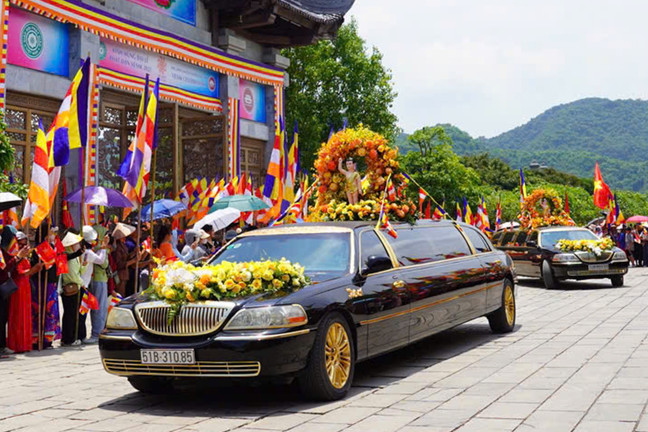
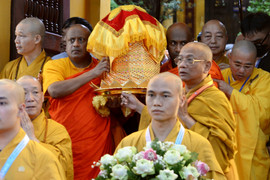
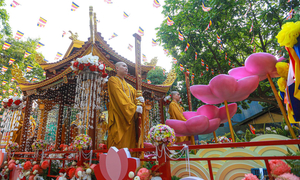
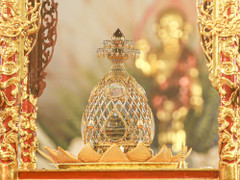
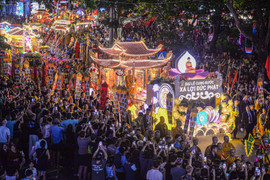
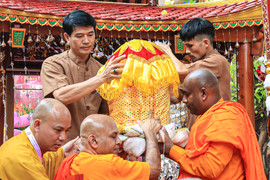
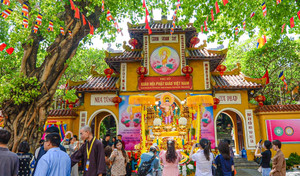
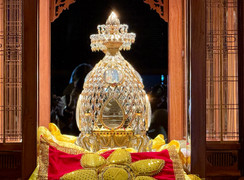
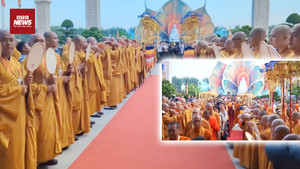
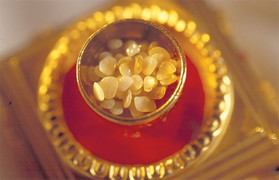
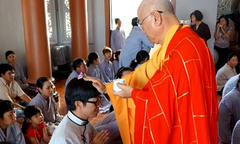
A solemn procession of limousines escorted the relics of the Buddha from Tam Chuc Pagoda to Bai Dinh Pagoda on the morning of May 21st, continuing the pilgrimage for Vesak 2025.
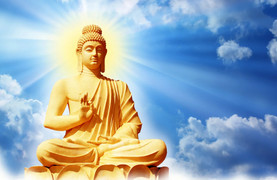
Worshiping Buddha is not about asking for blessings or forgiveness, because he is not a deity but a teacher who teaches how to escape suffering, a path he himself sought and experienced.
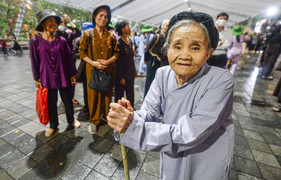
At the age of 90, Mrs. Chu Thi Phuong (from Ung Hoa district, Hanoi) still takes an early morning bus alone to Ha Nam to pay her respects to the relics of Buddha Shakyamuni at Tam Chuc Pagoda.
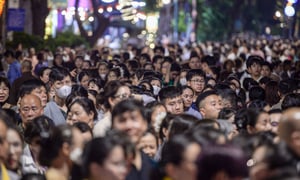
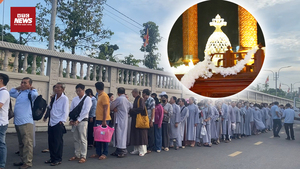
From early morning on May 17th, crowds of people lined up and moved into the place of veneration for the Buddha's relics at Tam Chuc Pagoda (Ha Nam province).
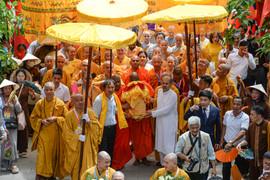
On the morning of May 17th, a procession carrying the relics of Buddha Shakyamuni departed from Quan Su Pagoda (Hanoi) to be enshrined at Tam Chuc Pagoda (Kim Bang town, Ha Nam province).
On the morning of May 17th, the relics of the Buddha were escorted from Quan Su Pagoda (Hanoi) to Tam Chuc Pagoda (Ha Nam), passing through major roads in Hanoi, Phu Ly City, and the Tam Chuc tourist area.
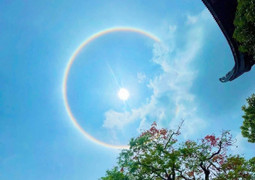
At noon on May 15th, a sun halo appeared in the sky over Hanoi, where the Buddha's relics are enshrined, moving many people who believed it was an auspicious sign from the divine realm.
Following the announcement that Quan Su Pagoda would be open all night, people from all over flocked there, willing to wait for hours to venerate the relics of the Buddha.
The relics of Buddha Shakyamuni were enshrined at Quan Su Pagoda (Hanoi) from May 14th to 16th, attracting tens of thousands of Buddhists who came to venerate, pray, and practice virtuous deeds.
On the evening of May 13th, tens of thousands of people and Buddhists gathered at Ho Guom Lake to venerate the relics of the Buddha – a national treasure of India – which were brought to Vietnam for the first time.
On the morning of May 13th, preparations at Quan Su Pagoda were complete, ready for the ceremony to welcome the relics of Shakyamuni Buddha - a national treasure of India.
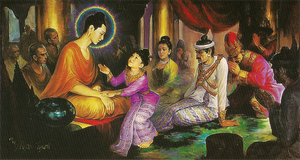
After many years away from home seeking enlightenment, the Buddha returned to the capital city of Kapilavastu to visit his family. His seven-year-old son, Rahula, asked his father to give him the family fortune.
Before becoming the first nun, the Buddha's stepmother requested three times that he allow women to become nuns, but he refused each time; why did he refuse?
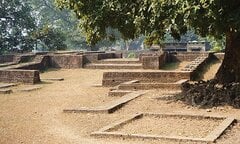
According to modern geographical divisions, were the birthplace of the Buddha and the royal capital of the Shakya clan where he grew up located in the same country?
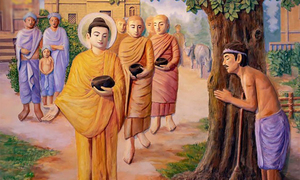
After attaining enlightenment, why did the Buddha not live like a religious leader but instead continued to go out begging for alms every day? What was the significance of this action?
Over 2.000 delegates from Vietnam and abroad solemnly welcomed the relics of the Buddha - a national treasure of India - on the summit of Ba Den Mountain, Tay Ninh, as part of the 2025 Vesak Grand Celebration.
The 2025 Vesak celebration, held from May 6-8 in Ho Chi Minh City, attracted thousands of people who came to participate and venerate the relics of the Buddha.
From early morning on May 3rd, a large number of people and Buddhist followers in Ho Chi Minh City and many provinces and cities across the country lined up to wait for their turn to venerate the relics of the Buddha.
Regarding the Buddha Shakyamuni, many documents and scriptures state that he possessed 32 auspicious signs and 80 beautiful features. What were these beautiful features?
On the full moon day of the first lunar month, when the Buddha was 80 years old, seeing that his physical body was decaying and his teachings had spread far and wide, he decided to enter nirvana.
How should one spend money to ensure peace and well-being for oneself and one's family? This was the question the Buddha was asked after the death of a wealthy man living a life of hardship in Sravasti.
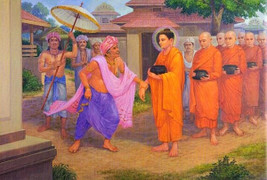
The Buddha's father was shocked and hurt when, on his first visit home, the Buddha went out to beg for alms after a sermon, while a feast had already been prepared in the palace.
Just because someone goes to the temple on the 1st or 15th day of the lunar month to pray for blessings and good fortune doesn't make them a Buddhist. So, who are considered Buddhists?





 Hotline: 0855.911.911
  RSS
RSS