


 Hotline: 0855.911.911
  RSS
RSS 

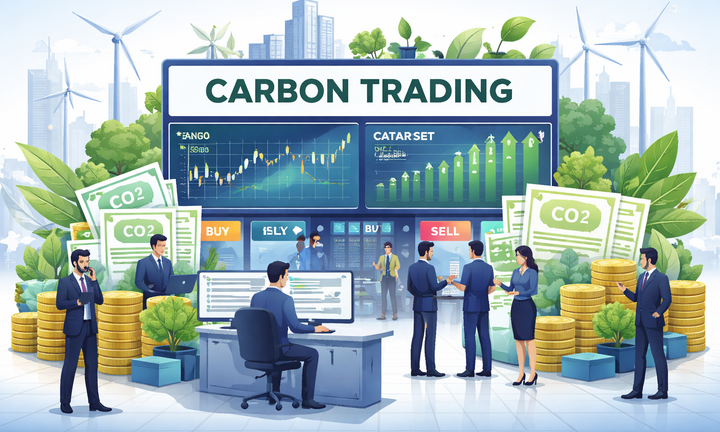
Carbon markets: The gap between legal framework and enforcement
Vietnam's carbon market legal framework is gradually being perfected, shaping the "rules of the game" for emission reduction, but the implementation gap still needs to be narrowed soon.





Vietnam's carbon market legal framework is gradually being perfected, shaping the "rules of the game" for emission reduction, but the implementation gap still needs to be narrowed soon.

Bidoup National Park is considered the "green lung" of Lam Dong province, playing a crucial role in conserving biodiversity and regulating the climate.
The European Union is pushing ahead with plans to use low-emission steel in the automotive industry to reduce carbon emissions.
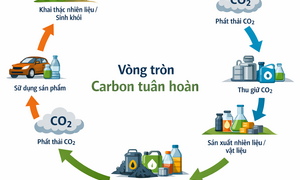
Cabot Group has successfully developed circular carbon production, accelerating the transition to a circular economy and reducing carbon emissions in Asia.
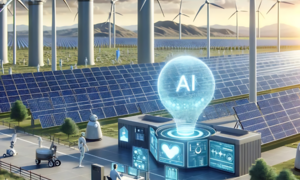
Over the past decade, artificial intelligence (AI) has transformed from science fiction into one of the most powerful drivers of innovation in the 21st century.

New research suggests that eliminating business class seats and increasing the occupancy rate of economy class seats could help the airline industry halve its CO2 emissions.

The European Commission has decided to advance by a year the review of its 2035 target to ban CO₂ emissions from vehicles, in response to concerns from the automotive industry.

Deputy Speaker of the National Assembly Le Minh Hoan posed the question, "Are we sacrificing the environment for development? This is not a criticism, but a reminder for us to reflect upon."

Applying artificial intelligence (AI) in manufacturing not only helps factories detect problems in a timely manner, but also saves energy consumption and reduces CO2 emissions.
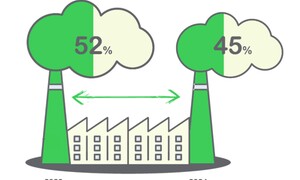
The 2024 annual "Green IMPACT Gap" Sustainable Development Report clearly outlines the survey results on Vietnamese businesses in promoting sustainable development.
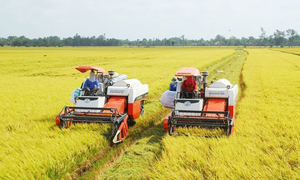
The agricultural sector is attracting investment to apply digital transformation and green transformation technologies to the production of 1 million hectares of rice in the Mekong Delta.
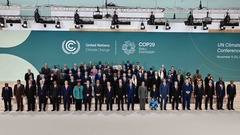
Observers argue that ASEAN is a region vulnerable to the impacts of climate change while also being uniquely positioned for a sustainable, carbon-free transition.

Hybrid vehicles can produce up to five times more emissions over their lifetime compared to electric vehicles.

To develop and move towards NET Zero by 2050, developing green buildings that balance energy consumption and recycling is considered the most effective solution.

BIDV has been selected as the servicing bank for the Emission Reduction Payment Agreement (ERPA) in the North Central region, funded by the Forest Carbon Partnership Fund (FCPF).
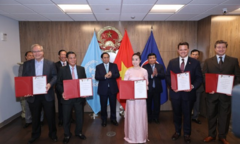
On the afternoon of September 21st, the Saigontel Green Infrastructure Development Alliance signed a cooperation agreement for green growth in the United States.
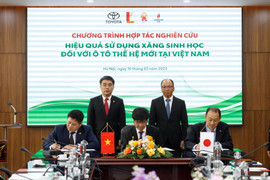
On March 16, 2023, the signing ceremony of the Memorandum of Understanding for the Project on Researching the Effectiveness of Applying Biofuels to Next-Generation Automobiles in Vietnam took place successfully.
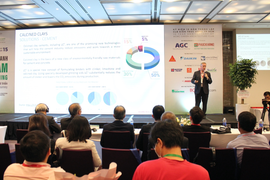
Sika® Vietnam continued to make a strong impression at the 15th Green Architecture Conference by providing three solutions to reduce the CO2 emission impact from cement.