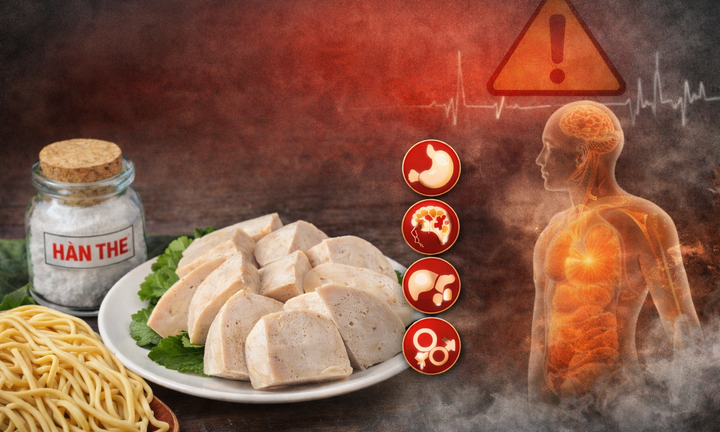
Borax is a substance that is absolutely banned in food, but many unscrupulous traders still mix it into sausages and ham to make them chewier, posing a health hazard to consumers.
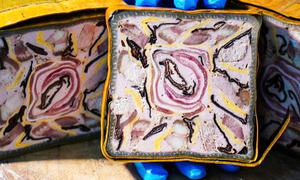
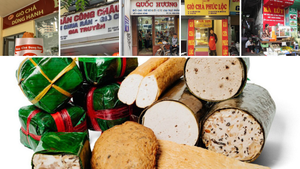
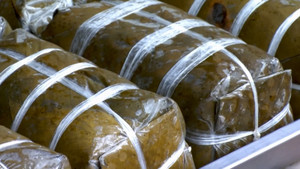
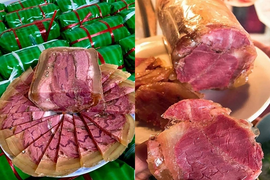
Hand-wrapped pork sausages with floral patterns, cloud patterns, and five-color designs, all possess a unique beauty found only in Vu Dong commune, Thai Binh province (formerly), now part of Tran Lam ward, Hung Yen province.
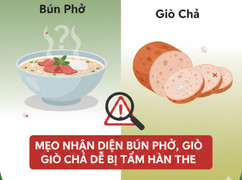
Borax is banned from use in food processing, but some unscrupulous traders still use it, and the following three types of food are particularly susceptible to being adulterated with borax.
The series of cases involving sausages and ham containing borax, resulting in the seizure of tons of products, serves as a wake-up call regarding consumer health.
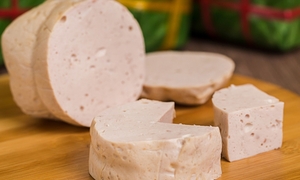
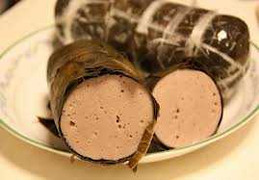
Identifying good quality Vietnamese sausage made from premium meat isn't too difficult if you pay attention to factors like color, aroma, texture, and ingredients.
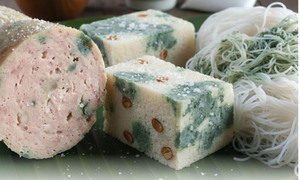
Many people believe that homemade Vietnamese sausage is safer, while store-bought sausages are more likely to contain borax. So how can you detect sausages containing borax?
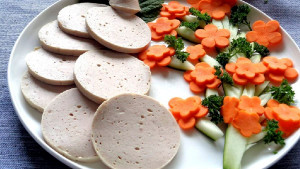
Pork sausage (giò chả) is not only found on celebratory feasts but is also a popular everyday dish, which is why famous places to buy giò chả in Hanoi always have long queues.
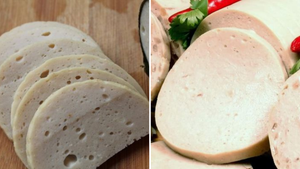
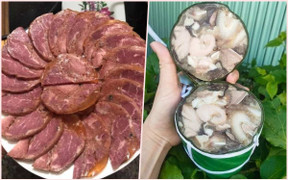
Many people still wonder whether the type of ham with a smooth, firm surface tastes better than the type that has many small holes when cut open, and which one they should choose when buying.
From ancient times to the present day, Ước Lễ pork sausage (Tân Ước commune, Thanh Oai district, Hanoi) has always been considered a dish that embodies the essence of Vietnamese cuisine, an indispensable part of holidays and Tet (Lunar New Year).
Long Dinh Pork Sausage and Ham - 204 Hang Bong Street is known for its diverse range of dishes that retain traditional flavors, focusing on health and product value.
A wide variety of homemade foods are being sold indiscriminately in the Tet market, without any quality control or expiration date checks, raising concerns about food safety.
Dung Hanh, Nguyen Sinh, and Lan Ong are three of the many long-standing bread shops in the capital, well-known and popular with customers, each selling more than 1.000 loaves a day.
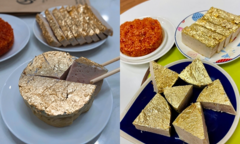
On the offering tray for the God of Wealth's Day this year, in addition to grilled fish and roasted pork, people were astonished to see pork sausage wrapped in 23-carat gold.
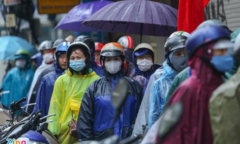
On the morning of February 9th (the 28th day of the Lunar New Year), despite the incessant rain, a large crowd still lined up to buy pork sausage and sticky rice cakes at a shop on Hang Bong Street (Hoan Kiem District, Hanoi).
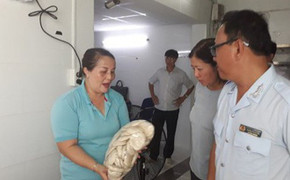
A team from the Central Inter-Ministerial Steering Committee on Food Safety and Hygiene inspected several sausage and ham production facilities in Ho Chi Minh City and discovered signs of violations.
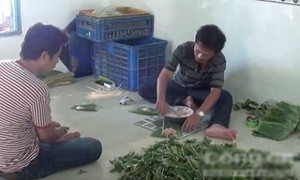
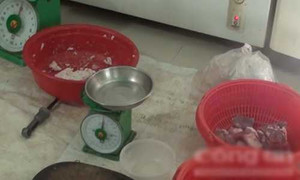
For every 1 kg of spoiled lean meat and 0,5 kg of fat, the owner mixes it with 1,5 tablespoons of borax, then grinds it into a paste and molds it into sausage sticks.
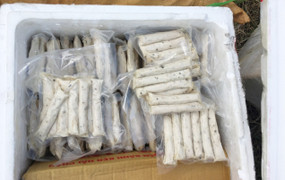
On April 22, the Binh Thuan Provincial Police inspected and discovered two food processing facilities that were mixing borax into the ingredients used to make sausages and ham.
For every 1 kg of spoiled lean meat and 0,5 kg of fat, the owner of the establishment mixes it with 1,5 tablespoons of borax. This is how an establishment mixes a carcinogenic substance into its processed meat products.
(VTC News) - Authorities have discovered a food production facility using borax, commonly used in ceramics and glass manufacturing, to process pork sausage and other processed meat products.





 Hotline: 0855.911.911
  RSS
RSS