



 Hotline: 0855.911.911
  RSS
RSS 

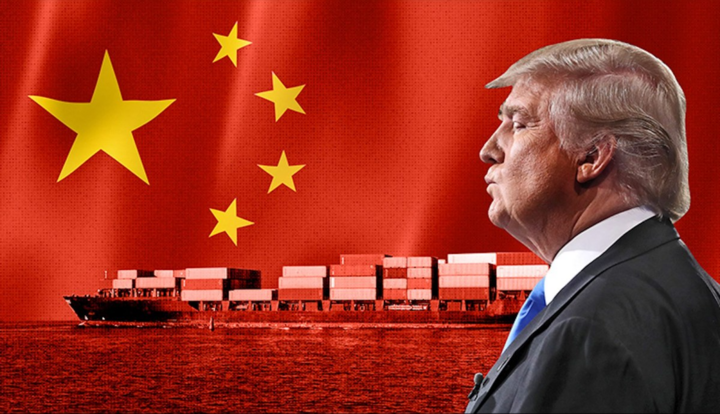
Trump wants to raise tariffs, but China doesn't mind?
China may not retaliate strongly against Trump's new tariffs, but instead focus on boosting domestic demand and diversifying its supply chains to other countries.





China may not retaliate strongly against Trump's new tariffs, but instead focus on boosting domestic demand and diversifying its supply chains to other countries.

Experts believe that the new US tariff increase on Chinese goods could trigger a chain reaction of similar actions from the West, as well as retaliation from Beijing.
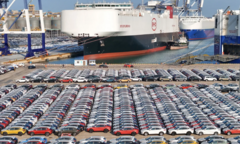
Due to domestic supply exceeding demand, China is forced to export cheap goods abroad, leading to tensions with its global trading partners.
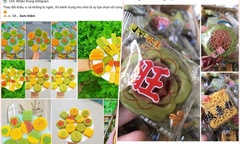
Recently, small Chinese mooncakes are being sold by weight in abundance on online marketplaces, priced at only around 4.000 VND per piece.

China still falls short of its commitment to purchase US agricultural products by $13 billion, and there are seven key areas where Beijing has yet to fulfill its obligations.
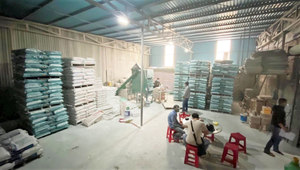
Mr. Long established a company, invested in production lines, and then bought raw materials from China to manufacture counterfeit wall plaster of famous brands for sale on the market.

Various types of hot pot broth, such as Chongqing hot pot broth, Haidilao hot pot broth, and Sichuan hot pot broth, are flooding the market, with Hanoi residents placing orders in droves as the weather turns colder.
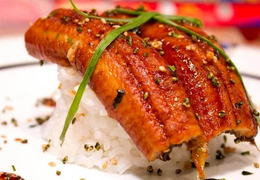
Grilled Japanese eels, currently appearing in abundance on online marketplaces for only 165.000 VND per eel, are advertised as a specialty from the land of cherry blossoms, but their origin is misrepresented.
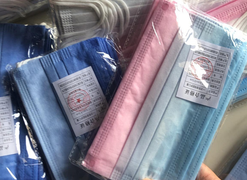
Advertised as domestically produced in China, these colorful medical masks are being widely sold online for as little as 1.500 VND per piece.
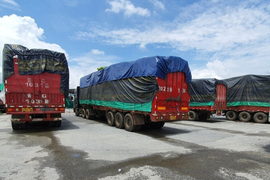
Representatives from the General Department of Customs announced that they will auction off 100 extremely large, unclaimed trucks from China at the Kim Thanh border gate, despite numerous attempts by individuals and businesses to secure the goods.
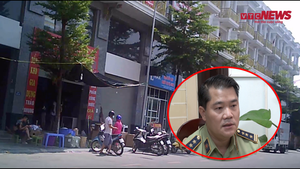
The head of the Hanoi Market Management Department affirmed that there is no protection racket, and the responsibility for handling the long-standing Chinese import warehouse in Ha Dong rests with the local authorities.
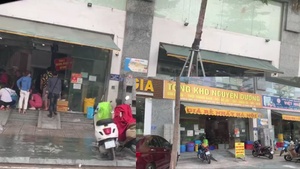
Following VTC News' investigative report, the smuggling hub in Hanoi has removed its signs en masse, but trading activities continue, while authorities remain silent.
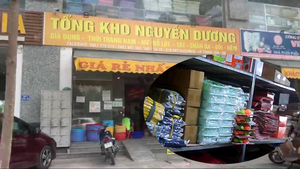
Le Trong Tan Street in Duong Noi Ward (Ha Dong District, Hanoi) is home to many dealerships selling goods of Chinese origin, with signs of tax evasion.
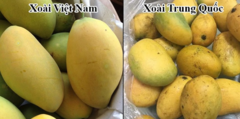
Chinese peaches, mangoes, longans, plums, and grapes are flooding both physical and online markets, with many sellers even advertising them as Vietnamese fruits. So how can you tell the difference?
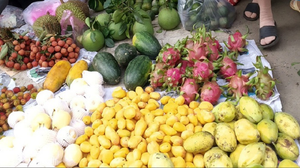
As soon as the Vietnamese mango season ended, Chinese mangoes flooded the market in large quantities, marketed as "sucking mangoes" or "seedless mangoes."
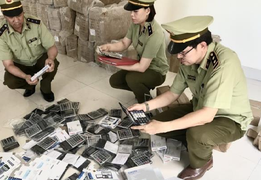
Authorities confiscated three warehouses containing smuggled goods and issued fines totaling 474 million VND to the warehouse owners for violations.
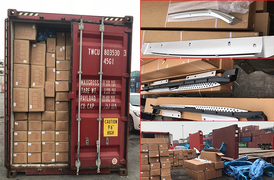
Customs officials have just discovered and seized a container of Chinese-made auto parts that arrived at Hai Phong port without being declared.
A series of fraudulent cases involving Chinese goods disguised as Vietnamese products are occurring with various tactics to deceive consumers, especially during the upcoming holidays and Tet (Lunar New Year).
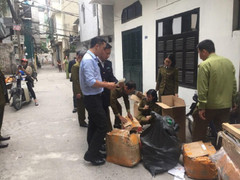
Thousands of clothing, shoes, and handbags bearing Chinese characters had their labels removed and replaced with those of famous brands such as Dior, Chanel, Louis Vuitton, and Gucci.
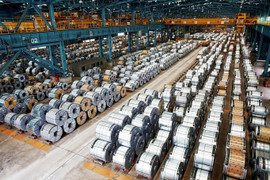
Based on statistical data analysis, the General Department of Customs has classified several items experiencing sudden growth as having a high potential risk of origin fraud.
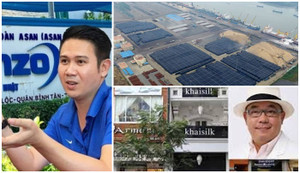
Public opinion has recently been outraged by the issue of Chinese goods falsely claiming Vietnamese origin; below are three of the most shocking cases.
National Assembly representative Hoang Van Cuong (Hanoi delegation) believes that information transparency and decisive action are needed to address violations related to fraudulent origin of goods.
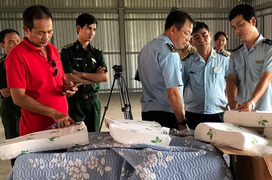
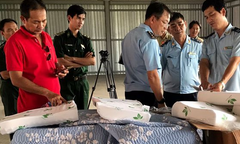
Over 7 tons of goods, including pillows, rubber mattresses, and blankets imported from China and falsely labeled as originating from Vietnam, were seized by Ho Chi Minh City Customs.

On the sidelines of the National Assembly session on the afternoon of October 30th, Deputy Chairman of the National Assembly's Economic Committee Nguyen Duc Kien shared his thoughts on the case of the $4,3 billion aluminum warehouse that was falsely labeled as Vietnamese goods to be exported to the US.
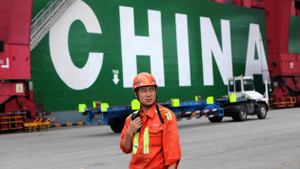
According to experts, this move is more related to the impact of the trade war on the US economy than to a concession to China.

Hanoi Customs has ordered the re-export of numerous shipments from China, South Korea, and Taiwan that did not meet the required conditions.

Authorities are currently inspecting and verifying 28 businesses with export activities related to Asanzo, as well as verifying information regarding the Asanzo group.
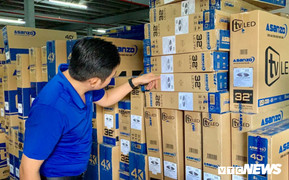
The Ministry of Industry and Trade is concerned about origin fraud, as there is a risk that Chinese goods could "use" Vietnam as a transit route and "borrow" its origin to enter the US market.
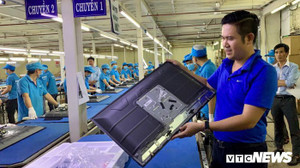
The Dien May Xanh supermarket chain has just announced that it will support customers who purchased Asanzo TVs at its stores by allowing them to exchange them for TVs from other brands.

The Ministry of Public Security has directed its functional units to collect documents and verify suspicions related to Asanzo.