The Cybersecurity Law prohibits the use of artificial intelligence (AI) or new technologies to falsify videos, images, or voices of others in violation of the law.
The draft Cybersecurity Law 2025 clearly stipulates that agencies, organizations, and individuals are responsible for ensuring the rights of children and preventing online information that is harmful to them.
Ms. Nguyen Phuong Hang stated that her biggest mistake was not knowing about the Cybersecurity Law, and that if the police had reminded her of the law when they summoned her for questioning, she would have stopped.
In October 2022, a series of policies came into effect, including the prohibition of reducing unemployment insurance contributions for employers and an increase of 10.000 VND per vehicle for car inspection fees...
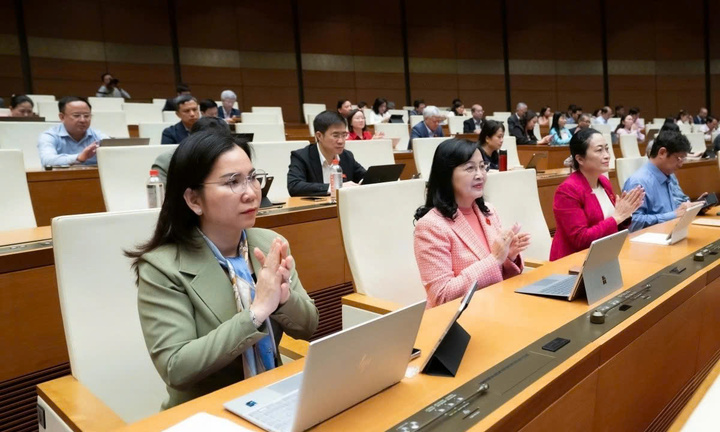
Delegates argued that for the stable development of the country and the future of the nation, the fight against harmful information needs to be given more attention.
According to the Cybersecurity Law, any act of disseminating false information, defamation, or slander online violates the law and may result in criminal prosecution.
On January 1, 2019, the Cybersecurity Law will officially come into effect, comprising 7 chapters and 43 articles regulating activities to protect national security and ensure social order and safety in cyberspace.
Strictly prohibiting the spread of false and misleading information online, accepting anonymous complaints, and legalizing official sports betting... these are some of the regulations and resolutions that came into effect in 2019.
The Ministry of Public Security stated that the data storage regulations in the Cybersecurity Law do not hinder or cause Facebook and Google to withdraw from Vietnam.
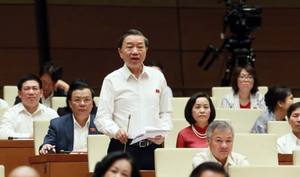
Major General Luong Tam Quang, Chief of Office and Spokesperson of the Ministry of Public Security, stated that the provisions of the Cybersecurity Law do not contradict international regulations and practices.
The Ministry of Public Security, in coordination with the Ministry of Information and Communications and other relevant agencies, has handled a number of cases involving individuals who insulted the dignity and personal integrity of others in cyberspace.
The People's Committee of Phu Loc district (Thua Thien - Hue province) organized a conference to disseminate the Law on Cybersecurity and the Law on National Defense to officials and civil servants of the district and 18 communes and towns.
Voters in Ho Chi Minh City are concerned about malicious individuals exploiting cyberspace to incite large gatherings of people, causing social unrest and insecurity.
The Prime Minister stated that some malicious and reactionary elements had taken advantage of the situation, inciting people to vandalize, resist law enforcement, and obstruct traffic in some areas, causing people to misunderstand the content of the law, especially the draft Law on Special Economic Zones and the Law on Cybersecurity.
Explaining the content of the Cybersecurity Law, a representative from the Ministry of Public Security stated that actions prohibited "in real life" are also not permitted online.
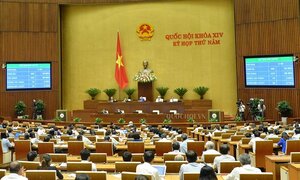
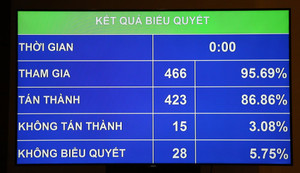
According to National Assembly Secretary General Nguyen Hanh Phuc, the National Assembly only publicly announces the voting results, not the identities of National Assembly deputies who voted or did not vote, on the electronic display board.
A spokesperson for the National Assembly Office said that the National Assembly is very interested in the Law on Demonstrations and the Government is currently working urgently to finalize it for submission to the National Assembly.
On June 12th, many Facebook pages with millions of followers posted information claiming that Facebook was preparing to establish an office in Vietnam; however, this was just fake news.
Major General Dang Ngoc Nghia argued that the Cybersecurity Law does not affect or monitor citizens' activities; the law interferes with information critical to national security, but does not delve into individual privacy.
Essentially, the Cybersecurity Law is expected to curb the spread of distorted, inflammatory, and slanderous information that has been rampant online in recent times, helping to protect national security and social order and safety.
The specialized force for cybersecurity protection is responsible for preventing and combating acts of using cyberspace, information technology, and electronic means to violate laws on national security, public order, and social safety.
Vietnam has the right to require domestic and foreign businesses providing services on telecommunication networks, the internet, and value-added services in cyberspace in Vietnam to store important data of service users in Vietnam within Vietnam.
Acts against the Socialist Republic of Vietnam that affect social security and order will be strictly dealt with according to the provisions of the Cybersecurity Law.





 Hotline: 0855.911.911
  RSS
RSS