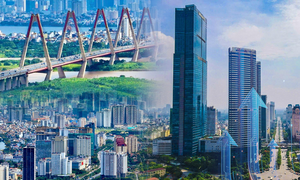
Hanoi has commenced construction on 5 urban railway lines totaling approximately 303,5 km in length, with an investment of over 1,3 trillion VND, and 3 rental housing projects with more than 8.000 apartments.
The Chairman of the Hanoi People's Committee stated that the city's goal is to essentially complete all five urban railway lines by 2030, forming a city-wide network.
Emphasizing the need for Hanoi to effectively mobilize private capital, Prime Minister Le Minh Hung set a target of attracting 5-10 dong of private capital for every 1 dong of public investment.
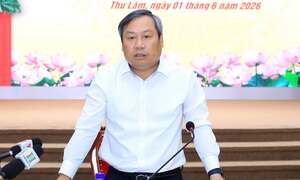
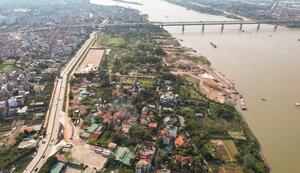
The city will establish a mechanism for open and regular dialogue to promptly address the legitimate aspirations of the people related to the Red River Boulevard project.
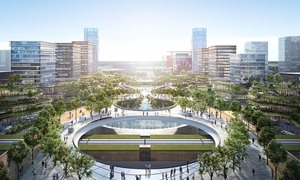
At the 2026 investment promotion conference, Hanoi will have an exhibition area showcasing models, panels, and maps introducing the Capital City Master Plan with a 100-year vision.
Mr. Vu Dai Thang suggested that the high-quality resettlement area should be completed soon so that people can see better new living conditions, thereby creating consensus for large-scale projects.
Hanoi has just announced its centenary planning vision with the goal of controlling the population to no more than 20 million people, achieving a life expectancy of 80 years, and ranking among the top 10 happiest capitals in the world.
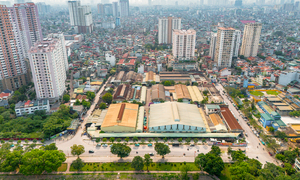
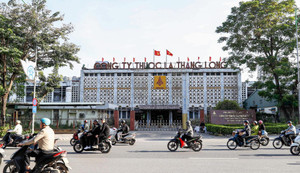
The nearly 3-hectare plot of land belonging to the Thong Nhat Electromechanical Factory, located near Den Lu Lake, is planned to be developed into the T&T Home apartment complex, worth nearly 1.200 trillion VND.
Hanoi is orienting the reconstruction of its historical inner city according to a "multi-layered" model, developing public transportation and gradually reducing population pressure in the central area.
According to the new plan, Hanoi aims to connect a chain of heritage, ecological, and spiritual sites from Soc Son, Ba Vi, and Huong Pagoda to Trang An - Bai Dinh to develop tourism.
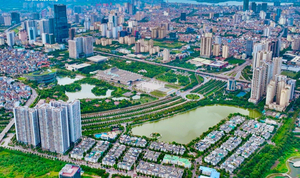
The new master plan shapes Hanoi's development according to a multi-polar model, expanding urban space through ecological buffer zones, belts, and inter-regional radial axes.
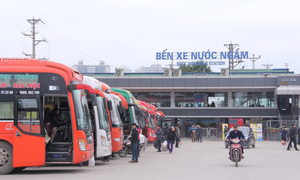
According to the new plan, Hanoi will gradually relocate bus stations within the Ring Road 3 area, while simultaneously developing a second airport and a multi-layered inter-regional transportation system.
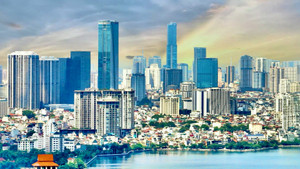
The master plan for the capital city, with a 100-year vision, identifies Hanoi as having 9 major urban centers and 9 growth poles, creating new impetus for future development.
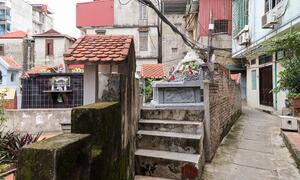
Hanoi is reviewing, closing, and relocating small, scattered cemeteries in the inner city to centralized cemetery areas, with the land freed up after relocation prioritized for public purposes.
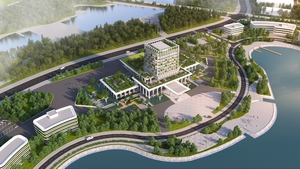
According to the 100-year vision plan, the headquarters of ministries, central agencies, and departments will be relocated outside the inner city, concentrating in the new planned area in Me Tri, Tay Ho Tay.
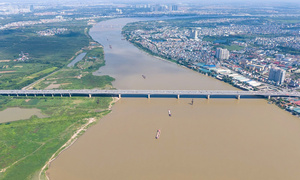
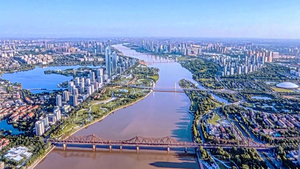
Hanoi's urban planning is based on an open development space, with a "multi-layered, multi-tiered, multi-polar, multi-centered" urban structure, using the Red River as the main ecological and cultural landscape axis.
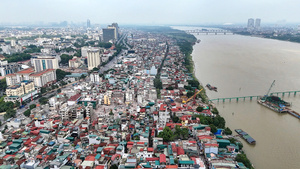
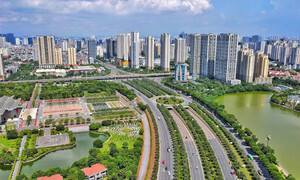
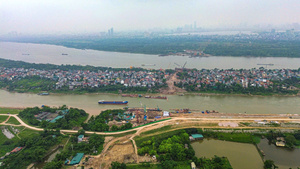
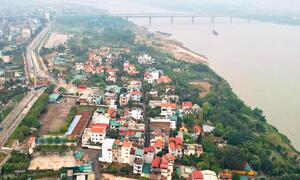
At its second session, the Hanoi City People's Council will approve the Red River Scenic Boulevard project, passing through 16 communes and wards, with a total investment of approximately 736.963 billion VND.
The Ministry of Agriculture and Environment and the City of Hanoi have agreed to relocate and re-plan the entire residential area outside the dike to meet the requirements of comprehensive and synchronized reconstruction of the space on both sides of the Red River.
Amidst increasing urbanization pressures, the challenge of balancing heritage preservation and modern development remains a difficult one for Hanoi to overcome.
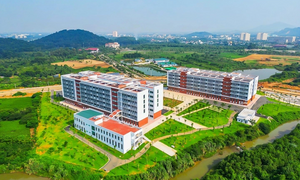
Hanoi plans to develop a university city in Hoa Lac into a major national science and technology center, covering approximately 2.500 hectares, connecting training and research.
In parallel with the relocation of universities out of the inner city, Hanoi is researching and advising on converting these housing units into resettlement housing or social housing.
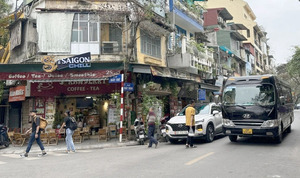
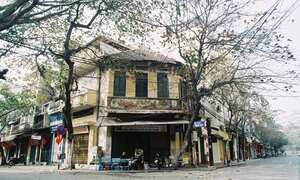
In the master plan for the capital city, with a long-term development orientation and a 100-year vision, Hanoi's Old Quarter will undergo many changes compared to its current state.
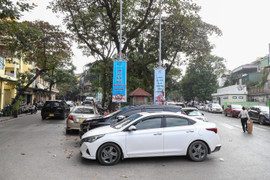
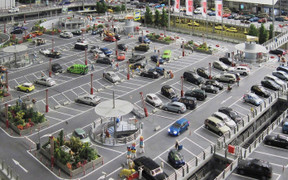
Hanoi has just approved the plan for an underground parking lot at Phung Hung - Bat Dan flower garden, with a scale of approximately 2.160 m², providing parking for 268 cars and 110 motorbikes.
The area under study for the detailed planning of the parking lot covers approximately 8,03 hectares, including about 1,97 hectares for roads and about 6,06 hectares for the project.
On the afternoon of December 15th, the Prime Minister chaired a working session of the Government Standing Committee with leaders of ministries, agencies, and Hanoi City to discuss and provide feedback on the major planning directions for Hanoi.
Hanoi has proposed relocating 51 industrial facilities and 15 government offices from the inner city, including many large businesses currently occupying prime real estate locations in the city.





 Hotline: 0855.911.911
  RSS
RSS