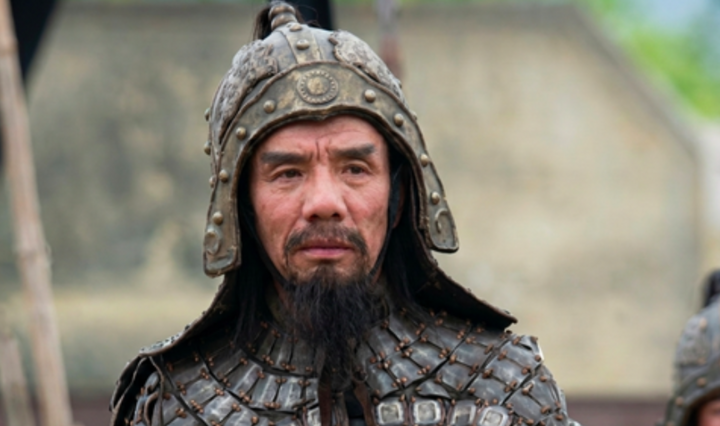
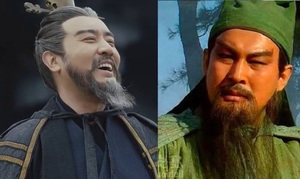
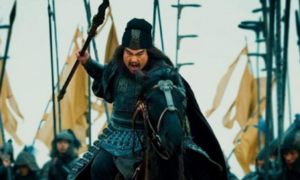
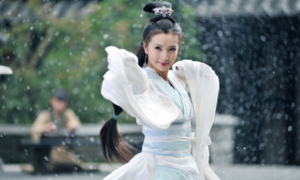
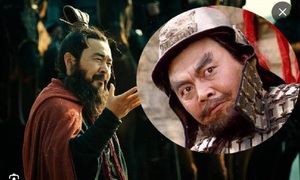
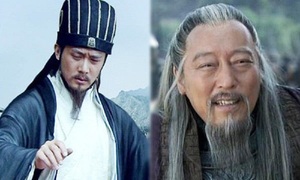
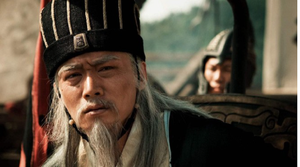
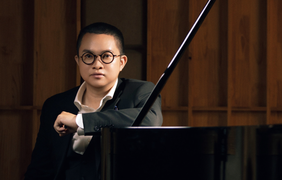
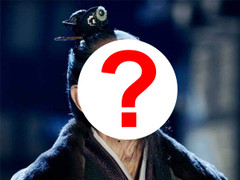
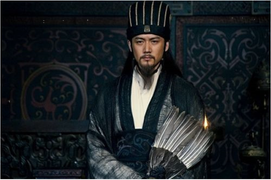
From a factory worker who was initially deemed unsuitable for acting, Wei Zongwan overcame more than two decades of hardship to become the iconic "Sima Yi" of Chinese television.
Believing that his birth mother's tragic death was due to his stepmother's slander, Emperor Wei Ming Cao Rui – grandson of Cao Cao – is said to have sought revenge in a tit-for-tat manner.
The Chinese consider widowed women to be a source of bad luck, often discriminating against and avoiding them, yet 13 of Cao Cao's 16 wives were widows.
The existence of Diao Chan, considered one of the four great beauties of ancient China, and the reason why Lu Bu turned against Dong Zhuo, remains a subject of much debate.
Cao Cao had initially agreed to let Guan Yu marry Du Shi (who was formerly the wife of Qin Yilu and concubine of Lu Bu), but ultimately, he decided to bring her back to his mansion and keep her for himself.
The novel "Romance of the Three Kingdoms" portrays Zhang Fei as a crude, brave but brainless character, far different from the real person; his wife is completely ignored by Luo Guanzhong, never once mentioned.
Ranked as one of the four great beauties of ancient China, Diao Chan's origins are shrouded in mystery; even her name wasn't originally her given name.
Few people know that although Zhang Fei was on opposing sides, he was related to Cao Cao, perhaps that is why his descendants were safe when the Shu Han dynasty fell.
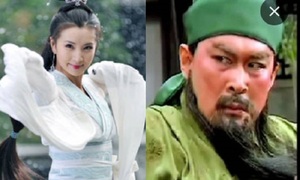
Chinese folklore and theatrical performances record many intriguing, mysterious, and dramatic stories about the relationship between Guan Yu and Diao Chan.
According to "Romance of the Three Kingdoms," Guan Ping was the son of Guan Ding, and later became Guan Yu's adopted son; however, official historical records state that he was Guan Yu's biological son.
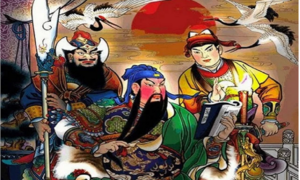
There are many mysterious folk legends explaining why Guan Yu's face is red, and cultural researchers have also weighed in and offered their own explanations.
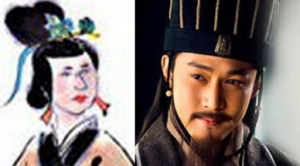
Zhuge Liang was an outstanding talent, a source of pride for the Chinese people, yet they themselves passed down the saying: "Don't learn from Zhuge Liang's method of choosing a wife."
Despite his many achievements and being ranked among the most valiant generals, Zhao Yun's position during Liu Bei's lifetime was not high, far below that of Guan Yu, Zhang Fei, Ma Chao, and Huang Zhong.
When Zhou Yu died, Xiao Qiao was very young and at the peak of her beauty. Many people are curious about the life of this famous beauty from the Three Kingdoms era.
Liu Bei's wives all came from distinguished backgrounds, but their fates were quite tragic; some died young, while others committed suicide by jumping into wells.
Liu Bei's son did not hold a funeral or erect a shrine to Zhuge Liang, leading many to believe that the two men were always on good terms but secretly resentful of each other, or even harbored animosity.
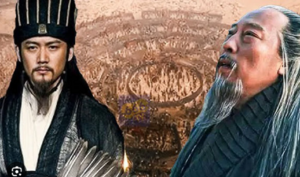
Even after his greatest rival, Zhuge Liang, passed away, Sima Yi still hesitated to attack Shu. Was this due to fear, or were there other underlying reasons?
Even after his death, Zhuge Liang still terrified Sima Yi, causing him to flee breathlessly for over 50 miles before he frantically asked his subordinates, "Is my head still here?"
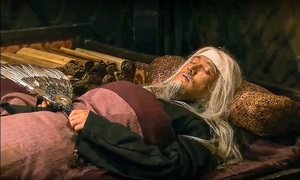
Zhuge Liang instructed his subordinates that after his death, seven grains of rice should be placed in his mouth, and ordered the soldiers not to mourn or grieve, but to maintain a calm and peaceful demeanor.
Depicted by Luo Guanzhong in Romance of the Three Kingdoms as a general with extraordinary martial skills, in actual history, Zhao Zilong was a talented general but not an invincible superhuman.
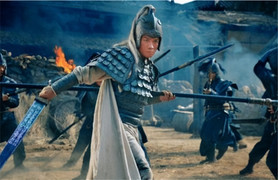
What was the reality of those dramatic one-on-one battles where famous Three Kingdoms generals like Zhao Yun, Guan Yu, Lu Bu, and Zhang He fought their opponents for "over a hundred rounds," slaying enemy generals to win the battle?
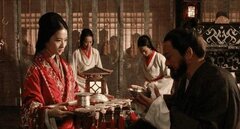
According to some historical documents and folk tales, the true "most beautiful woman" of the Three Kingdoms period was the one who captivated Emperor Wei Wen, Cao Pi.
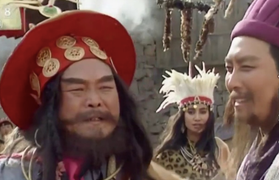
One character from the Three Kingdoms is beloved by many Vietnamese readers and has been voted a "national hero" thanks to his courage, loyalty, and unwavering wisdom.
In the Romance of the Three Kingdoms, Meng Huo is portrayed as a tenacious southern chieftain, but what puzzles many is whether this leader was actually an ancient Vietnamese.
During the Three Kingdoms period, where intelligence and strategy were valued just as much as military power, there was a man who outsmarted even legendary strategists like Zhuge Liang and Pang Tong.
Guan Yu and Zhang Fei are renowned as unparalleled generals of the Shu Kingdom, but the record for killing the most enemies during the Three Kingdoms period belongs to an unexpected figure.





 Hotline: 0855.911.911
  RSS
RSS