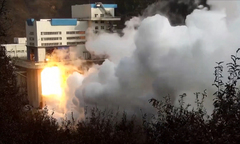
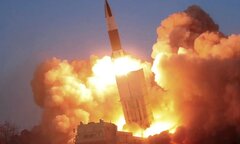
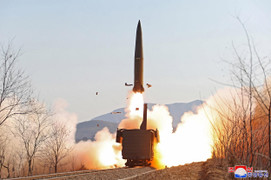
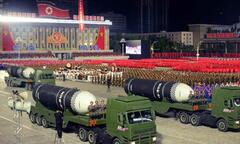
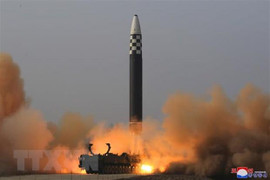
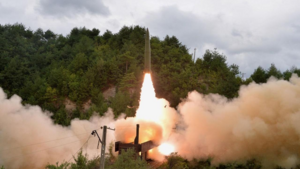
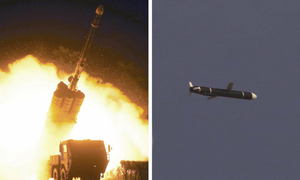
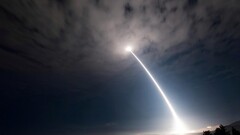
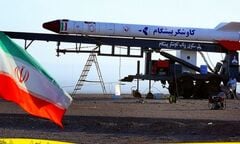
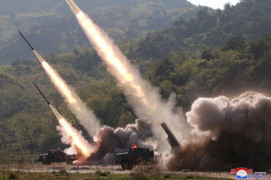
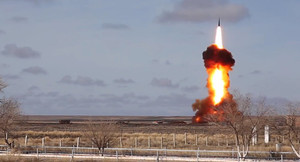
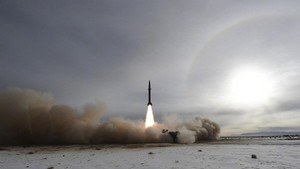
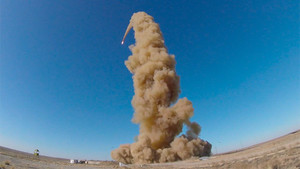
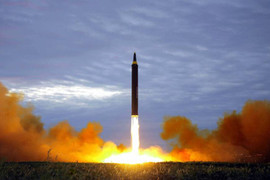
North Korea tested a ballistic missile carrying a cluster munition, underscores its efforts to expand its ability to penetrate the defense systems of the United States and South Korea.
A report to the U.S. Congress indicates that North Korea's recent missile tests are aimed at developing the capability to neutralize Washington's missile defense system in the region.
The US called for a closed-door meeting of the United Nations after North Korea confirmed the test of the Hwasong-12 ballistic missile – a weapon it had previously threatened to target the US territory of Guam.
To date, North Korea has conducted six missile test launches, the most recent being the test of two short-range ballistic missiles on the morning of January 27.
On October 4th, the Russian Ministry of Defense announced that it had successfully test-fired the Tsirkon (Zircon) supersonic cruise missile from the Severodvinsk nuclear submarine.
According to Pentagon officials, the Chinese military has just conducted a test launch of a missile from a submarine, capable of reaching the United States.
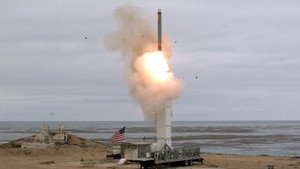
"The data collected and the lessons learned from the test will inform the development of the Department of Defense's future medium-range capabilities," the Pentagon said.
North Korea fired two unidentified projectiles from South Pyongan province eastward on the morning of September 10, the South Korean Joint Chiefs of Staff said.
Trump boasted about receiving "a wonderful letter" from Kim Jong-un, hinting at the possibility of another meeting with the North Korean leader in the near future.
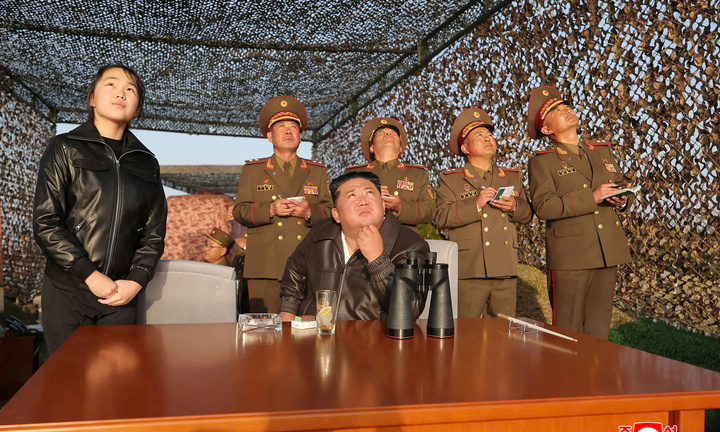
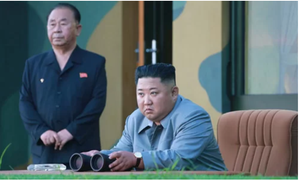
North Korean state news agency KCNA reported today that Kim Jong-un witnessed the August 6 launch, an action intended to warn against the upcoming US-South Korea joint military exercises.
North Korean media released a series of images documenting Chairman Kim Jong-un's inspection of the Amnokgang Tire Factory, which were published on December 3rd.
North Korea's two-month halt in missile testing may be due to its military being busy with winter training, rather than an attempt to de-escalate tensions on the peninsula as many have speculated, the Japan Times suggests.
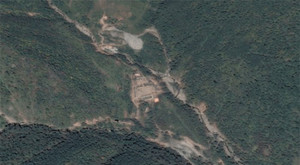
The mountain chosen by North Korea as the site for its nuclear tests is believed to be undergoing geological "fatigue" after numerous consecutive tests.





 Hotline: 0855.911.911
  RSS
RSS