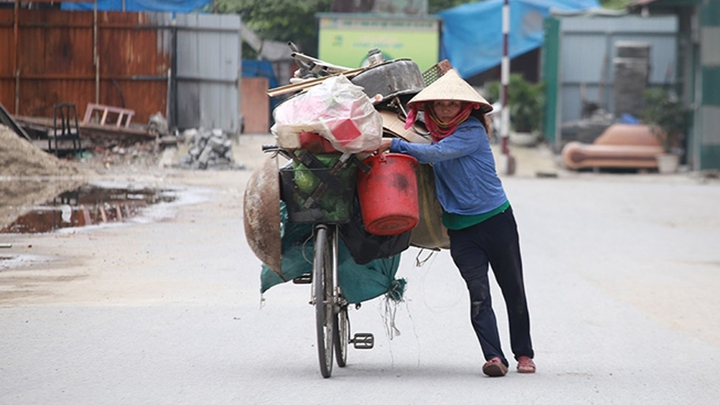
The Vietnam Chamber of Commerce and Industry (VCCI) proposes that scrap metal purchasing businesses be responsible for declaring and paying taxes on behalf of small-scale scrap collectors and dealers.
The proposal to temporarily suspend the exit of taxpayers who are no longer operating at their registered business address and have outstanding tax debts of 1 million VND or more is causing a stir in public opinion.
The government has decided to raise the taxable revenue threshold for individuals and household businesses to 1 billion VND per year, double the current level.
According to delegate Nguyen Thanh Tung, it is necessary to study the application of different tax thresholds for each industry to ensure fairness and reflect business practices.
The government proposes not specifying in the law the revenue thresholds for exemption from personal income tax and the revenue thresholds for exemption from value-added tax for household and individual businesses.
The tax and customs authorities have issued an urgent notice regarding the implementation of a 0% tax rate on gasoline and diesel fuel from today (April 16th) until the end of June.
Individuals earning approximately 28 million VND per month, if they have dependents, may not be required to pay personal income tax; tax only arises if their income exceeds 28,63 million VND, with the excess amount subject to a 5% tax.
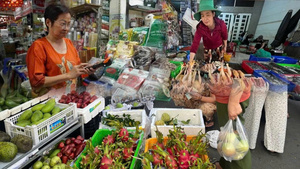
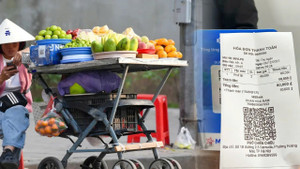
Many small business owners and household businesses are still hesitant about the regulations on issuing electronic invoices, especially for small transactions of only a few thousand to a few tens of thousands of dong.
The head of the Quang Ngai Provincial Tax Department said that requesting money from communes and wards was inappropriate and would be subject to disciplinary action; he was ready to return the money to the communes and wards.
Requirements regarding tax compliance, electronic invoicing, multi-channel operations, and AI applications are directly impacting the growth potential of Vietnamese retailers in 2026.
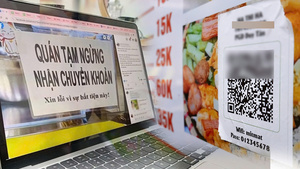
Refusing to accept bank transfers is a form of tax evasion, leading to the risk of businesses being eliminated from the market and facing legal consequences.
When will money deposited into a personal account be scrutinized and subject to tax collection? Experts uncover the truth about online sales tax, gold, and real estate to help you avoid penalties.
Failing to separate business and personal accounts can expose sole proprietorships to the risk of incurring higher tax liabilities than they actually should.
The 2026 business tax will help small business owners change their practices, become more professional, and ensure transparency in their revenue streams.
According to experts, for unintentional violations that do not affect the amount of money collected for the state budget, the penalties should be deterrent and not burden the people.
From 2026, the mandatory requirement for household businesses to have their own bank accounts and fully declare their information to the tax authorities will eliminate the policy "gap".
From January 1, 2026, the lump-sum tax system will be abolished, and more than 5 million households and individual businesses will switch to a self-declaration and tax payment mechanism.
According to the Ho Chi Minh City Tax Department, as of now, 87,8% of business households in the city have signed agreements to switch from lump-sum tax to declaration-based tax.
From 2026, the lump-sum tax payment method for household businesses will be officially abolished, and they will switch to declaring and paying taxes based on actual revenue.
The National Assembly agreed to adjust the tax-exempt revenue threshold for household and individual businesses from 200 million VND/year to 500 million VND/year.
On the afternoon of December 9th, the National Assembly discussed the draft Law amending and supplementing a number of articles of the Value Added Tax Law, with particular attention paid to the issue of taxation on unprocessed agricultural, forestry, and aquatic products.
Many believe that the proposal to raise the tax threshold for household businesses from 200 million to 500 million VND per year, while more reasonable, is still lower than expected.
This year's personal income tax period will be finalized at the end of the first quarter of 2026, so there are high expectations that the newly approved deductions will be applied immediately.
The latest draft of the Personal Income Tax Law is revised to raise the tax-exempt revenue threshold for individuals and household businesses from 200 million VND to 500 million VND per year.
National Assembly representative Nguyen Nhu So commented that the 15% tax on household businesses is like "taxing the air," and suggested classifying businesses by industry and flexibly adjusting the tax threshold.
The tax threshold of 200 million VND per year for small business owners is causing concern, as profits are low and the tax directly impacts their capital.
The taxable revenue threshold of 200 million VND per year for household businesses is considered unreasonable and needs to be adjusted to better reflect current prices, costs, and living standards.





 Hotline: 0855.911.911
  RSS
RSS