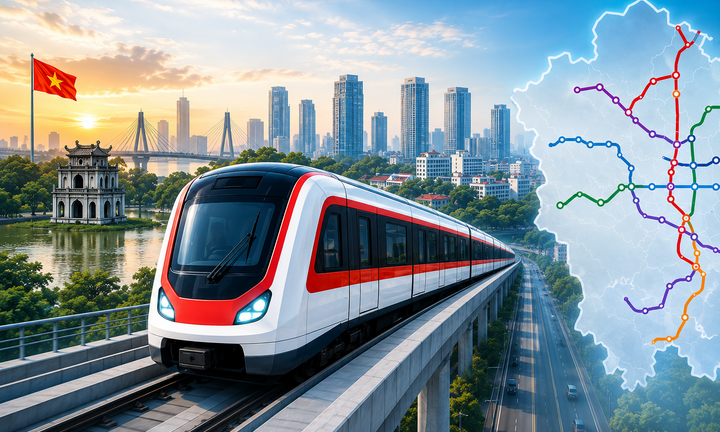
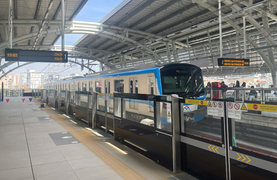
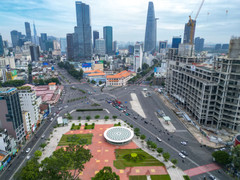
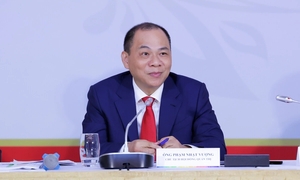
The Vinhomes - VinSpeed consortium has been selected by the Hanoi People's Committee as the EPC general contractor for 5 new urban railway lines with a total length of approximately 303,5 km and a total investment of over 1,3 trillion VND.
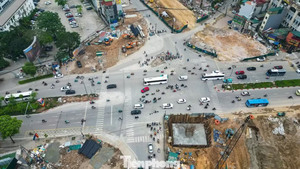
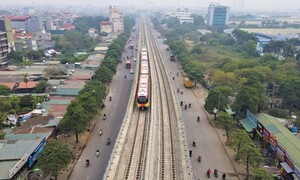
Hanoi is adjusting traffic arrangements at the La Thanh - Nguyen Chi Thanh intersection to facilitate the construction of station S3 of the urban railway line 5 project.
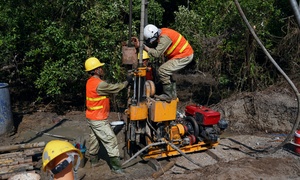
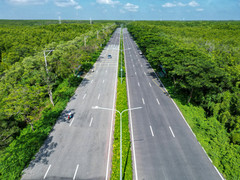
Multiple engineering teams simultaneously drilled geological surveys along the Rung Sac road for the Ben Thanh - Can Gio Metro project, with each borehole reaching a depth of 80m.
Given the fragmented operation of the metro lines, many experts believe that Hanoi needs a comprehensive development strategy to create an efficient urban transportation network.
Through the HCMC Metro app, passengers can easily look up and retrieve lost items while traveling on trains with just a few simple steps on their phones.
Construction on the Nhon – Hanoi Station metro line began in 2010 with the expectation of completion within 5 years, but it has experienced numerous delays and construction over the past decade.
Approximately 10 key projects in Ho Chi Minh City will commence construction around April 30th, including highly anticipated projects such as the Ben Thanh – Thu Thiem Metro line and the Can Gio International Port.
The fifth meeting of the Hanoi Party Committee's Executive Board, 18th term, agreed on several strategic directions: developing a "compact and green" urban area and expanding the metro network to 1.200km.
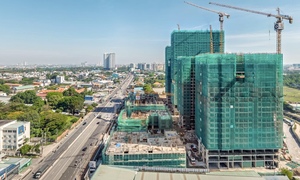
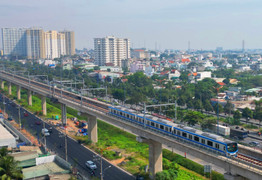
Ho Chi Minh City's metro lines are triggering a new wave of investment, with money flowing into projects along the stations, shaping real estate prices along the public transport corridor.
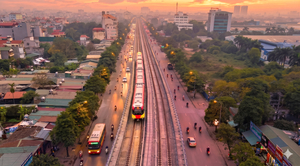
The Van Cao - Hoa Lac metro line 5 project, nearly 40 km long with a total investment of over 65.000 billion VND, is accelerating land clearance to begin construction of the first phases.
The Ho Chi Minh City People's Committee has authorized the use of direct contracting in selecting a consulting firm to review key technical documents for the Ben Thanh – Thu Thiem Metro project.
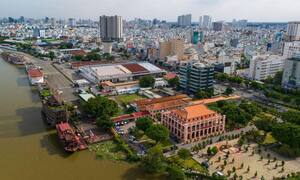
The Ben Thanh - Thu Thiem Metro line, approximately 6km long, is part of Metro Line 2 and functions to form a connecting axis between Tan Son Nhat Airport and Long Thanh Airport.
For the Ben Thanh - Can Gio Metro line, Ho Chi Minh City requires a study of an underground option through the Nha Rong - Khanh Hoi section; and the placement of appropriate transition points from the underground section to the surface...
Ho Chi Minh City plans to implement 10 metro lines with a total investment of 345.000 billion VND, but currently only has about 125.000 billion VND allocated. The city is requesting the central government to allocate an additional 220.000 billion VND.
The Metro Line 2 (Ben Thanh - Thu Thiem section) and the Thu Thiem - Long Thanh Metro line have been identified by Ho Chi Minh City as urgent projects, with construction expected to begin in April 2026.
In addition to accelerating the construction of the Ben Thanh - Tham Luong Metro line, in 2026, THACO will start construction of the Ben Thanh - Thu Thiem and Thu Thiem - Long Thanh Metro lines, with planned operation in 2030.
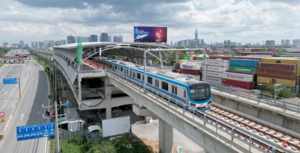
During the 6 days of the Lunar New Year holiday in 2026, Metro Line 1 transported over 571.000 passengers, exceeding the plan by 42%, demonstrating high travel demand and stable operation.
Extending Metro Line 1 contributes to completing the urban rail network, creating a public transport connection axis between Ho Chi Minh City and the new urban area and Long Thanh Airport.
Metro Line 2, the Ben Thanh - Thu Thiem section, is one of many projects that Ho Chi Minh City is accelerating procedures for in order to prepare for groundbreaking before April 30th.
The railway line connecting Thu Thiem to Long Thanh Airport will be 42km long with 20 stations, and the preliminary total investment of approximately 84.753 billion VND will be invested under the PPP (Public-Private Partnership) model.
The Red River Scenic Boulevard project includes an underground metro line along the right bank of the Red River for approximately 45 km, aiming to connect with the city's urban rail system.
The People's Committee of Ho Chi Minh City has approved the investment plan and the investor, Vinspeed High-Speed Railway Investment and Development Joint Stock Company, to implement the Ben Thanh - Can Gio metro project.
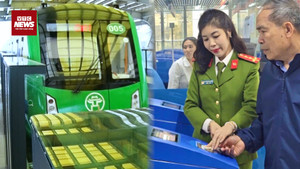
Hanoi Metro implements an automated ticketing system that utilizes electronic identification, authentication, biometric recognition, and cashless payment.
The Ben Thanh - Can Gio Metro project has received approval in principle from the Standing Committee of the Ho Chi Minh City Party Committee; the project is expected to commence on December 19th.
Ho Chi Minh City Party Secretary Tran Luu Quang has been appointed Head of the Steering Committee for the Development of the Railway Network in the City.
Experts believe that when implementing the Tan Son Nhat - Long Thanh or Can Gio - Ben Thanh metro lines, the effectiveness of the projects needs to be carefully studied.
Following the proposal to extend the metro line connecting the center of Ho Chi Minh City to Can Gio by more than 4km to Ben Thanh station, the total investment for this project is estimated at approximately 4 billion USD, equivalent to over 85.650 billion VND.
Before 2035, Ho Chi Minh City will prioritize investing approximately $37,15 billion in 9 metro lines, including 6 in the city center, 2 in Binh Duong, and 1 in the Vung Tau area.
Chairman of the Ho Chi Minh City People's Committee, Nguyen Van Duoc, concluded that the city supports the investor's proposal to adjust the starting point of the metro line to Can Gio from Tan Thuan station to Ben Thanh station.





 Hotline: 0855.911.911
  RSS
RSS