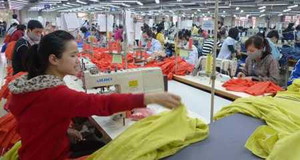
The chairman of Vinatex believes that it will take until the third quarter of 2022 for the textile and garment industry to return to the consumption levels of 2019.
Many textile and garment businesses saw a sharp decline in revenue and profits in the first quarter due to COVID-19, but their share prices have recently surged due to expectations surrounding the EVFTA.
Vietnam Textile and Garment Group (Vinatex) has just approved the transfer of all 2,75 million shares, representing 67,15% of the capital of Vietnam Wool Joint Stock Company.
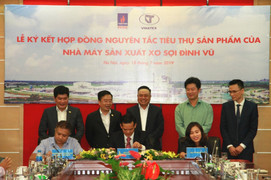
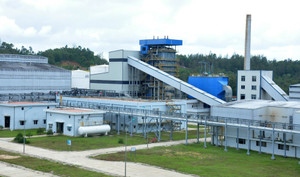
On July 18, 2019, in Hanoi, the Vietnam Oil and Gas Group, the Petrochemical and Synthetic Fiber Joint Stock Company (PVTex), and the Vietnam Textile and Garment Group (Vinatex) held a signing ceremony for a framework agreement on the consumption of products from the Dinh Vu Fiber Production Plant.
Having invested in Vinatex alongside Vingroup during its IPO in September 2014, Ms. Nguyet Huong's group has officially withdrawn all its capital from Vinatex.
While strong revenue growth resulted in substantial profits for Vinatex, the company's liabilities also increased significantly after the first nine months of the year.
According to a report by the Vietnam Textile and Garment Group (Vinatex), the company currently has 12 investments that need to be divested; however, these investments are located in underperforming businesses, making it difficult to preserve state capital if sold, or to attract any bidders.
The Vietnam Oil and Gas Group (PVN) has completed the review and assessment of options and solutions for handling inefficient projects and is proactively, actively, and urgently addressing the issues according to the "treatment plan" for these projects.
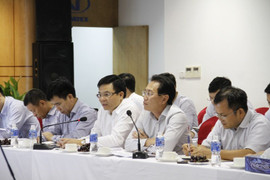
On August 3rd, in Hanoi, the Vietnam Oil and Gas Group (PVN) and the Vietnam Textile and Garment Group (Vinatex) held discussions on continuing the agreement to consume fiber products from the Dinh Vu Fiber Plant.
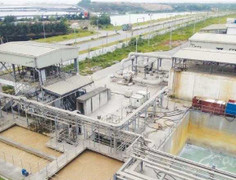
The Government Inspectorate concluded that the cause of losses at the Dinh Vu Fiber Plant project was due to numerous shortcomings and violations committed by VTex, PVN, Vinatex, and related units, organizations, and individuals during the investment and construction of the project.
If Vinatex, the textile giant, hadn't yet divested from PVtex, a unit that received 7.000 billion VND in investment but incurred losses of 3.000 billion VND, it would have suffered a catastrophic loss.
Following PetroVietnam and Sabeco, it is now the turn of the state-owned giant Vietnam Textile and Garment Group (Vinatex) to deposit trillions of dong in banks.
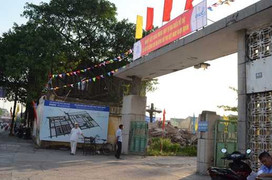
Authorized by the Vietnam Textile and Garment Group, Nam Dinh Textile and Garment Urban Development Joint Stock Company affirms that journalist Tran Dang Tuan's proposal to retain a portion of the Nam Dinh Textile Factory is entirely feasible.
Leaders of the Vietnam Textile and Garment Group said they would consider Mr. Tuan's opinion and would propose changes to the planning of the Nam Dinh Textile and Garment Urban Area project.
A number of leaders of state-owned corporations and companies such as Vinacomin, Vinatex, etc., received exorbitant salaries of over half a billion VND in 2014…
If the common problem of delays is not resolved, the goal of privatizing 432 state-owned enterprises in two years—4,3 times the number privatized in the past three years—will remain just on paper.
Following statements from the Minister of Planning and Investment demonstrating his determination to strictly control the use of budget funds, the Ministry's Inspectorate has announced that it will conduct inspections and audits of projects using state budget funds in ministries, sectors, and localities.





 Hotline: 0855.911.911
  RSS
RSS