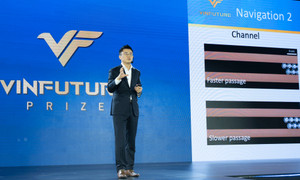
The VinFuture Global Science and Technology Award received 1.819 applications from around the world, along with a network of over 17.000 nominating partners from 117 countries and territories.
VinFuture 2025 once again emphasizes the spirit of "science for humanity" as it aims for a common goal: improving lives and opening up a more sustainable future for the community.
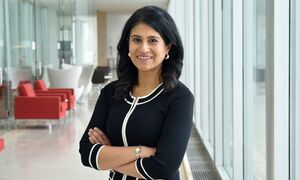
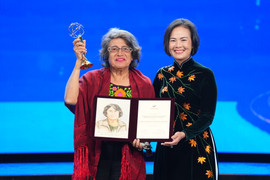
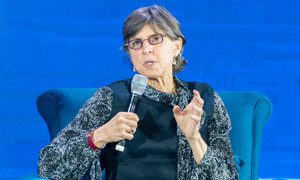
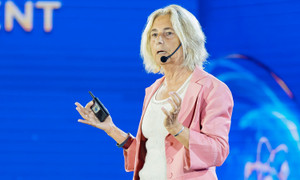
Professor Mary-Claire King, recipient of the VinFuture 2025 Special Prize for female scientists, believes that AI is currently not reliable enough for use in clinical practice.
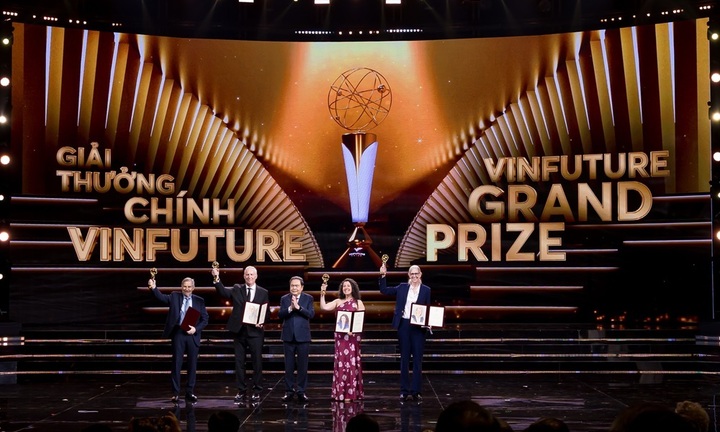
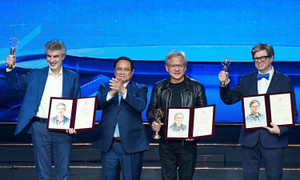
The VinFuture 2025 Grand Prize, worth $3 million, was awarded to four scientists from the United States for their discoveries and development of the HPV vaccine.
The VinFuture 2025 grand prize, worth $3 million, was awarded to four scientists who invented an HPV vaccine to prevent tumors caused by the human papillomavirus.
The Speaker of the National Assembly pledged that Vietnam will continue to be a reliable and attractive destination for scientists, so that creative values can be strongly disseminated to the international community.
The Chairman of the VinFuture Awards Council affirmed that the 5-year journey of the VinFuture Foundation has been guided by a vision of using science to serve humanity.
National Assembly Chairman Tran Thanh Man, along with other Party and State leaders, attended the 5th annual VinFuture Global Science and Technology Award Ceremony.
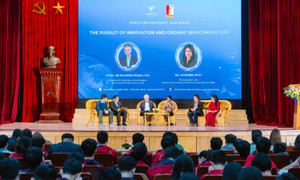
Within the framework of VinFuture 2025 Science and Technology Week, many Vietnamese students had a special "date" with some of the world's most outstanding minds.
The "Hand of Hope," like a robotic exoskeleton, can "read" the patient's movement intentions and assist them in regaining movement, retraining their brain through action.
Members of the VinFuture 2025 Awards Council stated that this year's nominations were exceptionally impressive, making it a real challenge to determine the true winners.
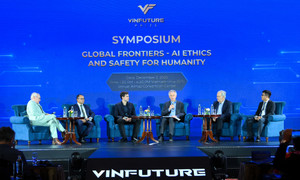
Highlighting the reality that when AI makes mistakes, humans cannot hold it accountable, Professor Toby Walsh argues that this is a loophole in all legal systems.
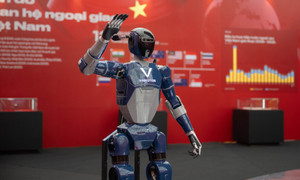
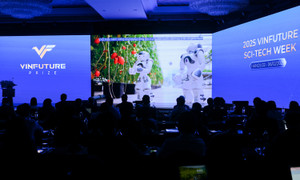
VinMotion is developing humanoid robots that are becoming increasingly flexible, intelligent, and possess superior movement capabilities, surpassing even humans.
The nomination for the Million Dollar Prize – the world's largest research award – is for research that has a significant impact on a very large global population.
According to Professor Tan Yap Peng, robots can replace humans in performing dangerous tasks, but the ability to "extend lifespan" is a matter that needs more time to be proven.
Scientists are researching soft materials for building robots and sharing insights into a future where robots could have artificial muscles and nerve cells similar to those of humans.
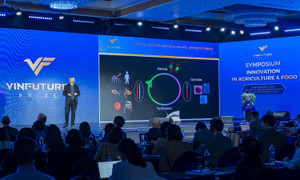
Genetically modified crops, asexual reproduction, and smart livestock farming integrating AI and IoT help improve productivity, reduce emissions, and adapt to climate change.
Instead of amputation as in the past, many patients can now move normally after having the cancer removed and the missing bone replaced with 3D-printed material.
The Ministry of Health identifies science and technology as a key driving force for improving the quality of medical examination and treatment and strengthening the capacity of the healthcare system.
At a panel discussion during VinFuture Week 2025, Professor Elgoyhen shared a method for delivering genes to the inner ear via viruses to help people with hearing loss.
Warning that AI could become smarter than humans within the next 20 years, Professor Geoffrey Hinton argues that this is a situation humanity has never faced before.
Based on the principle that ants can build bridges, Professor Ho-Young Kim developed Linkbot – a small, mobile robot that moves using vibrations and links together in a chain.





 Hotline: 0855.911.911
  RSS
RSS