When I realized I would never be able to afford a house, I freed myself from the pressure to succeed by the age of 30, feeling liberated because I could "live a life without being brilliant" according to societal standards.
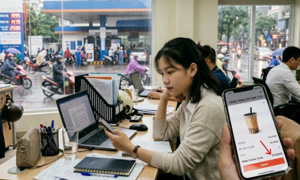
As a Gen Z who considers bubble tea an essential part of life, I first started thinking about saving money and reconsidering my spending when I had to pay 45.000 VND for shipping on a drink that cost 50.000 VND.
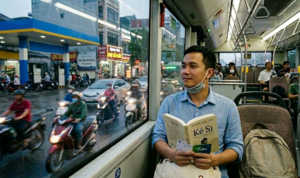
Switching to the bus because of expensive gas, I realized that even if I had to take two routes, my journey to work was still much easier than riding my motorbike through a sea of smog.
Because I needed to save on gas, I suddenly realized I used to make dozens of unnecessary trips every week, like driving a few hundred meters to buy some vegetables, which would still be perfectly fine to eat after being cut and discarded.
My friend's team lives in three different cities and meets via Zoom almost every day; yet he still has to drive 12km to the office to join the meetings with everyone via screen.
By simply allowing remote work one day a week, a small company with around 50 employees could save thousands of liters of gasoline annually; the environment would also be more pleasant.
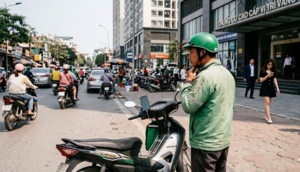
Having worked as a ride-hailing driver for many years, I've encountered many customers who were busy but still booked a ride to "make up for the delay." Sometimes I would wait for up to 20 minutes, only to find out the customer was busy putting on makeup.
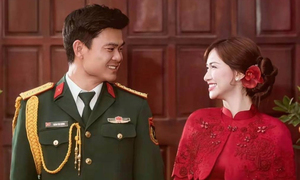
Hòa Minzy's new relationship has received many blessings because it highlights a simple truth: Happiness is loving the right person, not necessarily a prince charming.
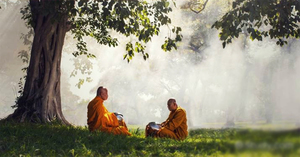
If you saw someone on the internet wearing a brown robe with the surname Thich, lecturing about karma and letting go, with a compassionate gaze, and receiving thousands of likes and thank-you comments, would you believe it?
On March 8th, many people frantically search for gifts for their loved ones, but the answer to what a woman truly needs is perhaps very simple, yet not everyone understands it.
Not only was my father scammed out of 3 million dong, but he also suffered and felt inferior, feeling "too old and foolish" for not realizing that the disabled girl in the video was an AI-generated image.
Negative statements and actions by monks can easily hurt the trust of Buddhists and create doubt, but we shouldn't cut down the entire Bodhi tree because of one rotten leaf.
The disparity in treatment between rich and poor children is hurtful, but we need to face the reality: people's roles and statuses are not always the same.
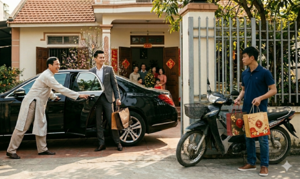
As soon as he heard my call, my uncle rushed out, eagerly opening the car door to welcome his wealthy nephew. Then, suddenly remembering that I had been waiting outside the gate for a long time, he casually said, "Bring the car inside."
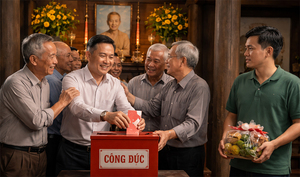
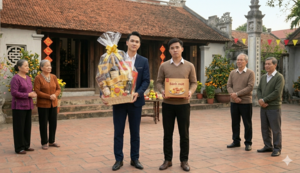
The old saying goes, "It's the thought that counts," but after many Lunar New Year celebrations back home, I've noticed the opposite: those who give big gifts or large red envelopes are respected, while those who give little are practically invisible.
In Buddhist scriptures, the full moon day of the first lunar month is associated with a special event during the Buddha's lifetime: the Great Assembly of the Holy Sangha.
The pickup truck driver clearly knew that cutting in front of and squeezing through the motorcyclists could easily cause them to fall onto the road and be run over by the truck, yet he still did it aggressively.
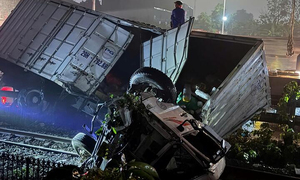
Cars that cross railway tracks when there is a stop signal are fined 4-6 million VND, and if they damage the barrier, the fine is 5-7 million VND, which is too low compared to the 18-20 million VND fine for running a red light.
If the driver doesn't activate the "barrier" of self-awareness, all warning devices are meaningless; the scene of cars being crushed by trains will continue to happen many times.
My friend was caught off guard when, at the beginning of the new year, 3 out of 5 employees in his sales department quit; it was as if they considered their Lunar New Year bonus as their "final payment" before leaving.
The beginning of the year is a good time for me to change jobs, but I'm very afraid of being accused of betrayal or ingratitude because of the generous Lunar New Year bonus and the large amount of New Year's lucky money from my boss.
I once witnessed a father yelling at his child, "Sit still or you'll get a beating," while his friends around him were laughing loudly and talking excessively due to the alcohol.
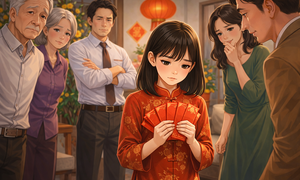
I'm in 8th grade now, and I'm fed up with Mom asking how much money someone gave me every time I open a red envelope, just to judge them. I understand that better than Mom thinks.
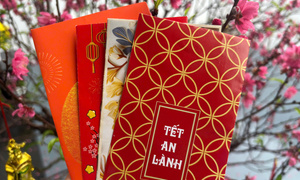
Traditionally, giving lucky money (lì xì) at the beginning of the year was meant as a wish for good fortune and health, conveyed in a red envelope by the giver. However, at some point, it became a matter of measuring and weighing the amount, whether it was a little or a lot.
Originally, red envelopes were only given to convey good luck and New Year's wishes, but in many families, giving these envelopes is gradually becoming a measure of wealth, generosity, and even prestige.
Many young people, like myself, feel that Tet is a time for rest and thoughtful care, not a time to face pressure or difficult questions from relatives.
Amidst the bustling atmosphere of Tet greetings, a red envelope containing 20.000 dong, accompanied by the words "for good luck," and the mother's awkwardness, made me feel a pang of sadness.
There are behaviors that are not just traffic violations; they are an alarming display of mentality: becoming rich very quickly but falling behind in terms of conscience.





 Hotline: 0855.911.911
  RSS
RSS 






 0
0