



 Hotline: 0855.911.911
  RSS
RSS 





Without choice, without discrimination, without haste, every gesture from the moment of carrying the alms bowl to beg for food until the moment of setting it down contains wisdom. The story of that simple meal of cold rice and boiled vegetables in the city of Sravasti will make us ponder: Is it possible that... Mindful eating Is this the simplest yet most profound method for nurturing both body and mind?
A peaceful morning journey
The Anguttara Nikaya and the Vinaya Pitaka meticulously record every step. Buddha When he went on his alms rounds in the city of Savatthi, the morning sun had just risen, illuminating his flowing yellow robe and his serene figure.
With eyes fixed on the ground about two feet in front of him, walking steadily and unhurriedly—this was the dignified conduct of a monastic that he taught the monks to uphold.

The Buddha ate mindfully not only to nourish his body but also to eradicate greed, hatred, and delusion. (Illustration: Phatgiao.org)
The people of Savatthi were accustomed to this sight. They respectfully placed whatever they had into his bowl: an old woman offered a handful of freshly cooked hot rice, a young boy brought boiled vegetables from his garden, a merchant offered a few pieces of fragrant bean curry. The Buddha accepted everything with equanimity, without distinction between delicious and unappetizing, rich and poor.
When the bowl was full, he went to a quiet sala tree outside the city. The Mahāparinibbāna Sutta describes this: Before eating, he mixed the contents of the bowl—a seemingly small gesture, but one that contained a great lesson in eradicating the craving for delicious food. Then he sat cross-legged, his back straight like a sturdy old sala tree, the bowl resting on the palm of his left hand.
Each bite of rice was chewed slowly, accompanied by the meditation recorded in the Anguttara Nikaya:We eat not for pleasure, not for passion, not for adornment, but only to sustain this body, to maintain peace, and to cultivate virtuous conduct.”
Once, a young monk asked why he did not accept invitations from wealthy families. The Buddha recounted the story of that day. He only begged for alms. They received leftover rice and boiled vegetables in Vesali."Simple food but a heart free from resentment—that is true wealth." - he taught.
The Majjhima Nikāya records that when the meal was over, the Buddha did not immediately get up. He washed the dishes, neatly folded his robes, and then sat in meditation contemplating impermanence. "This body survives thanks to food, but it will eventually perish according to the law of impermanence."
That lesson awakened the monks to the truth – they were sustaining themselves not to satisfy their desires, but to progress on the path to liberation.
After the meal, he set the bowl aside, rinsed his mouth, washed the bowl clean, and folded his meditation cushion. Then he meditated walking under the trees, observing: this body exists because of the meal just eaten, but it is still impermanent, still subject to weakening and disintegration.
The taste of contentment
Today, we live surrounded by a rich culinary landscape: seafood buffets, specialty coffee, and pastries from all over the world. But the easier it is to find delicious food, the easier it is to eat hastily, for pleasure, or out of habit rather than to nourish our body and mind.
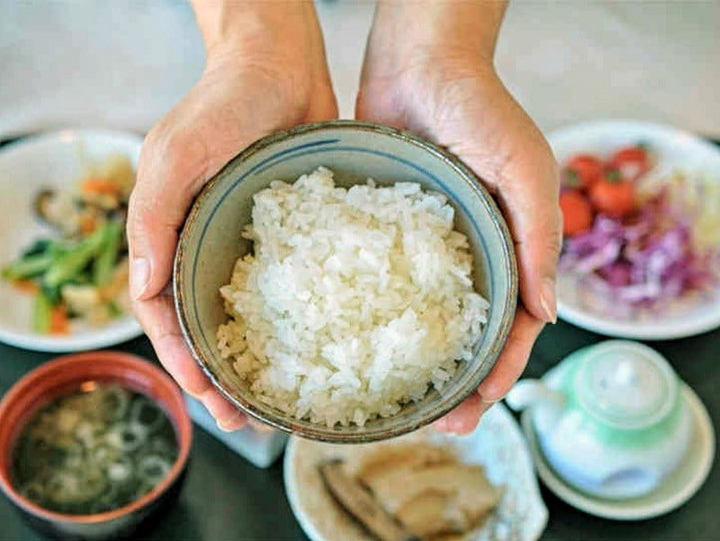
Mindful eating nourishes the body, mind, and spirit, rather than simply consuming meals out of habit. (Image: Phatgiao.org)
The Buddha's meal offers us many insights. First, where we eat is just as important as what we eat – a quiet space allows us to fully appreciate the flavors and be grateful for the food. Second, mindful eating – being aware of what we are eating, recognizing the efforts of countless people and nature that have contributed to each grain of rice. Third, contentment – stopping before becoming overly full, so that the body feels lighter and the mind clearer.
In this fast-paced age, try eating like the Buddha: Choose a quiet corner, eat slowly, and don't let your phone interrupt your meal. You might discover that the "deliciousness" lies not in expensive ingredients, but in the peaceful state of mind while eating; just as more than 2.500 years ago, under the sala tree, the Buddha's bowl of rice and vegetables not only nourished his body for one day, but nurtured a lifetime of enlightenment.




 Comment