


 Hotline: 0855.911.911
  RSS
RSS 





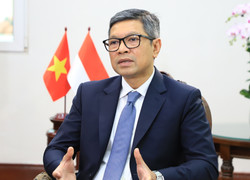
In an interview with VTC News online on the sidelines of the ASEAN Future Forum (AFF) 2026, Ms. Mari Pangestu, former Indonesian Minister of Trade and Special Envoy of the Indonesian President for International Trade and Multilateral Cooperation, stated that Vietnam and Indonesia have ample room for cooperation in emerging industrial sectors, as the two economies possess distinct advantages that can complement each other in the regional value chain.
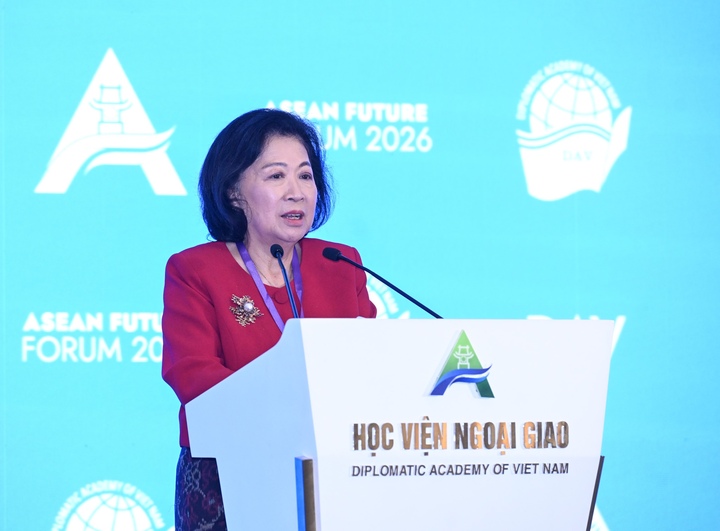
Ms. Mari Pangestu, former Indonesian Minister of Trade and Special Envoy of the Indonesian President for International Trade and Multilateral Cooperation, speaks at AFF 2026. (Photo: Tran Hai)
According to her, renewable energy, energy conversion, and electric vehicles are the most promising areas for bilateral economic cooperation.
"Indonesia has important minerals like nickel and is boosting processing to produce inputs for batteries. Meanwhile, parts and components for electric vehicles can be manufactured in both Vietnam and Indonesia. This is an area where we can build complementary supply chains."", she said.
Ms. Mari Pangestu also assessed that Vietnam is ahead of Indonesia in the semiconductor industry. According to her, this is the basis for the two countries to participate in different stages of the supply chain and expand cooperation in the future.
ASEAN faces a great opportunity.
Assessing the regional economic outlook for the next decade, Mari Pangestu stated that ASEAN is simultaneously facing both challenges and opportunities arising from the global economic restructuring process.
According to her, one of the biggest pressures currently comes from US tariffs and trade actions, which could affect the ability of many economies in the region to access this important export market.
In addition, there is pressure from China. With limited access to the US market and slowing domestic consumption growth, China is increasing exports to other markets, creating a wave of imports from China in many countries, including ASEAN nations.
However, according to Ms. Pangestu, these very changes are also driving a new wave of investment shifts globally. Businesses are seeking production locations with better access to the US market, while also minimizing risks from trade tensions.
To capitalize on this opportunity, she suggested that ASEAN countries need to strengthen their internal resilience through domestic reforms, infrastructure investment, human resource development, and maintaining macroeconomic stability to enhance their attractiveness for investment and trade.
Simultaneously, ASEAN needs to deepen the process of regional economic integration through mechanisms such as the Regional Comprehensive Economic Partnership (RCEP), while expanding cooperation with external partners such as the European Union (EU) or the Comprehensive and Progressive Trans-Pacific Partnership (CPTPP).
"In a volatile global environment, diversifying markets and partners is essential."", she remarked.
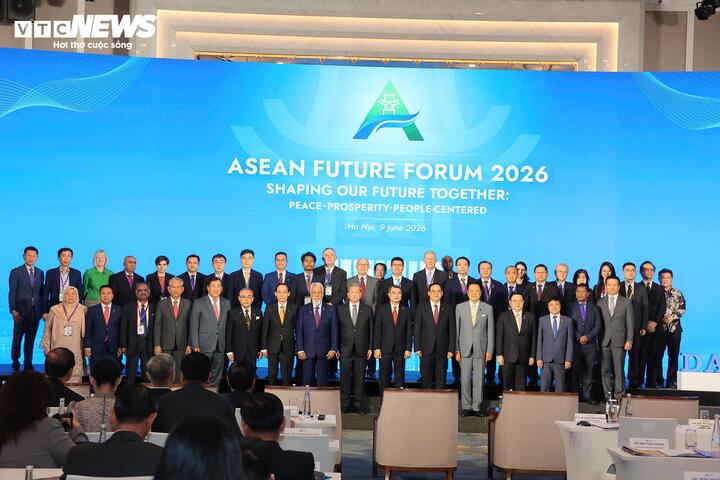
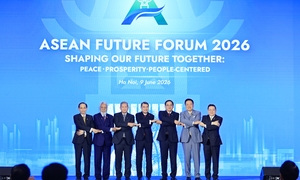
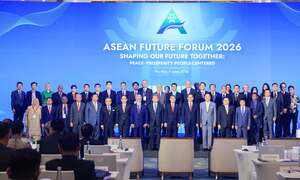
Prime Minister Le Minh Hung, Lao Prime Minister Sonexay Siphandone, Cambodian Prime Minister Hun Manet, Thai Prime Minister Anutin Charnvirakul, Timor-Leste Prime Minister Kay Rala Xanana Gusmão, ASEAN Secretary-General Kao Kim Hourn, and delegates pose for a group photo at the opening session of AFF 2026. (Photo: Dac Huy)
We cannot rely on cheap labor.
Looking at the long term, Mari Pangestu believes that ASEAN needs to change its growth model if it wants to maintain competitiveness and realize its development goals by 2045.
According to her, advantages based on cheap labor or natural resource exploitation will no longer be sufficient to guarantee sustainable growth in the future.
"We must increase added value in the economy and in the supply chain. This requires increasing the complexity of manufactured products as well as developing stronger supporting industries.", she said.
This transformation requires stronger investment in infrastructure, workforce skills, and technological capabilities. Simultaneously, ASEAN economies must adapt to emerging trends such as artificial intelligence (AI), digital transformation, and carbon emission reduction.
"Greening industries and decarbonization have now become part of our competitiveness.", she remarked.
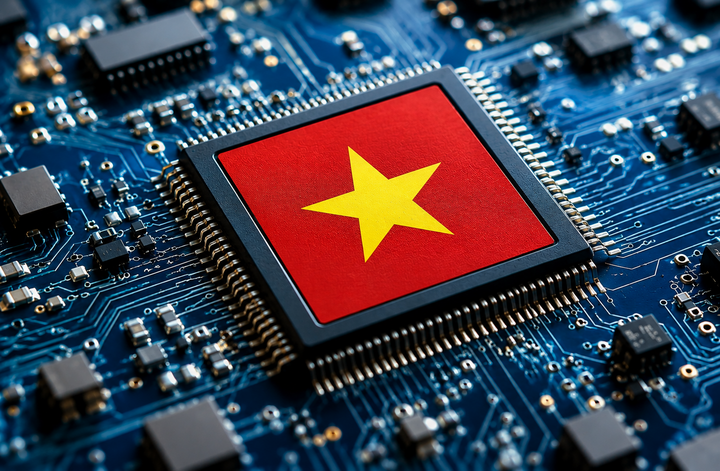
The semiconductor industry is considered one of the areas with the greatest potential for cooperation between Vietnam and Indonesia in the coming years. (Illustrative image)
According to her, AI can bring about profound changes to the labor market, productivity, and national competitiveness. However, technology will only truly become a driving force for development if all segments of society have the opportunity to access and benefit from it.
According to her, this first requires ensuring access to digital infrastructure and connectivity for all population groups, especially those with low incomes or living in areas with limited development opportunities. People need access to secure financial services, from bank accounts and e-wallets to credit, savings, and suitable insurance products.
"Once connected, people need to know how to use technology to create value for their work and lives.", she said.
According to Ms. Pangestu, experience from many countries, including Vietnam, shows that digital identification systems play a fundamental role in enabling citizens to fully participate in the digital economy. This is also one of the important factors in narrowing the development gap and ensuring that the digital transformation process takes place in a more inclusive direction.
 Comment