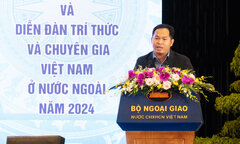
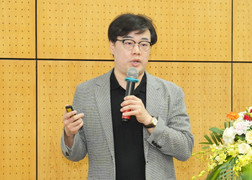
Dr. Bui Ngoc Son believes that the US still holds the number one position in the Industry 4.0 race, while China, despite accelerating its pace, will find it difficult to surpass it.
Samsung Galaxy devices were hacked, China asserts its role in the global semiconductor supply chain... these are some of the notable technology news stories on November 10th.
Dr. Bui Ngoc Son analyzes the reasons why Beijing, despite investing hundreds of billions of USD, is still struggling to surpass the US and the West in the semiconductor sector.
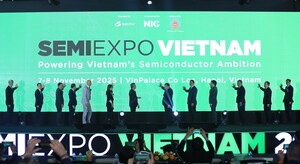
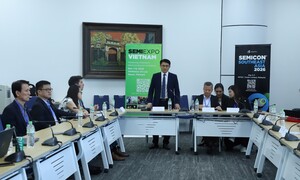
SEMIExpo Vietnam 2025 is expected to bring together 5.000 delegates and 200 exhibitors from leading technology corporations, universities, and industrial parks worldwide.
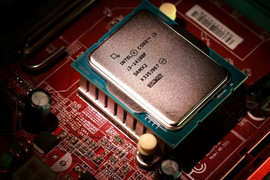
Intel and US President Donald Trump announced on August 22nd that the US government had invested $8,9 billion to purchase Intel shares, giving it approximately 10% of the chipmaker's stock.
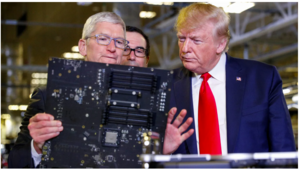
The Trump administration launched investigations under Section 232 of the Trade Expansion Act of 1962 into imports of pharmaceuticals and semiconductors.
On April 13, President Trump announced he would launch an investigation and impose separate tariffs on Chinese electronic chip products, despite having previously exempted them from tariffs.
The Prime Minister emphasized the need to build a transparent institutional system to promote AI and semiconductors, and to eliminate unnecessary administrative procedures.
Experts believe that in order to seize the opportunity to excel in the semiconductor chip manufacturing race, Vietnam should focus on training high-quality engineers.
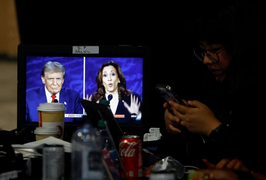
Taiwanese semiconductor workers are closely monitoring the developments of the US election, as whoever becomes the new president will bring with them unpredictable risks.
Wu Cheng-wen, head of Taiwan's National Science Council, believes that mainland China's semiconductor industry lags behind Taiwan by more than 10 years.
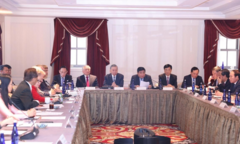
General Secretary and President To Lam delivered a speech at a seminar on the topic of Strengthening Vietnam-US Cooperation in the Development of the Semiconductor Industry and Artificial Intelligence.
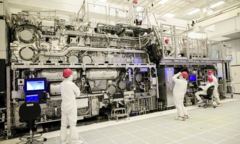
The Dutch government plans to ban ASML from servicing semiconductor equipment in China, significantly impacting the country's chip manufacturing capabilities.
Despite US sanctions on semiconductor equipment, China remains the largest market for many companies such as ASML and AMAT, setting new records this year.
According to Mr. Duong Minh Tien, a Vietnamese expatriate in South Korea, packaging and testing is a niche area where Vietnam can participate in the semiconductor supply chain.
The situation between the US and Chinese shell companies can now be likened to a game of "whack-a-mole," resulting in sanctions being too slow to react.
During the development of the semiconductor industry, Professor Park Inkyu advised Vietnam to build sensors to monitor exhaust gas quality and ensure environmental safety.
Possessing advanced semiconductor technology is believed to have been a key factor in helping Taiwan (China) minimize damage from the powerful earthquake on April 3rd.





 Hotline: 0855.911.911
  RSS
RSS