


 Hotline: 0855.911.911
  RSS
RSS 





During house cleaning, we often encounter cleaning blind spots such as computer keyboard crevices, window frames, or stray hairs and pet fur on bedsheets. Without a dedicated handheld vacuum cleaner, cleaning these areas with a broom or cloth is almost impossible.
In that context, social media and forums household tips A unique vacuuming trick has gone viral: turning a hairdryer into a vacuum cleaner. From a scientific and applied physics and mechanics perspective, this isn't magic, but rather a clever application of the principle of airflow circulation. However, to perform this trick effectively and ensure the absolute safety of the device, users need to understand its mechanical nature.
A conventional hair dryer operates using a small centrifugal fan motor and a heating coil. The core operating principle is: The fan draws air from the outside environment through the rear of the machine (intake), blows this air through the heated resistance coil, and finally expels the hot air out through the front of the machine (exhaust).
Transformation technique máy sấy tóc The main function of a vacuum cleaner is to utilize the vacuum suction force at the rear of the machine. Instead of letting the machine suck in air freely, we install a collection funnel and filter system at this intake. The suction force generated by the fan will then draw dust and small debris into the funnel, while the filter will trap the debris, preventing it from entering and damaging the motor.
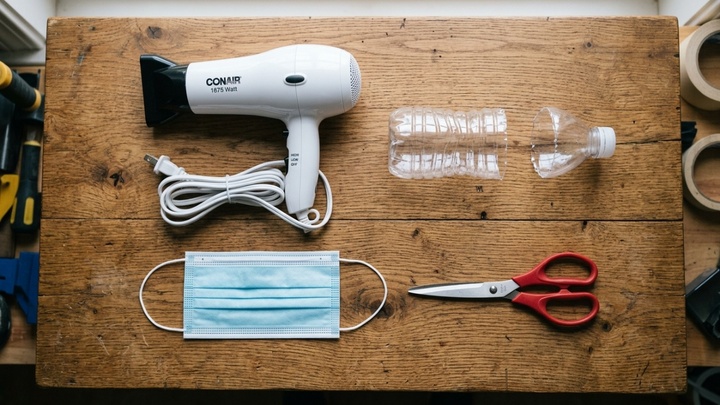
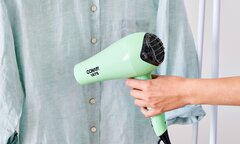
To turn a hairdryer into a mini vacuum cleaner, you only need a few simple items. (Photo: BNC)
Tips for vacuuming with a hairdryer
To perform this conversion, you don't need to disassemble any electronic components of the dryer. The supplies you need only include: an empty plastic bottle (like a 500ml water bottle), a medical face mask or a dried wet towel, and a pair of scissors.
Step 1: Use scissors to cut off the top part of the plastic bottle (about 1/3 of the bottle's length from the cap down). This funnel-shaped section will act as a tapered suction tip, increasing the acceleration of the airflow and thus increasing the suction force at the funnel tip based on the Venturi effect.
Step 2: Take a medical face mask and cover the end of the hairdryer (where the air intake grille is located) with it. Medical face masks are made of layers of ultra-fine non-woven fabric, acting as a miniature HEPA filter. This will prevent 100% of dust and debris from entering the hairdryer motor.
Step 3: Place the plastic bottle funnel (cut in step 1) on top of the face mask at the end of the hair dryer. Make sure the plastic funnel fits snugly around the end of the dryer. You can hold it firmly with your hand, or use a rubber band/tape to secure the plastic funnel and face mask to the dryer body.
Step 4: Turn on the hairdryer. Now, bring the mouth of the plastic bottle close to the crevices where the dirt is, and the suction from the end of the hairdryer will draw all the debris into the plastic bottle, right on the surface of the face mask.
With its compact suction head made from a plastic bottle, this homemade vacuum cleaner performs exceptionally well in tight spaces that larger vacuum cleaners cannot reach.
Cleaning electronic devices: The gentle suction power is just enough to pull out snack crumbs and dust stuck under the mechanical keys of a computer keyboard or the cooling vents of an amplifier or TV without damaging the components.
Cleaning sliding door tracks: Aluminum window or sliding glass door frames often accumulate dirt, sand, and insect carcasses that are difficult to clean. A plastic funnel-shaped nozzle can easily be inserted into the track to suck up debris before wiping with a cloth.
Collecting pet hair and loose hair: Thanks to the electrostatic attraction generated when air passes through the mask's surface, this system easily attracts and neatly rolls up stray hairs on bed sheets, mattresses, and sofas.
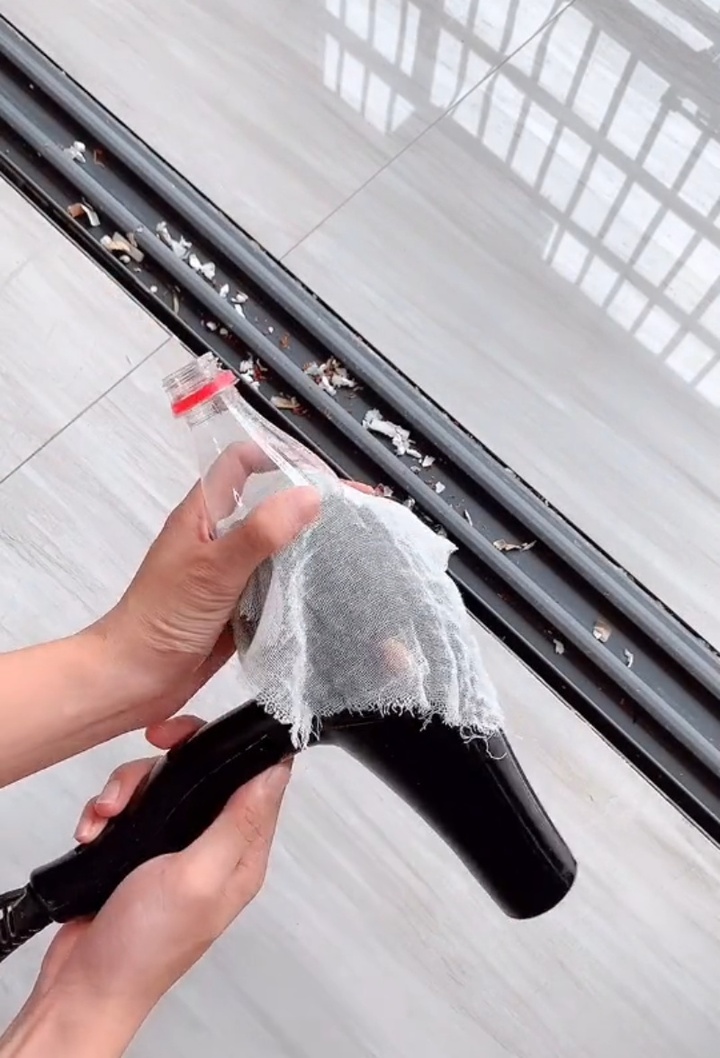
Only use the cool setting when using the dryer to vacuum. (Photo: BD)
Things to note when vacuuming with a hairdryer.
Although this is a highly practical physics trick, from an electrical engineering perspective, forcing a device to function contrary to its original design always carries significant risks. To protect the device and prevent fires and explosions, users must adhere to the following principles:
Never use the cool air drying mode: When you partially block the air intake with a filter (face mask), the airflow into the machine is severely reduced. If you switch to hot air drying mode, the heating coil inside will not receive enough airflow to dissipate heat and will immediately overheat. The sudden temperature surge can melt the plastic casing of the dryer, burn the face mask, and cause a fire. Therefore, only use the cool air mode.
Operating time limit: Hair dryers are not designed to run under sealed load pressure. This tip should only be applied for short periods of 1 to a maximum of 3 minutes per suction cycle. Allow the machine to rest and cool down before continuing.
Regularly check the filter: If dust accumulates too thickly on the mask's surface, the suction power will approach zero and the motor will become clogged, making a hissing sound. Stop the machine immediately and remove the debris from the plastic funnel before starting the next suction cycle.
The trick of using a hairdryer to vacuum is an interesting example of the flexible application of physics principles to living spaces. It's a perfect stopgap solution, quickly and efficiently resolving minor household annoyances.

 Comment