


 Hotline: 0855.911.911
  RSS
RSS 





The Eco-Runner Team Delft, a group of students from Delft University of Technology (Netherlands), introduced the Eco-Runner XVI this week.
Unlike vehicles designed for a single type of fuel, this car can use a variety of sustainable fuels such as methanol and bioethanol without requiring significant changes to the operating system.
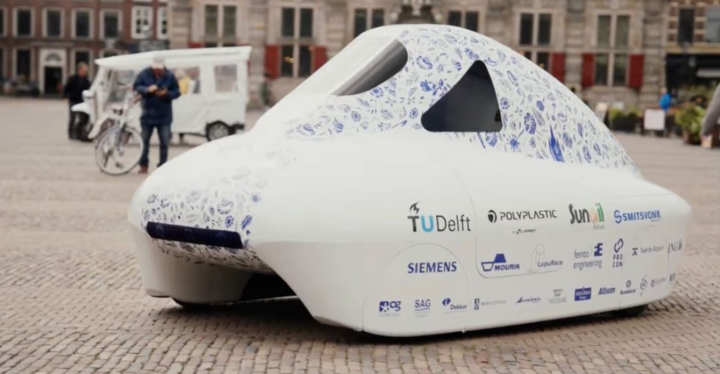
The Eco-Runner XVI prototype was developed by the Eco-Runner Team Delft student group. (Photo: Eco-Runner Delft)
The Eco-Runner Team Delft has over 20 years of research into hydrogen-powered vehicles. In 2023, the team set a Guinness World Record by having a vehicle travel 2.488 km on less than one kilogram of hydrogen.
A year later, they successfully built the first road-legal hydrogen-powered car developed by students.
However, instead of continuing to focus on a single fuel type, the research team suggests that the future of sustainable transportation may lie in the ability to adapt to a variety of energy sources.
The key element that enables the Eco-Runner XVI to achieve this capability is its micro-turbine system.
Unlike traditional piston engines, which require precisely controlled combustion processes for each cycle, gas turbines operate by continuously burning fuel in a steady stream of air. This structure makes the system less dependent on the chemical properties of each type of fuel than conventional engines.
As a result, the vehicle can switch between various types of biofuels without significantly altering the engine design.
According to the development team, relying on a single energy source can create numerous risks in the context of a constantly fluctuating energy market. Fuel prices change, energy supply infrastructure develops unevenly, and grid overload is occurring in many countries.
Vehicles capable of adapting to multiple fuel sources can make the energy transition more flexible, rather than relying on the development of a single technology.
The research team believes that the potential of the technology extends far beyond personal automobiles.
Sectors such as heavy transport, maritime, and aviation still face significant challenges in electrification due to high energy density requirements and continuous operation times. These industries could benefit from propulsion systems capable of utilizing a variety of sustainable fuels.


 Comment