


 Hotline: 0855.911.911
  RSS
RSS 





The Finnish telecommunications company plans to launch a 4G mobile network on SpaceX rockets in the coming months, according to Luis Maestro Ruiz De Temino, Nokia's chief engineer, who spoke to the press earlier this month. The network will be powered by a base station equipped with antennas located within the Nova-C lunar lander, as well as an accompanying solar-powered rover.
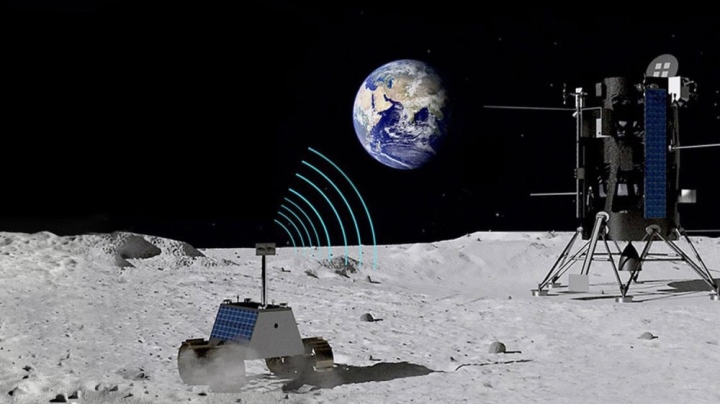
Nokia wants to bring 4G to the Moon for NASA's Artemis 1 mission. (Image: bm.ge)
LTE connectivity will be established between the lander and the rover. The infrastructure will be located in the Shackleton crater, along the southern side of the Moon. According to Nokia, the technology is designed to withstand harsh space conditions.
Nokia's 4G network will be used for NASA's Artemis 1 mission, which aims to send the first human astronaut to the Moon since 1972. Nokia wants to see if its terrestrial network can meet the communication needs of future space missions. In addition, the 4G network will allow astronauts to communicate with each other, remotely control the rover, view real-time video, and send data back to Earth instantly.
According to Temino, the lander will be launched via a SpaceX rocket. The rocket will not launch the lander to the lunar surface but will have a thruster to complete the journey. Analyst Anshel Sag of research firm Insights & Strategy said 2023 is the “optimal target” for launching Nokia's devices.
Previously, Nokia stated that the network on the Moon would “provide critical communication capabilities for a variety of data transmission applications, including essential C&C functionality, remote autonomous vehicle control, real-time navigation, and high-resolution video transmission.”
One of Nokia's hopes is to find ice on the Moon. Much of the lunar surface is dry, but recent missions have discovered remnants of ice trapped in volcanoes. This water could be used for drinking, split into hydrogen and oxygen for rocket fuel, or provide oxygen for astronauts.
To live on the Moon, humans will need more than just internet connectivity; they'll need many other things. The giant Rolls-Royce is researching nuclear reactors to power future residents and explorers.
 Comment