



 Hotline: 0855.911.911
  RSS
RSS 





After interacting with many landlords, Manh Cuong, a real estate agent in Ho Chi Minh City, also started investing directly. His initial calculations showed that he could earn a net monthly profit of up to 40 million VND and recover his investment within 9 months.
But in reality, throughout a year of operation, he lost 10-20 million VND each month.
Counting crabs in a hole
Mr. Cuong rented a house near the university in the former District 9 (now part of Thu Duc City, Ho Chi Minh City) to use as a dormitory. Besides the monthly rent of 18 million VND, he invested an additional 350 million VND to renovate and operate 62 dormitory beds, renting them out for 1,4-1,45 million VND per month.
He estimates his monthly revenue at 85 million VND, minus operating and management costs of approximately 20-25 million VND and rent of 18 million VND, resulting in a net profit of 40 million VND. Therefore, he can recoup his investment in just 9 months, which is why he is willing to rent the property for only 3 years, while also accepting a 10% annual rent increase as requested by the landlord.
However, in reality, during a year of operation, he only managed to rent out 14-24 beds, earning 20-32 million VND per month. After deducting management and operating costs and rent, he consistently lost 10-20 million VND each month.

Renting an entire house and then subletting it doesn't yield as much profit as many investors expect. Photo: Quynh Danh.
Although not suffering losses like Mr. Cuong, Ms. Thu An, who is renting out a 17-room house in District 10, Ho Chi Minh City, only earns about 4-8 million VND per month.
"Every month I spend over 5 million VND on fixed costs such as elevator maintenance, air conditioning, minor repairs, cleaning, internet, garbage disposal, etc., not to mention advertising and brokerage fees for renting rooms, which cost more than half a month's rent.
There were always 2-3 rooms vacant, so in the end I only earned around 80 million VND/month. After deducting management and operating costs, brokerage fees, and rent of 60 million VND, I was left with only 10-14 million VND.
With a 5-year lease agreement and an initial cost of 400 million VND for renovations and furnishings, and monthly depreciation of 6-7 million VND, there's not much money left.", Ms. An said.
How to avoid the trap of "illusory" profits?
Speaking to Zing, Mr. Bui Minh Thuc, representative of TSA Land, said that a few years ago, when they first started, the rental market didn't have many service providers, so business was quite favorable. However, currently, the increasing number of individual investors participating has caused market chaos.
"Rental prices have been driven up, and there is fierce competition for good properties, while demand shows signs of slowing down.", he said.
That's why, after a period of leasing buildings in bulk, they renovated them into serviced apartments for rent. Therefore, some businesses are focusing on the office rental segment. He estimates that the operating cost of a serviced apartment building is double that of an office building.
Those who are newcomers with little experience and limited capital are highly likely to not survive.
"As for newcomers with little experience, they often don't fully calculate operating costs, and if they have limited capital, they are highly likely to not survive in this market," Mr. Thuc observed.
In fact, in Mr. Cuong's case, if he cannot find someone to take over the lease, he will lose more than 80% of his initial investment. However, the landlord requires the new tenant to still accept and fulfill the terms of the contract signed with him.
According to Mr. Le Quoc Kien, a real estate investment consultant, these situations were anticipated by the landlords, which is why they usually only sign lease contracts for a minimum of 3 years, and an average of 5 years or more.
"Once a wholesale tenant experiences business losses, they will have to find a new tenant themselves, employing various tactics to artificially inflate revenue and income in an attempt to recoup as much of their invested capital as possible. During this loss-making cycle, the landlord will use the previous tenant's price as a reference for subsequent tenants, as the landlord doesn't need to lower the price for the new tenant since the wholesale tenant has to find another buyer.", Mr. Kien emphasized.
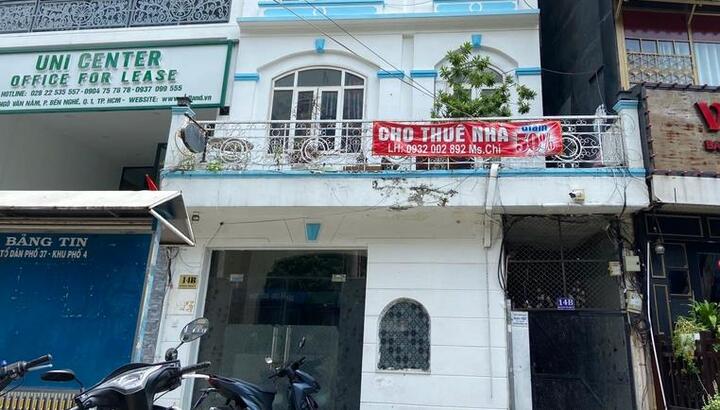
Investors need to be cautious about properties offered for bulk rental at high prices. Photo: HB
To mitigate risks, this expert suggests that investors should avoid the "trap" of bidding above market value to secure the right to operate. At the same time, amidst a wealth of information provided by landlords, previous tenants, and brokers, investors need to carefully calculate to determine the true revenue and profit.
According to him, actual revenue needs to be calculated based on many factors, such as feasible rental prices in the area, the exact number of each room type, and the occupancy rate of each segment. In particular, entire houses for rent typically only achieve 60-95% occupancy.
At the same time, in the initial financial calculation, investors should not overlook operating and management costs, administrative costs, and business taxes, as well as another important component: depreciation of the initial investment.
"Just one miscalculation of costs and an occupancy rate exceeding 15% means that the investment in renting entire houses wholesale for individual rentals will become unprofitable; an occupancy rate exceeding 25% will certainly result in a loss.", Mr. Kien affirmed.

 Comment