


 Hotline: 0855.911.911
  RSS
RSS 





Many people believe that eating more fish than meat is better because fish has higher nutritional value. However, some people argue that meat is more important. So, is it better to eat fish or meat?
Nutritional value of meat and fish
According to the National Institute of Nutrition, both fish and meat are very important foods.
Meat provides the body with essential amino acids and fatty acids that aid in the development of many organs. In addition, meat contains minerals, vitamins, and is a source of trace elements such as vitamin A, iron, zinc, copper, cobalt, and selenium. Meat is also a very good source of B vitamins (B1, B6, PP, B12, etc.).
However, during digestion, meat produces many intermediate products that are not good for the body. Meat is also high in fat, saturated fatty acids, and cholesterol, especially in organ meats where the cholesterol content is very high. Eating too much of it will increase the risk of cardiovascular disease and high blood pressure.
Fish and fish products are highly nutritious foods. First of all, they are a valuable source of protein, containing all the necessary amino acids, and fish oil is rich in vitamins A and D and various types of polyunsaturated fatty acids (these are essential fatty acids with many important roles in the body).
Fish, especially marine fish, are rich in important minerals such as calcium, phosphorus, chlorine, sodium, and trace elements (copper, cobalt, zinc, iodine...). Some types of marine fish have very high iodine content.
For example, mackerel contains 1,7-6,2 mg/kg. The fish meat is easily digested and absorbed; its connective tissue is evenly distributed, so it cooks quickly, becomes tender, and is easy to digest and absorb.
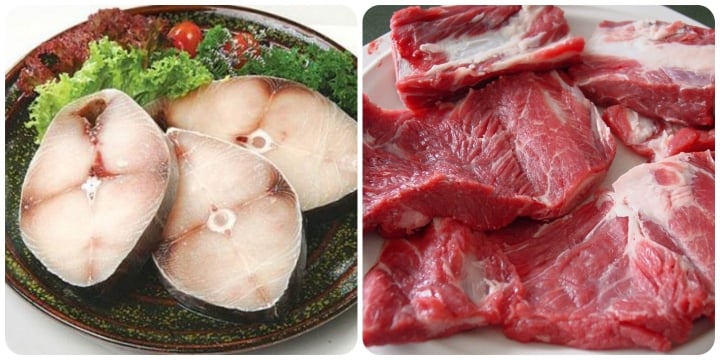
Whether eating fish or meat is better is a question many people ponder.
Is it better to eat fish or meat?
Answer above ZingAccording to Lieutenant, Master's degree holder, and doctor Bui Thi Duyen, from the Nutrition Department of Military Hospital 175 (Ministry of National Defense), both meat and fish are important sources of protein and nutrients for the body.
According to Dr. Duyen, fish contains a lot of protein rich in nutrients, especially omega-3 fatty acids, a nutrient that the human body cannot synthesize on its own. Omega-3 fatty acids have many health benefits, such as helping to reduce the risk of cardiovascular disease, reducing inflammation, and supporting the development of children.
However, some types of fish may contain harmful substances such as mercury, so eating too much of them can be detrimental to health.
Meat is a high-quality source of protein, iron, and vitamin B12. However, some types of meat can be high in fat and cholesterol. Even so, consuming too much red meat can increase a person's risk of cardiovascular disease and cancer.
Therefore, there is no simple answer to the question of whether eating meat or fish is better, as this depends on many different factors such as the type of meat/fish, the cooking method, and individual taste.
Whether eating meat or fish is better depends on each person's nutritional needs, health status, and dietary preferences.
If you're looking for a high-quality and nutritious source of protein, you can consider various types of meat and fish and incorporate them into your daily diet to ensure you're getting all the necessary nutrients for your health.


 Comment