


 Hotline: 0855.911.911
  RSS
RSS 





Latest news on Hurricane Mekhala
According to the National Center for Hydro-Meteorological Forecasting, this morning, June 20th, the tropical depression in the Northwest Pacific strengthened into a typhoon, internationally named Mekhala. This is the seventh typhoon to operate in the Northwest Pacific region.
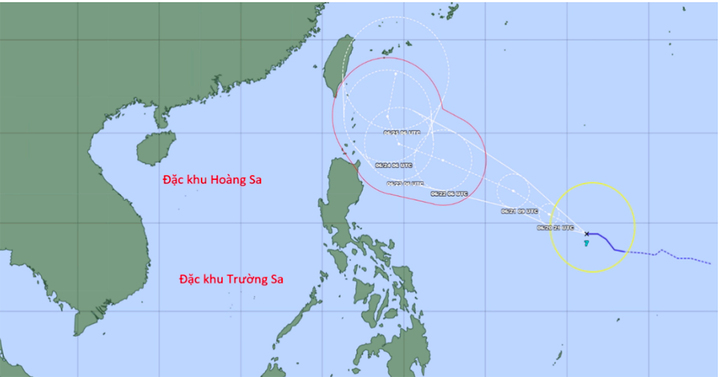
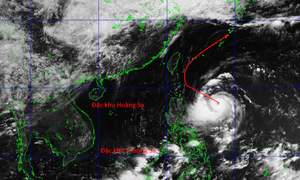
The path of Typhoon Mekhala. (Source: Japan Meteorological Agency)
By 16 PM on the same day, the center Typhoon Mekhala Located at approximately 14,4N-136,2E, the storm is at intensity level 8, with gusts up to level 11. It is currently about 2.000km east of the Philippines.
Forecasts for the next 24 hours indicate the storm will move in a west-northwest direction, with maximum intensity reaching level 12 and gusts up to level 16. Around June 24th, as the storm moves north of Luzon Island (Philippines), it will change direction and move northward towards the waters east of Taiwan (China) and southeastern Japan.
"There are no signs yet that Typhoon Mekhala is moving into the East Sea off the coast of Vietnam. The Vietnamese meteorological agency is still monitoring the development of this typhoon." The National Center for Meteorological and Hydrological Forecasting provides this information.
Heavy rain warning in the mountainous region of Northern Vietnam
According to the meteorological agency, scattered showers and thunderstorms are expected in the mountainous areas of Northern Vietnam this evening and tonight, June 20th, with rainfall ranging from 10-30mm, and locally heavy rain exceeding 90mm. Scattered showers and thunderstorms are also expected in the southern part of the Central Highlands and Southern Vietnam, with rainfall ranging from 10-30mm, and some areas experiencing heavy rain exceeding 60mm, concentrated in the evening and night.
Furthermore, satellite imagery, lightning detection data, and weather radar have revealed that a strong convective cloud system is developing in southern Phu Tho province and is tending to move towards Hanoi.
Over the next 1-4 hours, this convective cloud system will continue to develop and expand, bringing rain to the southern wards and communes of Hanoi, and then spreading to other wards and communes in the area.
During thunderstorms, there is a possibility of dangerous weather phenomena such as tornadoes, lightning, hail, and strong gusts of wind.
 Comment