


 Hotline: 0855.911.911
  RSS
RSS 





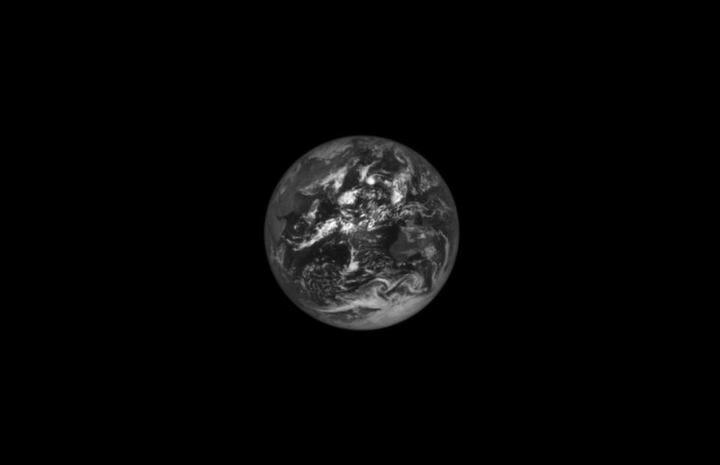
Image of Earth taken by the Lucy spacecraft on October 15. (Photo: NASA)
Images shared by the US National Aeronautics and Space Administration (NASA) show Earth as captured by the Lucy spacecraft from a distance of 620.000 km. The photo was taken during the spacecraft's mission to explore Jupiter's Trojan asteroids.
According to NASA, the black-and-white photo, taken by Lucy on October 15th, shows Earth dwarfed by the vast, dark expanse of space.
The top left of the image shows the Hadar region of Ethiopia. This is where Lucy, the oldest human fossil ever discovered, was found, dating back 3,2 million years. It is also the name of the spacecraft for the NASA mission.
NASA also shared a second image, taken on October 13th, showing Earth and the Moon when Lucy was 1,4 million kilometers away. Both appear as tiny objects when positioned opposite each other in space. The Moon is a small dot on the left, while Earth is on the right and appears larger.
According to CNET, these Earth images were taken by Lucy's Terminal Monitoring Camera (T2CAM) during calibration for image quality testing, in preparation for a mission to explore Trojan asteroids.
This was also a crucial moment for Lucy as the spacecraft turned toward Earth for the first time to receive gravitational assist, a process that uses a planet's gravity to change direction and increase velocity.
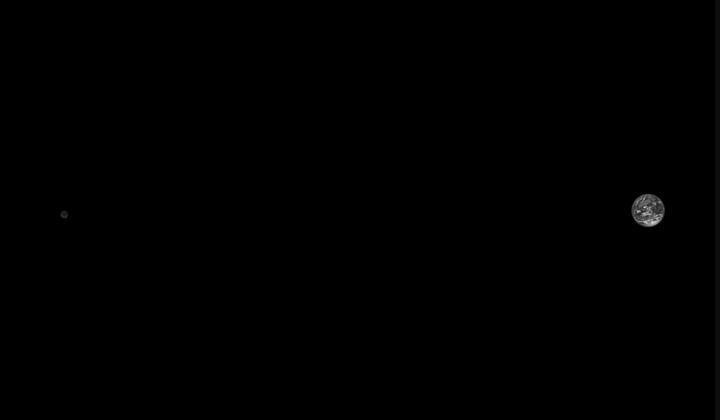
The Earth and the Moon are facing each other in this photo taken on October 15. (Photo: NASA)
According to NASA, this phase helps the spacecraft reach the speed needed to approach Trojan asteroids, small celestial bodies orbiting the Sun at a distance similar to Jupiter.
Lucy was launched in late 2021 with a mission expected to last 12 years. According to NASA, studying fossils on the asteroid could help scientists study the formation of the Solar System.


 Comment