


 Hotline: 0855.911.911
  RSS
RSS 





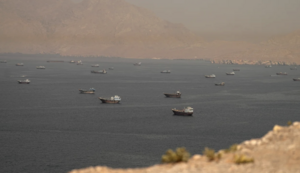
The U.S. Central Command (CENTCOM) announced last night in an official statement that it was lifting the complete blockade on Iranian ports and waters. CENTCOM affirmed that this move was carried out at the direction of President Donald Trump.
Immediately following the CENTCOM announcement, Iran's Supreme National Security Council also issued a statement saying that the newly established Persian Gulf Strait Authority would implement measures to expedite the licensing of ships needing to pass through the Strait of Hormuz, in accordance with the agreement reached with the United States.
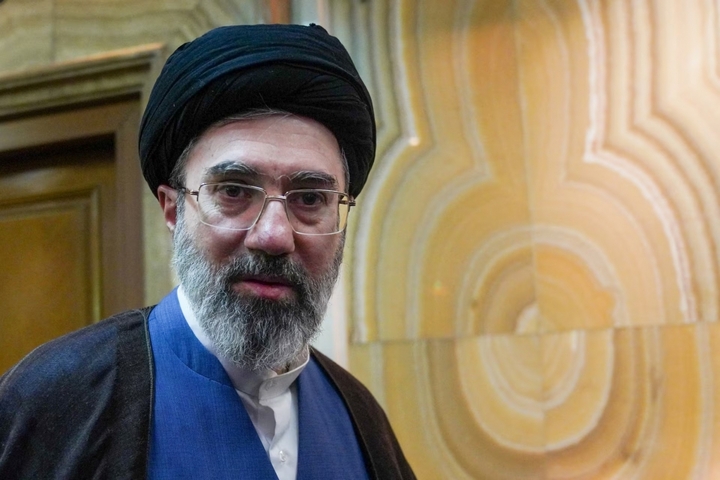
Iran's Supreme Leader Mojtaba Khamenei. (Photo: Reuters)
The statement emphasized that mine-clearing operations would be carried out. Therefore, ships were advised to strictly adhere to the routes and timetables provided by Iran to ensure safe navigation.
The lifting of the US naval blockade on Iranian ports and the reopening of the Strait of Hormuz are two of the key points of the memorandum reached between the US and Iran.
Regarding this agreement, Iran's Supreme Leader Mojtaba Khamenei spoke out for the first time last night, expressing his views. In an official statement, Supreme Leader Mojtaba Khamenei announced that he had approved the memorandum. However, Iran's supreme spiritual leader also affirmed that accepting direct negotiations with the US does not mean Iran recognizes the other party's position.
According to the plan, the official signing ceremony for the preliminary US-Iran agreement will be held in Switzerland today. Immediately after the signing, representatives from both countries will hold the first round of negotiations on the formal agreement.
This process is expected to be facilitated by Pakistani and Qatari mediators, among others. The total negotiation time agreed upon by both sides is 60 days. The focus of the talks is a solution to Iran's nuclear issue, including the handling of Tehran's highly enriched uranium.
Media outlets and analysts predict this will be a tense and challenging negotiation process. The 60-day timeframe is likely insufficient for both sides to resolve all outstanding issues.
Prior to today's scheduled talks, the US and Iran had also held several tense rounds of negotiations early last year and early this year, mediated by Oman. Both processes stalled midway after Israel and the US unexpectedly launched attacks aimed at preventing Iran from developing nuclear weapons.

 Comment