


 Hotline: 0855.911.911
  RSS
RSS 





For decades, greasy and seasoned instant noodle cups have been a major challenge for South Korea's recycling industry. Because they are contaminated with food, they are difficult to process using traditional mechanical recycling methods.
Therefore, most of this waste has to be burned or buried, harming the environment.
In early June, the South Korean Ministry of Environment announced the launch of a nationwide chemical recycling program aimed at transforming used instant noodle cups into raw materials for the petrochemical industry.
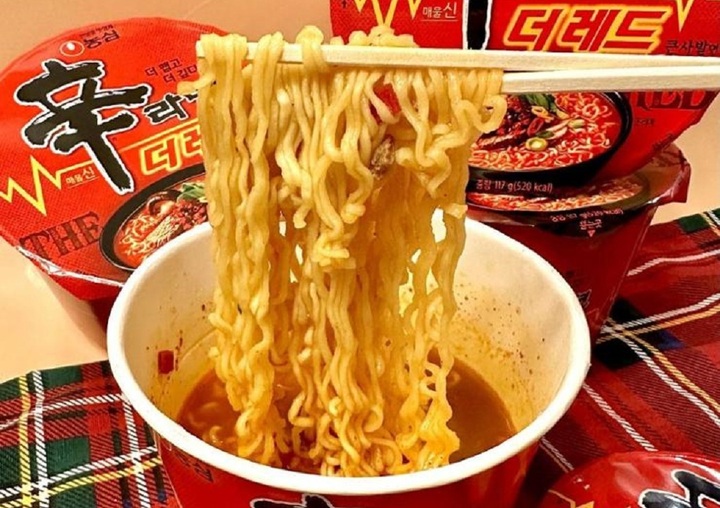
Used instant noodle packaging is a type of waste that is difficult to recycle. (Illustrative image)
According to South Korea's Ministry of Environment, the new program marks a shift from mechanical to chemical recycling. While mechanical recycling only melts and reshapes plastic, often resulting in material degradation after each recycling cycle, pyrolysis technology allows for the conversion of plastic waste into higher-value chemical raw materials.
The program uses pyrolysis technology to process products made from foamed polystyrene (PSP), a common material used to manufacture instant noodle cups, food trays, and food containers.
This process exposes PSP waste to a high-temperature, oxygen-free environment. The plastic breaks down into liquid pyrolysis oil, which is then further refined into naphtha – a crucial input material in the production of new plastics and many other petrochemical products.
South Korean officials believe this technology helps close the material recycling cycle for types of waste that were previously almost impossible to recycle.
The program was launched after pilot projects in several localities successfully processed approximately 15,8 tons of PSP waste last year.
To encourage business participation, the South Korean government implemented an Extended Producer Responsibility (EPR) mechanism, requiring businesses to be responsible for the entire product packaging lifecycle they bring to market.
Logistics and chemical companies involved in the waste collection, transportation, and treatment chain will receive financial support from the government in both the collection and pyrolysis stages.
Kim Go-eung, Director of Resource Recycling at South Korea's Ministry of Environment, said expanding the program would help address long-standing technical limitations in recycling contaminated polystyrene.
"The program will contribute to transforming low-value waste into high-value chemical resources, while also promoting the transition to a circular economy.", Mr. Kim said.
 Comment